

 dyton mupawaenda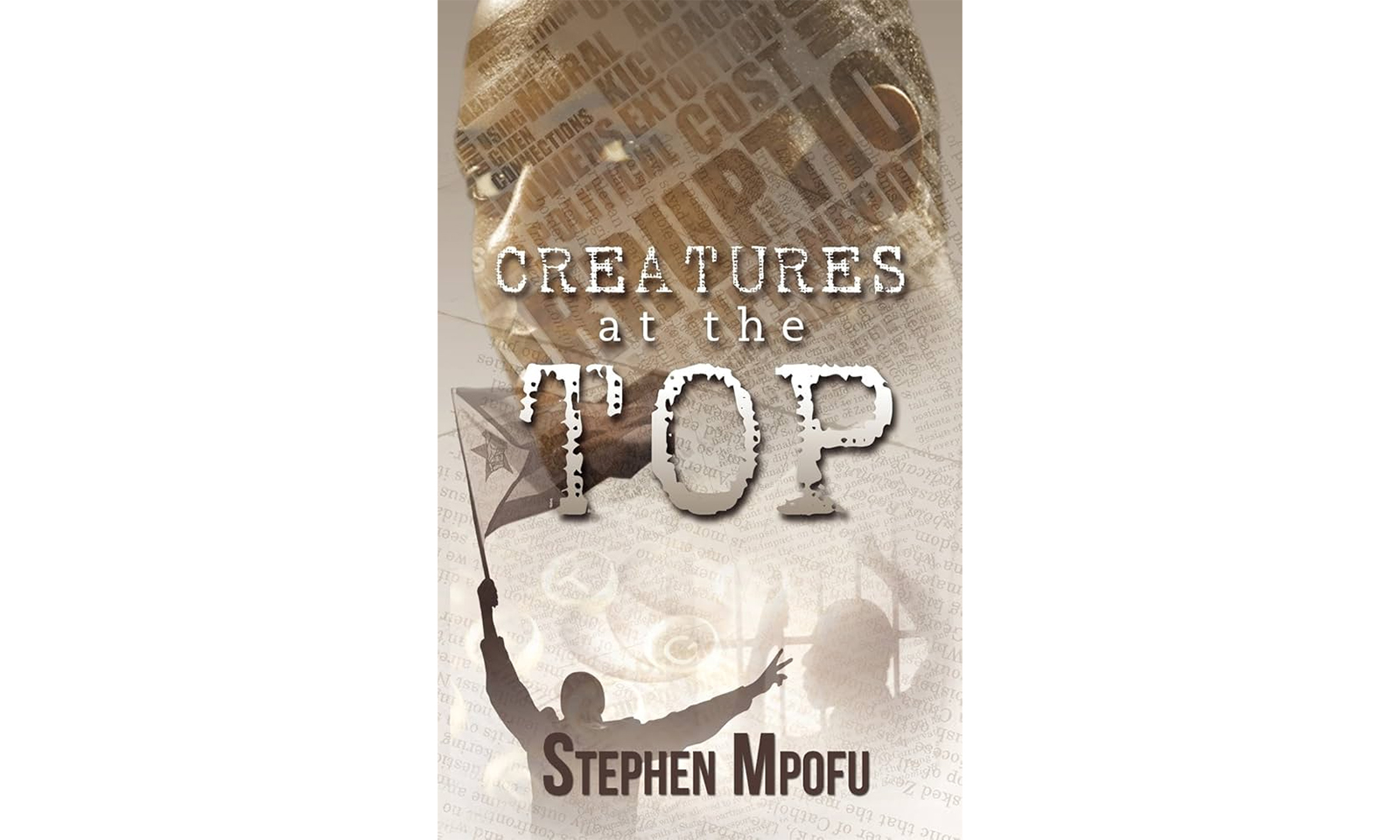
Elliot Ziwira-At the Bookstore
Though biographies or autobiographies offer a unique lens into the life and experiences of the artist, they can also be fraught with the danger of self-justification.
The autobiographical mode, while fraught with the risk of self-justification and biased narratives, offers a unique opportunity for writers to engage with their experiences and share them with a broader audience.
This mode allows artists to serve as firsthand recorders of events, providing a more reliable and personal account than historians, who often rely on secondary sources.
When crafted by skilled storytellers, autobiographical works can transcend geographical boundaries, connecting with readers and drawing them in. The characters and experiences described become relatable and familiar, echoing the lives and struggles of those in the reader’s own community.
This universality is evident in the works of renowned African writers, such as Ezekiel Mphahlele, Peter Abrahams, Alan Paton, and Robert Muponde, who have masterfully employed autobiographical elements to share stories of determination and hope even when the chips are down.
When done well, autobiographies can be powerful tools for storytelling as they intricately capture humanity’s experiences and the struggles of a community. Writing an autobiography requires great skill as the storyteller should desist from disregarding other characters, since the story belongs to all, and not individuals.
True, a people’s story exists in the many individual stories redolent in a community’s aspirations, hence biography inspires, teaches, admonishes, questions, instils discipline, and encourages honesty.
In light of that, Stephen Mpofu’s “Creatures at the Top” is a consummate example of the power of autobiographical storytelling.
Mpofu’s account is a powerful narrative that delves into his experiences as a young man, striving to shape his own destiny and that of his homeland, Zimbabwe.
Through the protagonist, Sam, the author recounts his journey as a journalist in exile, navigating the intricacies of colonial oppression and the fight for independence.
In 1963, Mpofu finds himself in Zambia, where he begins his training as a journalist. As he becomes immersed in the world of reporting, he sheds light on the plight of blacks in Southern Rhodesia, both at home and in the diaspora.
His unique position as a Zimbabwean living in exile allows him to provide an insider’s perspective on the revolutionary outfits that shaped the region’s history, including ZANU, ZAPU, ANC, FRELIMO, and MPLA.
Mpofu’s narrative takes the reader on a journey through the tumultuous landscape of African politics, from the independence of Zambia in 1964 to the protracted onslaught against the Ian Smith regime in Rhodesia.
Testifying to the power of storytelling, the narrative exposes the seeds of despondency and the complex nature of reconciliation in the aftermath of independence.
Through his experiences, Mpofu offers a nuanced understanding of what it means to be an exile, yet fighting for one’s country. He powerfully explores the human condition beyond geographical boundaries, thus appealing to readers on a universal level.
Weaving a profoundly personal and universally relatable story, Mpofu personifies Chenjerai Hove’s view in “Palaver Finish” (2002), who insists that the writer functions as a recorder of mores and events.
One of the strengths of “Creatures at the Top” is its ability to balance the personal and the political.
The writer’s experiences as a journalist and exile are intertwined with the broader struggles of Africa’s liberation movements. These different strands are adeptly woven together to create a multifaceted narrative.
The book’s strength lies in its insightful portrayal of Africa’s struggles for liberation, the difficulties of exile and identity, and the challenges of journalism in the face of constantly shifting trends.
Mpofu sheds light on the challenges faced by journalists, particularly when dealing with dishonesty in high places, through his experiences as a newsman in Zambia and at Zimbabwe Newspapers (1980) Limited, after Independence, where he worked for over 20 years in editorial positions at The Herald, The Sunday Mail and Chronicle, which he edited for 12 years.
Reminiscent and engaging, the author draws the reader into his world making him or her feel like he/she is part of the story.
Through effective use of imagery and metaphor, he enriches the narrative, hence rewarding reading.
As Mphahlele demonstrates in his own autobiographical work, “Down Second Avenue” (1959), the use of literary devices can elevate the narrative, making it more than just a personal account.
In “Mine Boy” (1946) Peter Abrahams shows that both the personal and the political are often inextricably linked, and Mpofu subscribes to this idea.
He reflects on his interactions with talented journalists and dedicated war veterans during and after the liberation struggle.
The familiar names mentioned throughout the book lend credence to the writer’s experiences, making “Creatures at the Top” an evocative and informative repertoire of individual episodes stitched into a selfless blanket of national consciousness.
Certainly, a man is not born a professional, politician, tradesman or businessperson, but he is born a human being with idiosyncrasies and frailties, which he has to conquer to achieve greatness.
Therefore, one who “reads biography will not become mentally bankrupt. To read and learn from what he reads is a mark of intelligence” (Royal Bank of Canada Monthly Letter, August 1973).
As Emerson avers, “In every man there is something wherein I may learn of him, and in that I am his pupil.”
A man who accepts that he has more to learn from others’ experiences, and remains a pupil all his life leaves an enduring legacy of success. Birth and death, love and passion, ambition and avarice, triumph and defeat, temptation and sin, deceit and jealousy, have always weighed down on human endeavour.
The competent biographer, therefore, should be alive to the complexity of honesty. Knowing that the truthfulness of a thing, event or incident does not make it right or honourable to recount.
“The hallmark of a good biographer is not passion but good sense. He has to weed out the irrelevant and seek what is strong, novel and interesting.
“He needs a profound knowledge of human nature, wide sympathies, and an impersonal standpoint” (Royal Bank of Canada Monthly Letter, August 1973).
There are some little events, which others may consider trivial, in one’s life, which may have a stronger bearing on major happenings that sharp or map a person’s destiny.
As highlighters of character traits, such events should be chronicled as long as the risk of trivialising the vital is mitigated or avoided. There is so much to learn from autobiographies and biographies.
The Italian artist Benvenuto Cellini points out that upright and capable men across stations, who have done exceptionally well to deserve praise, have a duty to record the events of their lives.
In “Creatures at the Top”, Stephen Mpofu appropriately answers the call, a powerful and thought-provoking autobiography that offers a unique perspective on the struggles of Africa’s liberation movements and the complexities of identity and exile.
Stephen Mpofu’s “Creatures at the Top” is available at Typocrafters Book Shop at Herald House, Corner George Silundika Avenue and Sam Nujoma Street, Harare. Grab your copy today!
Contact: Mercy—0771537929, Rose—0776131480, or Leon—0733100191.


 Online Reporter