

 admin
admin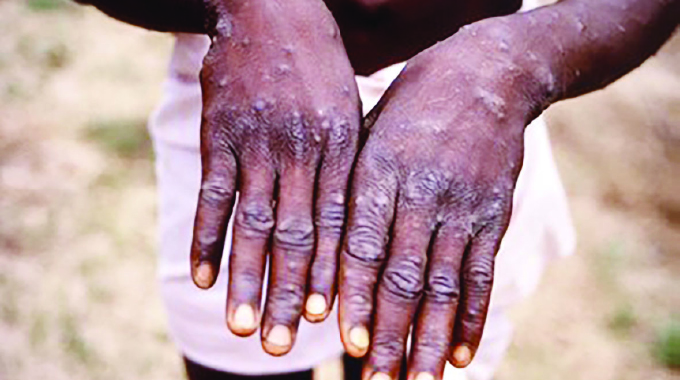
Rumbidzayi Zinyuke
Senior Health Reporter
ZIMBABWE remains on high alert for any cases of the ongoing Mpox outbreak which has spread to 12 countries in Africa since January this year.
While the country is yet to record a case of the viral disease, Africa as a whole has been reporting a rise in cases despite a decline reported in other regions.
Globally, more than 99 000 confirmed Mpox cases were recorded between January 2022 and last month.
As of August 18, the total number of confirmed cases in the African region had reached 4 562 with 35 deaths. However, the number of suspected cases is now almost 18 000 with 563 deaths.
The Democratic Republic of Congo remains the most affected country accounting for 90 percent of all Mpox cases at 16 123 suspected cases and 558 deaths. In the last week alone, over 1 000 new suspected cases and 27 potential Mpox-related deaths were reported in the DRC.
Burundi has also been recording a rapid rise in the number of cases following the re-emergence of Mpox cases.
Health and Child Care Minister Dr Douglas Mombeshora in a statement confirmed that Zimbabwe had not yet reported a case of Mpox.
“The Ministry of Health and Child Care wishes to reassure the public that currently no case has been reported in Zimbabwe and is monitoring the evolving situation of Mpox outbreak. The Ministry has also placed its structures on high alert and is conducting preparedness and response activities,” he said.
However, with cases rising in other countries, health experts have said Africa needs to increase collaboration in the response to the Mpox outbreak.
Speaking during a virtual joint briefing with the World Health Organisation Africa centre of disease control and prevention on the Mpox outbreak in Africa, the director of the WHO liaison office to the AU and the UN Economic Commission for Africa, Professor Francis Kasolo, said the Mpox outbreak had highlighted the vulnerabilities within the health systems while also showcasing the resilience and strength of collective response.
“While the impact is significant, it has also provided invaluable lessons on the importance of coordinated action, robust surveillance and rapid response capabilities. As we move forward, it is imperative that we remain vigilant and proactive in our efforts to combat Mpox.
“This means not only addressing the immediate needs, but also investing in long-term strategies that will build resilient health systems capable of withstanding future outbreaks and shocks,” he said.
However, the level of data collection and reporting in affected countries has been low, underscoring the need for improved surveillance and testing.
Dr Michel Muteba, with the WHO Mpox incident management support team, said the actual number of Mpox cases in the region was likely to be more than those being reported. This was because reported data coming from most affected countries was incomplete because most cases were being reported in hard-to-reach areas that had limited access to testing services.
Other challenges that were negatively affecting the response to the disease included poor cross-border information sharing, stigma, and financial and logistical challenges.
“We have limited funding for specific infection prevention and control activities at regional and country levels where the preparedness and readiness need to be on top of the game. The actual cases are likely to be higher due to underreporting and limited testing,” he said.
To address these challenges, WHO regional advisor on country readiness and strengthening Dr Charles Njuguna said there was scope for increased collaboration in the response to the Mpox outbreak.
“We can work together as partners to do joint readiness and ensure that even those countries that are not affected at the moment are ready to deal with Mpox in case they get cases. We can do joint response planning and coordination using the established coordination mechanism,” he said.
There was also an opportunity for joint advocacy and resource mobilisation efforts since many countries were faced with a similar challenge of financial limitations.
Africa is lagging in terms of sample processing and testing, hence a collaborative approach was needed to support countries to improve diagnostics and where possible to minimise the distance of specimen referral.
Dr Njuguna said countries also needed to focus on collaborative surveillance.
“We need to see how best we can do a One Health Approach because we know that Mpox is a zoonotic disease, and how we can do epidemiological investigations and improve surveillance systems. We need to see how best we can do cross-border surveillance, collaboration and information sharing for we know that diseases don’t need visas to jump from one country to another and already Mpox has the potential to spread to other member states through cross-border and international travel,” he added.



 Online Reporter
 Bongani Ndlovu