

 admin
admin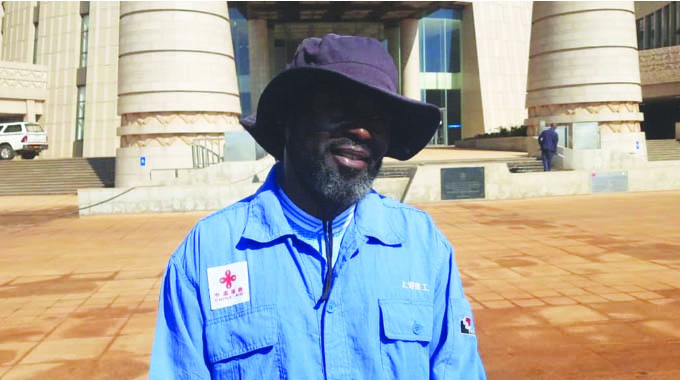
Africa Moyo, Deputy News Editor
MOUNT Hampden, the ridge where the new Parliament Building is situated, has gone through a major transformation of sorts.
In 1890, the mountain was the original destination of the Pioneer Column of the British South Africa Company, but because the headwaters of the Gwebi River were considered so inadequate as a water supply, the Column eventually resolved to settle 18km away, in what is known as Harare today.
Frederick Courtney Selous, a hunter and explorer, is credited with naming the mountain after John Hampden, an English politician.
It later became a farm and then an air training station which meant that surrounding land was pulled out of farming.
Fast-forward, a white man whose name could not be immediately established, set up a lodge in Mt Hampden and it is said to have become a hit with people that needed their space far away from the hustle and bustle of the city.
Weddings and parties would also be hosted there, as people sought to make merry in a place where the sounds of birds and squeaking of swaying trees were the only ones that disturbed the almost serene atmosphere.
But for a place that almost became a political nerve centre for colonialists, the magnet to attract power has remained in Mt Hampden, as it later became a prayer mountain under One Way Ministries International, whose radio adverts back then said “Nzira imwe chete”.
People burdened by different challenges in life, including those suffering from curses by family strongmen, would turn to the mountain during the day and the dead of the night to seek divine intervention.
In 2012, talks to construct a new Parliament in Mt Hampden started, to replace the one in central Harare, which could no longer accommodate all National Assembly legislators, after the number of constituencies was increased from 120 to 210, and the Senate was reintroduced in 2005.
Of course, like most brilliant ideas during the First Republic, the construction of the new Parliament could not take off mainly due to funding challenges.
Come November 2017, President Mnangagwa became the President and talks for the construction of a new Parliament intensified, and was fulfilled in 2018 when the Second Republic unlocked funding.
One man has witnessed the evolution of Mt Hampden and his name is Mr Mugove Mudonhi (54), a driver and local workers’ manager for Shanghai Construction Group Company Limited of China, the project contractor.
In an interview on the sidelines of a tour by local journalists and those from the People’s Daily of China on Wednesday this week.
“Some time ago, there was a white guy here who ran a lodge and I used to work for him, then it became a prayer mountain run by a church called One Way Ministries,” said Mr Mudonhi.
“People were coming here for weddings and parties. It was like a lodge and when the Chinese came, I assisted them when they were doing their soil testing.
“I then resigned where I was working and joined the Chinese and we started building the new Parliament in September of 2018 September till today.”
Government officials are presently busy, putting up final touches to preparations ahead of the 44th SADC Summit next month, which will run under the theme, “Promoting innovation to unlock opportunities for sustained economic growth and development towards an industrialised SADC”.
President Mnangagwa has said he wants the summit to be a “record of excellence” and roads leading to Mt Hampden, especially Old Mazowe Road, have been repaired while a Boulevard has been constructed from scratch, from the Harare-Bindura Road straight to the new Parliament.
President Mnangagwa has expressed happiness over the preparations so far, while Transport and Infrastructural Development Minister Felix Mhona is opening new stretches of roads almost twice a week ahead of the big event in the mountain.
But Mr Mudonhi is probably the happiest of them all.
“I am happy to be part of the construction team (for the new Parliament). I understand it is one of the biggest in Africa. Now, presidents are coming from 16 countries and I am happy to be part of the people who built this marvellous building.
“I am also happy to be part of this big, good company as well. I have learnt a lot of things and have gained a lot of experience.
“I don’t regret joining the company. I have a picture of what was here and what is now there. I am happy there are new roads; back then, there was nothing like this, it was just a dusty road. Now we have finished the project and we are preparing for the SADC Summit,” said Mr Mudonhi.
At one point, Mr Mudonhi worked for SCG with his wife and two sons.
Now, it is him, his wife and one son still working for the company. The wife assists in the kitchen while the other son has joined, ironically, another Chinese company, Wild Africa, underlining the impact of Chinese investments in Zimbabwe.
Zimbabwe and China enjoy cordial relations dating back to the days of the liberation struggle.
A number of infrastructural development projects implemented in Zimbabwe in recent years and some that are ongoing, have been financed or are being implemented by the Chinese.
The Kariba South Hydro Power Station Expansion, Hwange Thermal Power Station Expansion, Victoria Falls International Airport Upgrading, Expansion and Upgrading of the Robert Gabriel Mugabe International Airport and NetOne broadband are some of the projects implemented with China’s financial support.


 Peter Tanyanyiwa
 Online Reporter