Online Reporter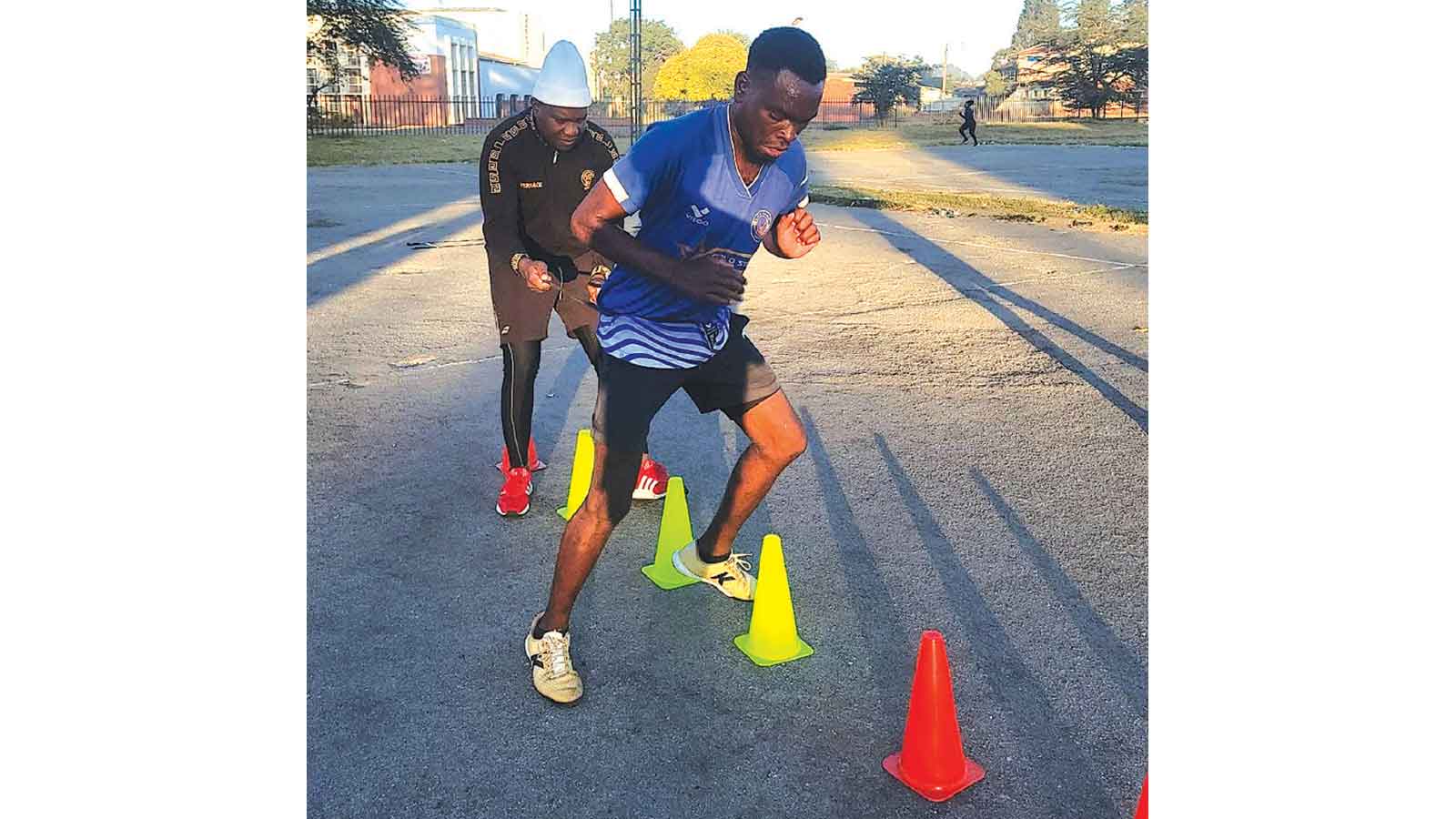
Eddie Chikamhi
Zimpapers Sports Hub
AS dusk settles over Shingirayi Primary School grounds in Mbare, Moses Muchenje calls his players together for one final drill ahead of the Munhumutapa Challenge Cup knockout matches.
The former CAPS United captain watches closely from the touchline, immersed in his new role as coach of Mbare-based futsal side 16 Views.
For Muchenje, it feels like destiny.
After a football journey marked by career highs and lows, Muchenje is excited to be back where it all started.
The former midfield dynamo first honed his skills in the fast-paced world of five-a-side football before earning a breakthrough move into the domestic Premiership.
Now, with his playing days largely behind him, he is charting a new path in the sport that laid the foundation for his success, as a coach in the ZIFA Northern Futsal League.
“I started my career in futsal and I am now back again in futsal,” he said with satisfaction.
“Futsal made me who I am today in terms of my football career. So, I am very happy to be giving back as a coach because I also learnt from some of the best guys in Zimbabwe.
“My dream is to develop more futsal players and get this game recognised again.”
Muchenje’s football story began in the dusty streets of Mbare, where he turned out for five-a-side teams, Karikoga and Faith Ministries.
His talent eventually caught the eye of former Castle Lager Premiership champions Gunners, opening the door to a successful top-flight career.
His crowning moment came in 2016 when he helped CAPS United win the league championship.
He was also a key member of the Green Machine side that captured the imagination of local football fans during an impressive CAF Champions League campaign.
Despite those achievements in mainstream football, futsal has always remained close to his heart.
Even after establishing himself in the 11-a-side game, Muchenje maintained strong ties with the indoor version and represented Zimbabwe during the 2012 FIFA Futsal World Cup qualifiers.
That national team featured several renowned footballers, including Bhekuvuyo Dlamini, Ambrose Kunaka, Gift Mugabe, Bernard Chipurura, Vengai Mafusire, Wellington Kamudyariwa, Marshall Phiri, Gilmore Nengomasha, Terrence Chitsamba, Itai Kanyati, Fungai Mukayira, Clifton Chitsamba and Farai Madora.
Some of the players in that team are still involved in the game today. Chitsamba serves as an administrator at 16 Views while Nengomasha sits on the club’s board.
As futsal shows signs of recovery after years of decline, Muchenje believes old challenges remain.
“The biggest challenge with futsal is not the shortage of players or a lack of interest. It is funding and the availability of proper facilities,” he said.
“I would like to urge prospective sponsors to explore futsal. It is a very exciting sport. From my experience, it can keep young people off the streets and also provide a strong platform for identifying talent for 11-a-side football.”
Muchenje credits the sport with helping him rebuild his life following a well-documented struggle with drug addiction.
He feels the inaugural Munhumutapa Challenge Cup has arrived at the perfect time for a sport that has spent years fighting for relevance.
16 Views recently defeated Real Stars and Go-Boys to advance to the quarterfinals of the competition.
Club chairperson, Frank Farakezi Jnr, believes Muchenje’s presence has transformed the team.
“We are happy to have people like Moses in futsal. He has been there before and is now giving back to the sport,” he said.
“He has helped a number of our players and we feel privileged that our team is still in the competition.
“We are excited and grateful to President Mnangagwa and our mother body ZIFA for the chance to participate in the tournament.”
Winners of the men’s competition will walk away with the trophy and US$30 000 in prize money.
Zimbabwe Futsal Association chairperson, Philani Banda, believes the game is enjoying its strongest growth in years.
“I think the competition is at its highest level since I became involved in futsal in 1996,” he said.
Although futsal remains largely concentrated in Harare and Bulawayo, Banda noted that encouraging progress is being made, particularly in the Southern Region.
“The Southern Region has made huge strides towards professionalising the sport,” he said.
“There is improved organisation, trained personnel and the games are attracting large crowds. Harare is also making positive progress.”
However, infrastructure remains a major stumbling block.
At present, the Gwabalanda FIFA Hope Centre remains Zimbabwe’s only purpose-built futsal facility.
Constructed by FIFA under its global 20 Centres for 2010 World Cup initiative, the venue has become the heartbeat of futsal development in the country.
“The sport is growing, but the facilities remain limited,” Banda said.
“We are grateful to have the Gwabalanda venue, but it is no longer enough to meet the increasing demand. Sometimes we host as many as 18 matches over a weekend and the arena is usually packed.
“We are also grateful to the Bulawayo City Council for allocating land where we intend to build a new stadium. It is a project that is in the pipeline and we hope to begin construction soon.” With the game making its way back to its feet, Muchenje believes he has a big part to play from behind the scenes, ensuring another generation benefits from the sport that gave him so much.