admin
admin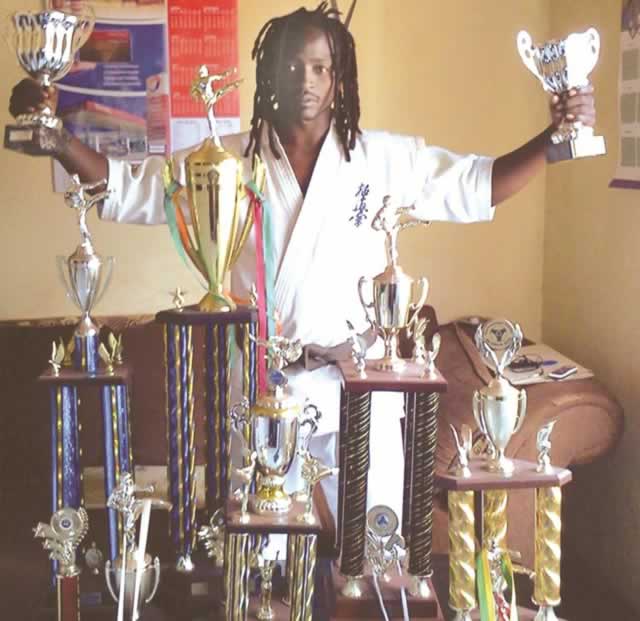
Ellina Mhlanga Senior Sports Reporter
IKO Nakamura Kyokushinkaikan karate Branch Chief, Tawanda Mufundisi, has said they are shifting their focus to 2022 after a tough year that saw them missing out on a number of activities.
On Saturday, they held their grading for Harare Province at Nakamura Dojo in Kambuzuma, which was their last event for the year.
The grading was led by Mufundisi and more than 60 karatekas from different dojos in Harare were graded.
They got orange, blue, yellow, green and brown belts.
The weekend’s grading was their third for 2021, having had two other gradings in June and November.
The one held in November focused on the black belt karatekas.
Mufundisi said 2021 has seen them going through several challenges and there wasn’t much to talk about.
“The year 2021 wasn’t an easy year at all especially in the face of this terrible (Covid-19) pandemic.
“We lacked almost everything, sponsors, participation, seminars, almost everything that an athlete needs,” said Mufundisi.
The seasoned karateka, who is also the Zimbabwe Karate Union vice-president, is hoping 2022 will be a better year.
“We hope 2022 will usher in new opportunities ahead of us . . . We have a collective calendar of events to complete, compiled by our ZKU technical director Kumbirai Musinami.
“From the calendar we will select events for a combined national team under the banner of the Zimbabwe Karate Union.
“We are looking forward to engaging the corporate world and good friends to make 2022 a success,” said Mufundisi.
Among those that were graded over the weekend was Tafadzwa Lindadi who graduated from second kyu brown belt to first kyu brown belt and will be looking forward to getting the first dan black belt soon.
Victor Chinguwo was graded from green to brown belt second kyu.
Twin sisters Amiliolate and Aliviate Tombotiya as well as Nikita Chigoba were all graded from white to orange belt.
Masleen Chinhamo graduated from orange to blue.
Leeroy Chiyama, Harry Charamba and Robert Mashingaidze all moved from blue to yellow belt.
Mufundisi said the process is important in grooming karatekas.
“Gradings play a role in nurturing one’s talent in the process of developing a good athlete.
“The karatekas went through the whole syllabus of kyokushin from kihon (basics) to kata (formal moves) up to kumite (fighting). We also look at good character and discipline,” said Mufundisi.
Several awards were also presented to nominees drawn from different dojos, in different categories.
Jean-Claude Mufundisi, Tawanda Alexander, Dumisani Magaya, Confidence Muzondi, Wengai Katemanyengo and Hazel Maupa got the Most Dedicated Karateka award in their respective age-groups, at their respective dojos.
The Best Performing Dojo went to Tatsuji Dojo Chitungwiza.
They also honoured parents for their contribution with Wellington Kusikwenyu, Felistas Whande, Florence Ruzane and Albert Makara getting the Most Supporting Parent award.


 Online Reporter