


 Online Reporter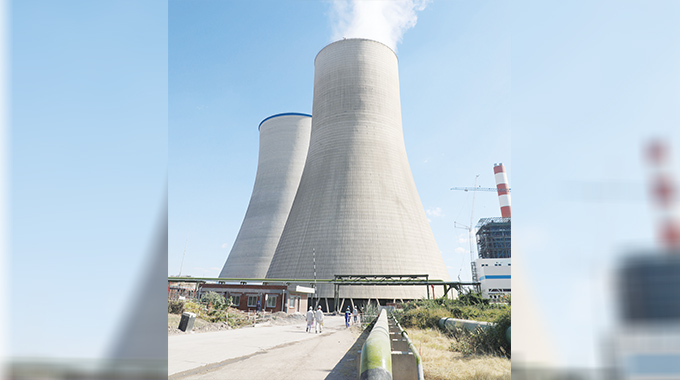
Sunday Mail Reporter
ZIMBABWE has lined up a multi-billion-dollar portfolio of electricity generation projects, under which the Government and private investors will roll out power facilities across the country aimed at more than doubling national installed capacity within the next five years.
The plan, outlined in the recently unveiled National Development Strategy 2 (NDS2), targets to raise national generation capacity from the current 2 950 megawatts (MW) to 6 000MW, driven by expanded hydro, thermal, gas-to-power and large-scale private sector plants.
The ambitious programme targets to plug long-standing supply deficits that have constrained industrial output, mining expansion, agricultural productivity and economic growth.
Energy security is considered a central pillar of the country’s industrialisation and development agenda.
Under the programme, the Government plans to implement “a portfolio of short-, medium- and long-term electricity generation projects” across the country, supported by independent producers and private industrial operators.
The plan is hinged on a dual-track approach of revamping legacy public assets while fast-tracking new, largely privately financed projects.
At the centre of the programme is fast-tracked commencement of the long-anticipated Batoka Gorge Hydroelectric Project, a binational initiative on the Zambezi River shared between Zimbabwe and Zambia.
Once complete, the 2 400MW project will deliver 1 200MW to Zimbabwe.
While development of the project has faced delays, it is now envisaged that the rollout of NDS 2 next year will inject impetus into the project and mark its official commencement.
Over the same period, the Hwange Thermal Power Station Units 1-6 repowering project is also expected to commence early next year through a public-private partnership (PPP), at an estimated US$455 million, feeding 700MW into the grid.
“During NDS 2, national electricity generation capacity is targeted to increase from the current 2 950 MW to 6 000 MW, driven by both Government and private sector-led projects,” reads NDS2.
“To realise this target, a portfolio of short-, medium- and long-term electricity generation projects will be implemented across the country.
“The Batoka Hydro Power Project — jointly owned by Zimbabwe and Zambia — is scheduled to commence during NDS2.
“Zimbabwe will benefit 1 200MW from the project.
“The Hwange 1-6 rehabilitation project will be implemented through a public-private partnership at an estimated cost of US$455 million, with completion expected by 2028.
The project will feed 700MW to the national grid, with an extended operational life of over 20 years.”
The Government has already awarded the rehabilitation contract to India’s Jindal Group, a private energy and mining conglomerate that is expected to modernise key systems and restore reliability at Hwange.
Another flagship project envisaged for implementation under NDS2 is the installation of a 1 800 megawatt-hours of battery energy storage system capable of providing a dependable 600MW.
The project is expected to cost US$400 million and will be funded through debt financing.
It is scheduled to be completed in 2027.
It will provide grid-level storage that allows excess solar power to be stored during the day and released during peak demand periods, improving system stability.
Another mega power project in the pipeline is a 500MW gas-to-power plant that will be rolled out in stages, beginning with a 100MW plant, and sourcing gas primarily from the Muzarabani and Lupane gas fields.
“Development of 50MW of gas-to-power project will be implemented on a phased approach, starting with 100MW power plant,” reads the blueprint.
“Priority sources of gas will be Muzarabani and Lupane gas fields.
“The project will be funded through public-private partnership, implementable in six years.”
Additional public sector projects will also include the Gwayi-Shangani hydropower project, which will generate 10MW, at an estimated cost of US$25 million, with completion targeted for 2028; and the 15MW Tugwi-Mukosi hydropower project, valued at US$32 million and expected to be completed in 2027.
Both projects will be implemented under PPP arrangements to leverage private sector financing and expertise.
At the Kariba South Power Station, the Government will fund the repair of Unit 4 at a cost of US$4,4 million, with works expected to be completed by 2027.
The repairs involve refurbishment of key turbine and generator components damaged during previous operations and are intended to restore 125MW to the national grid, improving system reliability.
In addition, a 90MW solar power project will be developed in Mutorashanga, at an estimated cost of US$86 million, and will form part of efforts to diversify the energy mix and expand renewable generation.
Private sector investment pipeline
Over the next five years, the Government also expects a substantial increase in generation capacity from independent power producers (IPPs), industrial own-use plants and commercial solar plants.
Among major IPP projects is Zimbabwe Zhongxin Electrical Energy’s 200MW power plant in Hwange, valued at US$360 million and targeted for completion in 2027.
“Government will facilitate the setting up of own-use power plants by intensive industrial energy users, with excess power fed into the national grid,” reads the NDS2 document.
“There are major IPP-led and own-use power plants projects that form part of the national power generation pipeline projects earmarked for implementation during the NDS2 period.
“Zimbabwe Zhongxin Electrical Energy in Hwange entails the implementation of a 200MW power generation project at an estimated cost of US$360 million and is scheduled for competition in 2027.
“There is also the Titan Power project in Hwange, which involves the development of a 720MW power generation project valued at US$486 million, with the first phase of 270MW targeted for completion by 2030.”
In addition to these two massive undertakings, Lafrica Energy intends to build a 150MW plant in Hwange costing US$250 million, while Manhize Resources will expand generation by 200MW, adding to its current 50MW in 2025 under a US$360 million programme.
Prestige Massive in Beitbridge will develop a 200MW plant at a cost of US$360 million.
In Masvingo, a new 5MW Bangala mini-hydro plant will be built downstream of Lake Mutirikwi, while the long-delayed 30MW Gairezi hydro project in Nyanga is also part of the NDS2 pipeline.
The Government says the prioritised IPP projects are expected to deliver 2 471MW of new capacity by 2030.
Zimbabwe has faced persistent electricity shortages over the past two decades owing to ageing power stations, low water levels at Kariba, limited coal generation, slow investment in new capacity and, more recently, increasing demand from a resurgent industrial base. The shortages have resulted in load-shedding, disrupted manufacturing and mining, and increased production costs across agriculture and industry.
Officials say the new pipeline projects will significantly reduce reliance on imports from the region, strengthen economic competitiveness and provide the energy backbone required for mining expansion and industrialisation.



