malvernmugadzikwa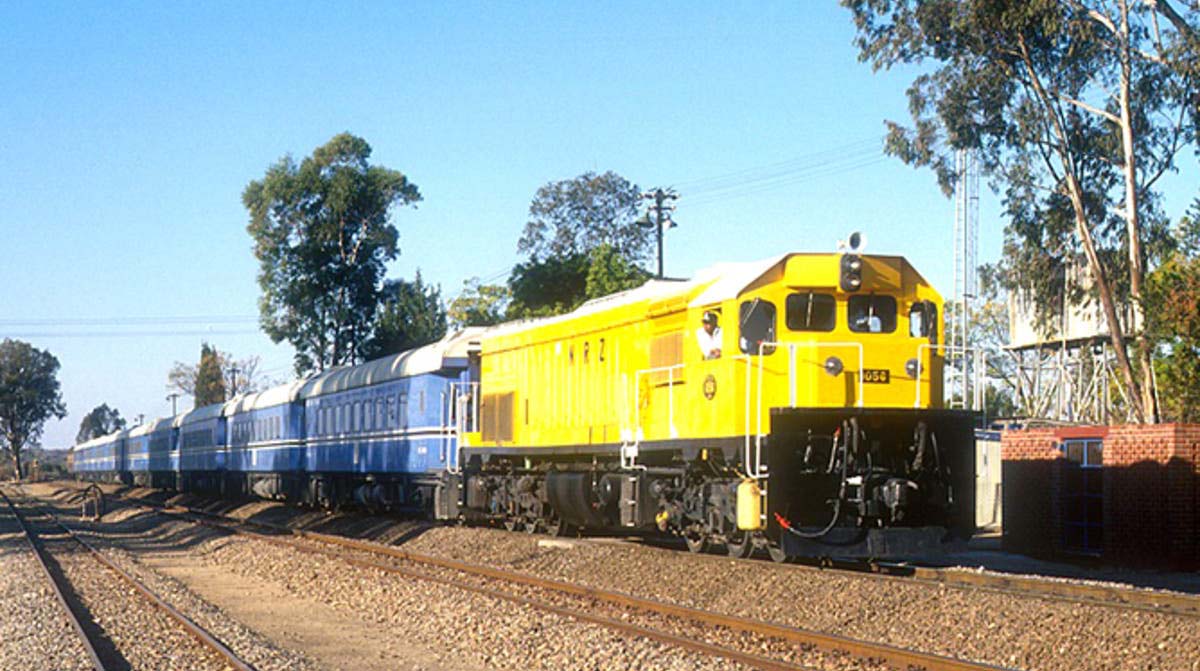
Business Reporter
THE Mutapa Investment Fund, Zimbabwe’s sovereign wealth fund, is negotiating with the African Export-Import Bank (Afreximbank) for a US$431 million loan facility to help revive the National Railways of Zimbabwe (NRZ).
The loan would be used to rehabilitate rail infrastructure and for the acquisition of new rolling stock, a crucial step towards rebooting Zimbabwe’s strategic rail network, Mutapa said in its inaugural newsletter.
“The facility will be self-liquidating take-or-pay off-take arrangement between NRZ and its customers, ensuring no recourse to the fiscus,” said Mutapa, adding that it would have a 12-year tenure and “will provide a stable and predictable framework for NRZ transformation”.
The national railway operator is among nearly 30 State-owned companies whose assets were transferred to capitalise the Mutapa Investment Fund. NRZ has been struggling with declining revenue due to a significant drop in business volumes, from 12 million tonnes annually in the 1990s to current levels of 2,3 million tonnes.
The decline is largely attributed to outdated infrastructure and a deteriorating fleet.
Its current fleet consists of 68 mainline locomotives and 73 shunt locomotives. However, only 14 mainline and 25 shunt locomotives are operational. The other locomotives need urgent repairs.
Additionally, all of the locomotives have exceeded their expected lifespan of 25 years, with mainline locomotives ranging between 30 years and 48 years, while shunt locomotives are between 40 years and 60 years.
Zimbabwe’s rail network is not only hindering NRZ’s operations but is also posing a significant challenge to businesses across the country. This was highlighted by the Minerals Marketing Corporation of Zimbabwe. It pointed out that the limitations of the rail system are hindering efforts to tap into new markets for Zimbabwe’s valuable minerals.
The inefficiencies of the Zimbabwean railway system are also creating a ripple effect, placing significant strain on the country’s road network.
With a decline in freight being transported by rail, there is a corresponding rise in heavy goods vehicles using roads.
The increased traffic load can lead to premature road degradation, requiring more frequent and expensive repairs.
The compromised state of roads not only increases transportation costs for businesses but also disrupts travel and commerce, hindering overall economic activity.
“Zimbabwe’s strategic rail network, which is critical for domestic, regional and international trade, has been facing significant challenges due to outdated infrastructure. The rehabilitation efforts aim to address these issues and improve the overall functionality and efficiency of the rail network system,” said Mutapa.
The fund added that rehabilitation of NRZ was expected to significantly enhance Zimbabwe’s logistics landscape, improving efficiency across various sectors and reducing pressure on the roads.
The upgraded network would also boost connectivity involving key production zones, domestic markets and international trade hubs, fostering economic opportunities and trade growth.
NRZ is among State-owned entities that have attracted the attention of many investors, but potential deals have fallen through largely due to interference.
For instance, South Africa’s state-owned rail company, Transnet, and the Diaspora Infrastructure Development Group (DIDG), a consortium of Zimbabwean investors living abroad, had expressed interest in recapitalising NRZ.
In August 2017, the Government awarded the $400 million tender for NRZ’s recapitalisation to the Transnet/DIDG consortium.
The deal, which, ironically, had the backing of Afreximbank, would have seen the consortium providing funding, equipment and expertise to rehabilitate NRZ’s infrastructure and rolling stock. However, the deal faced several challenges and ultimately fell through. The key issues that contributed to the deal’s collapse included the Government’s doubts about the consortium’s financial capabilities. The consortium had, however, produced evidence of its ability to fund the project.
Mutapa is expected to benefit ordinary Zimbabweans in several ways. First, as the entities become commercially viable and profitable, they will reduce their dependence on Government support, freeing up resources for other priorities.
Second, increased production will lead to more employment opportunities and a more stable and resilient economy.
Third, Mutapa will contribute to achieving the objectives of the National Development Strategy and the aspirations of Vision 2030 by increasing Gross Domestic Product and per capita income.



 Online Reporter