

 admin
admin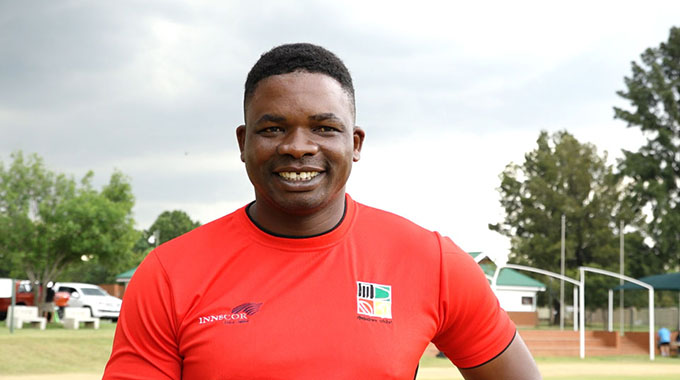
Eddie Chikamhi Senior Sports Reporter
FORMER Zimbabwe international cricketer, David Mutendera, says black players needed to be twice, as good as their white counterparts, for them to break into the Chevrons.
The details of a grim past of racism, in domestic cricket, are beginning to emerge.
Mutendera, a victim of the crooked system of the late ‘90s, had a promising career derailed despite the abundant talent which saw him make his Test debut at only 21.
For those who saw him in action, back then, there was no doubt he was one for the future, especially after setting himself up with that fine show during the 1998 ICC World Cup in South Africa.
But, it appears, the system did not just target him alone.
There were many black players — the likes of Trevor Madondo, Mluleki Nkala, and Moses Chitare — who many believe could have made it regularly into the team were it not for an unwritten code.
The code appeared to say that there should be not more than two players of colour, in the national team, at once.
Mutendera, who is now a Zimbabwe Cricket selector, opened up during a cricket podcast with Dean Du Plessis.
“I always wanted not to think that way, just because I was a non-white player, so I had to make way,’’ the 41-year-old said.
“But it looked like that way . . . To be honest with you, the only time I played with two non-whites, it was myself and a batsman.
“I was a bowler, as you know, and that time was when we played Australia, we had (a batsman) Trevor Madondo in and myself as a seamer.
“We never had an attack which had two non-white guys opening the bowling for Zimbabwe, which I always found strange and very disappointing.
“You knew that you were always fighting with another black person for a place in the team.
“So, I think, our selection (as black players) was based on one spot in the team. Disappointing, really, but such was the situation then.
“You couldn’t be vocal about it because you didn’t want to be victimised.
“But to be honest, it was devastating and frustrating. That’s why only a few of them (black players) made it then.’’
He said everything was just done quietly.
“There was no time where it was said we are going top pick (the squad) according to merit,’’ he said.
“If, it was going to be three black players forming the bowling attack for Zimbabwe, and two other batsmen, then it could have been fair.
“But, that’s how it was, it was difficult for us.
“Some people might think otherwise, but it was very difficult. We just had to be twice as good as the white players to actually make the team.
“Even in first class cricket, we had to take a lot of wickets. I had to make the World XI team for me to recognised, so that I could play for the national team.’’
He had caught the eye of the selectors at the 1998 World Cup, where he bowled his quickest, sometimes clocking 145km/hr.
Mutendera’s performances earned him a place in the tournament’s World XI that included future stars like Andrew Flintoff of England and West Indies’ great Chris Gayle.
But such were the depths of the racism in the Chevrons that, at one point, a senior white player threatened to boycott a match after Mutendera had been picked to make his Test debut ahead of his preferred choice.
This was to be his one and only Test for Zimbabwe.
“Sometimes, they played eleven white players in that team and you had guys, who deserved to be in there, sitting or carrying drinks.
“It’s disappointing, it was a tough world for us.
“Back then, I remember Trevor (Madondo) was one of the guys who could bat. There were quite a number of guys who could bat properly.
“There was a youngster called Alistair Maregwede, there was Shepherd Makunura, Moses Chitare.
“All those guys never got recognition because it was so tough breaking into that batting line-up because it was just reserved for the special boys.
“And, for us to even make that team, it didn’t go well with some certain players.’’
He still remembers the nightmare that came with his first Test.
“I can go back to my first Test; it was horrible. We had players not wanting to play because I was selected,’’ he said.
“There I was, as a 20-year-old having been picked by the selectors to play in a Test match, and then you have one senior player saying I am not playing because ‘why is David Mutendera being picked’?
“Because I am black? I have never mentioned this, but my Test debut was horrible.
“I actually don’t like to talk about it, but it’s something that’s always on the back on my mind.
“It’s a sad situation when you have players having a voice on who should be in the team, or threatening to boycott because a certain player of colour has been selected, and why is it that my buddy is not playing.’’
Twenty years later, the subtle effects are still being felt.
The issues of racism in cricket, which have also been hitting headlines in South Africa, have once again come to the fore.
But, unlike in South Africa, it seems Zimbabwe have managed to make great strides in addressing the racial issues.



 Online Reporter