

 admin
admin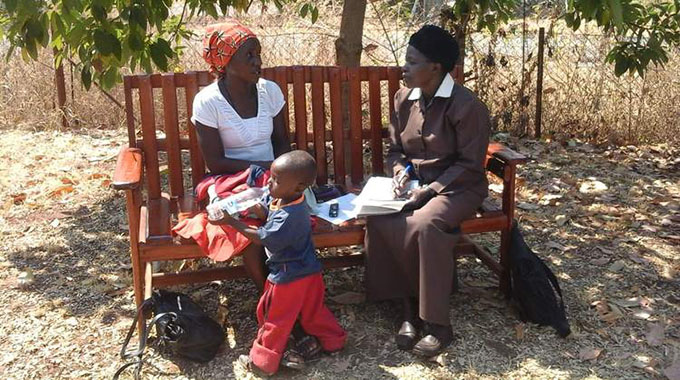
Ephephania Munetsi Correspondent
A psychological intervention aimed at addressing common mental disorders, has noticed a surge in cases of domestic violence since the advent of Covid-19 in Zimbabwe.
The Domestic Violence Act Chapter 5.16 defines domestic violence as any unlawful act, omission, or behaviour resulting in the death, or the direct infliction of physical, sexual, or mental injury to the victim.
Professor Dixon Chibanda, a psychiatrist, founded the Friendship Bench in 2006 after a mental health stakeholders’ meeting resolved to address increased common mental disorders among people seeking treatment at primary care clinics around the country.
The shortage of trained mental health personnel led to the founding of the Friendship Bench project.
He initiated the programme in Mbare, Harare, with a group of elderly women, locally-known as “Mbuya Utano.”
Sessions are usually conducted on a wooden bench within the clinic grounds; hence the name Friendship Bench.
The counsellor and the client sit down and hold a session.
Since then, the project has gained national and international attention.
From its humble beginnings in Mbare, the intervention is now being delivered by trained and supervised male and female lay health workers of all age groups around the country.
In 2019, the Ministry of Health and Child Care endorsed the Friendship Bench as a national programme.
I decided to carry out a study on the extent to which the lay health workers deal with victims of domestic violence.
The study sought to find out how Friendship Bench counsellors deal with domestic violence cases.
Nine older women who are part of the Friendship Bench lay health workers team took part in the study carried out in Harare.
These women were offered basic training in counselling to provide services to those who need them. The average age of the lay health workers is 58.
Those who took part have been working with the Friendship Bench since 2013. Findings from the study revealed that victims of domestic violence are mostly women aged between 17 and 35.
The lay health workers perceived domestic violence as misunderstanding or disagreement between couples or between family members.
The study also revealed that the types of domestic violence reported on the bench were economic, physical, sexual and emotional.
Financial issues, cheating, social media indiscretions, and alcohol and drug abuse were cited as the leading causes of domestic violence.
The study revealed that most of the perpetrators of domestic violence were men who had been unfaithful to their partners.
Mothers-in-law were also said to be perpetrators of domestic violence to their daughters or sons-in-law.
Although rare, men also reported being victims of domestic violence, with women being the perpetrators.
Because men are supposed to be the “stronger sex”, not too many of them come out in the open about being abused by their female partners.
The research also revealed that secrecy about male abuse was related to culture.
On the other hand, some women also said they did not feel free to report domestic violence.
Fear of getting divorced was given as a reason why some cases go unreported.
Some men are breadwinners; so women fear being forced out of the marital home if they talk about the abuse.
Also, there is stigma associated with being a single, divorced woman.
Some women lack support in reporting men to the police because of the sensitivity of the case.
At the same time, some fear that by involving the police, they may tear the family apart. In some instances, men discourage the discussion of the behaviour.
Consequences of domestic violence
Lay health workers reported that when one is a victim of domestic violence, their mind is heavily burdened, resulting in sleep disturbances.
Their concentration is affected, and they can easily neglect themselves. If one is on life-saving medication, they may skip taking their drugs or discontinue their treatment.
Their daily work may lag.
If someone is breastfeeding, breast milk supply or infant feeding may be affected, while some people may start to entertain suicidal thoughts.
All the consequences of domestic violence are mental health issues which call for mental health intervention.
Following these findings, the Friendship Bench provides counselling services for free as lay health workers intervene to help clients deal with their problems.
Cases of suicidal ideation are always dealt with successfully by trained Friendship Bench counsellors.
They also explore support networks within families and the community.
Case referrals to other service providers are also done. Ongoing counselling services and online services are being offered even during this time of COVID-19.
Ephephania Munetsi, one of the Friendship Bench Project Coordinators, is a Research Psychology intern. She holds an MPhil, and she is currently studying for a Doctor of Philosophy degree in Psychology. She has an interest in mental health and has been working in the field for more than 10 years.



 Online Reporter