Online Reporter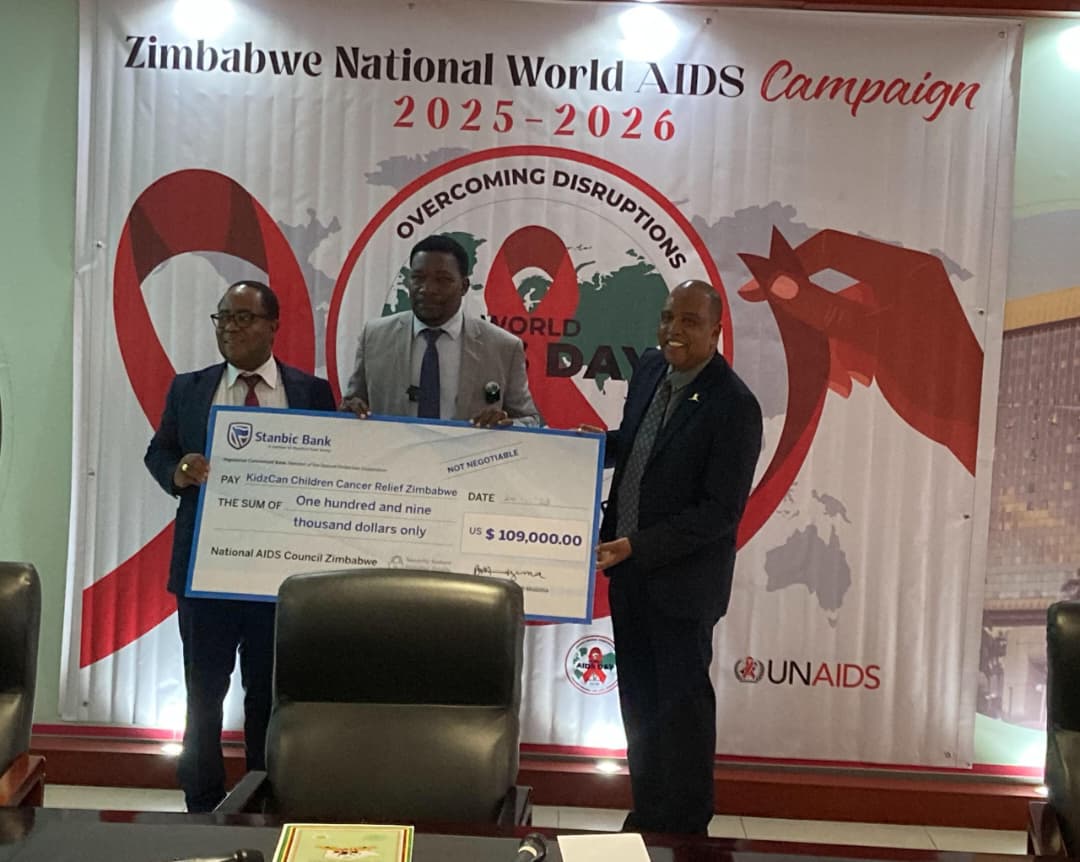
Ivan Zhakata
Herald Correspondent
THE National Aids Council (NAC) has committed US$109 000 towards supporting childhood cancer services in 2025, a donation KidzCan Zimbabwe said significantly strengthened treatment pathways, diagnostics and welfare support for affected children.
KidzCan executive director Mr Daniel McKenzie, addressing the Minister of Health and Child Care Dr Douglas Mombeshora, NAC leadership, partners and stakeholders in Harare, said the contribution will have a direct impact on the lives of hundreds of children battling cancer.
“The support from the National AIDS Council amounting to US$109 000 for 2025 is not simply financial, it is life-giving,” he said.
“It directly strengthens diagnostics, welfare support, transport assistance, food packs, counselling, and treatment pathways for our children.”
KidzCan supports around 700 children annually, although Mr McKenzie said the actual national burden was higher due to underdiagnosis and late detection.
He said each child represented a dream and a story that deserves a chance.
“Behind each number is a child with a dream, a family with hope, and a story that deserves a chance. Your partnership makes that possible,” he said.
Mr McKenzie said children living with HIV face a higher risk of developing cancers such as lymphomas and Kaposi sarcoma, making the integration of childhood cancer services into the national HIV response both strategic and urgent.
He said Zimbabwe’s strong HIV infrastructure — reliable laboratories, trained health personnel, established community structures and a resilient supply chain — positions the country to improve childhood cancer detection and care if leveraged effectively.
Zimbabwe is the fourth focus country under the WHO Global Initiative for Childhood Cancer, and the Ministry of Health and Child Care has applied to join the St Jude–WHO Global Platform for Access to Childhood Cancer Medicines. Mr McKenzie said these global alignments should prompt local system strengthening.
He urged the ministry to convene a national stakeholder strategy meeting to coordinate planning, assess gaps and establish systems that can support anticipated global assistance.
He also appealed for the appointment of a dedicated Childhood Cancer Focal Person within the ministry to drive national efforts toward the WHO target of a 60 percent survival rate by 2030.
Mr McKenzie further requested that NAC extend its support into 2026 to maintain momentum in early detection programmes, diagnostics support, paediatric training, family assistance and improved national data systems.
“These children cannot speak for themselves. It is our collective responsibility to speak — and act — for them,” he said.
He also called for childhood cancer to be formally included in the upcoming Zimbabwe National HIV and AIDS Strategic Plan (ZNASP 2026–2030), arguing that the clear link between HIV and childhood cancer justifies its integration.
Mr McKenzie said ongoing collaboration between the Government, NAC and partners remains crucial in ensuring timely and lifesaving care.
“Your leadership, commitment, and compassion give children with cancer the greatest gift — a chance to live,” he said.