Online Reporter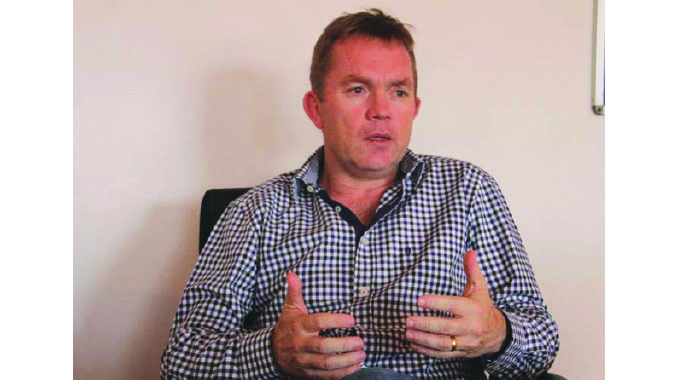
Prosper Ndlovu
FOLLOWING the commissioning of three new production plants by President Mnangagwa in Harare in May last year, National Foods Holdings Limited chief executive officer, Mr Mike Lashbrook, says the company is enjoying higher aggregate volume growth due to expanded capacity, which has positioned the business to substitute imports and shift focus to exporting.
President Mnangagwa led the commissioning of the new Pasta, Biscuit, and Cereal plants under a combined US$22,7 million investment. The significant investment represented a bold step toward enhancing the company’s offerings and advancing up the value chain in food production.
In an exclusive interview with Zimpapers on the sidelines of the ongoing Zimbabwe International Trade Fair (ZITF) 2026 in Bulawayo, Mr Lashbrook applauded enhanced Government support under the Second Republic and re-affirmed the company’s commitment to playing a key role in ensuring that Zimbabwe achieves food security, grow the economy and create jobs in line with Government’s Vision 2030.
“If you look at our aggregate volume growth over the last five years, maybe around 30-35 percent. We’re seeing decent growth in our overall volumes,” said Mr Lashbrook.
“We’re now kind of a year down the line. I’m very happy with the progress so far. I mean, I think, first of all, our market is vibrant. The economy is in a good state. We’re seeing a little bit improved consumer spending power, which is good. It’s benefiting these kind of products
“In general, overall Government support is excellent. As a broader company we invest heavily into corporate farming. We’re investing through the value chain to try and assist in the growth of local agriculture,” he said.
“We’ve seen, you would have seen the statistics, local agriculture is growing quite robustly, which is healthy. We’re looking forward to further growth. You know, we’ve got big ambitions to value add furthermore. Pasta and biscuits are value-adding locally made flour, which is from local wheat,” he added.
Investing in higher domestic industrial capacity has come in handy for Zimbabwe at a time when import-dependent developing economies are feeling the pinch from the adverse impact of geo-political disruptions such as the Russia-Ukraine war, and recently the United States-Israel war against Iran.
“I think given the situation in the Middle East, quite fortunate that we’ve done that because a lot of the spaghetti in this country is actually imported. So, it just gives us a bit more food security in the country as well. And we’re happy that line is running close to full capacity at the moment,” said Mr Lashbrook.
“The biscuit line is also going very well, pretty much running at capacity. Our Gloria Munchies is a new product in the market, but been very, very well accepted by the consumers and we’re actually looking now at further investments in biscuits,” he added.
“You’ve seen our breakfast cereals on display here, very wide range of breakfast cereals. Many of our cereals were previously imported into the country. So, we’re localising the production there, overall we’re very happy.
“We’re seeing the volumes coming through and people are eating the products, which is what we want and they’re appreciating the products and seeing the value,” said Mr Lashbrook.
“So, simplistically, we’re saying, why should we import finished product of pasta and pasta is basically flour and water. Let’s produce it locally. Let’s grow the wheat locally, mill it into flour and produce the pasta here. This is very interesting.”
The newly established facilities, which embodied a combined investment of $22,7 million, formed part of a larger $50 million capital investment strategy implemented over the past five years.
The development not only underscored National Foods’ commitment to innovation but also bolstered local agriculture by increasing the market for locally grown maize, wheat, and soya beans.
“What’s quite exciting is that now with the value addition, we have potential now to look at the region because these are products that attract a higher margin,” said Mr Lashbrook.
“Once we’re happy with how we’re servicing the local market, then we’ll look at exporting as well.”
He said the company was excited by the prospects of a bumper harvest as it speaks to domestic sourcing of critical raw material, adding that National Foods was already active in supporting farmers under contract farming arrangements.
“We love local agriculture because when we pay local farmers, they hire more people. They value add to the local economy. So, we’re always big supporters of local agriculture,” said Mr Lashbrook.
“That’s why we’re happy to see the improvement in local agricultural production that’s occurring. So, we’re looking forward to a decent maize crop this summer. The winter cropping is now on and, that’s going to be very important for us, as always that we produce a big wheat crop. Demand for wheat and flour products is going up. We’re looking forward to a decent wheat crop this year as well.”