Online Reporter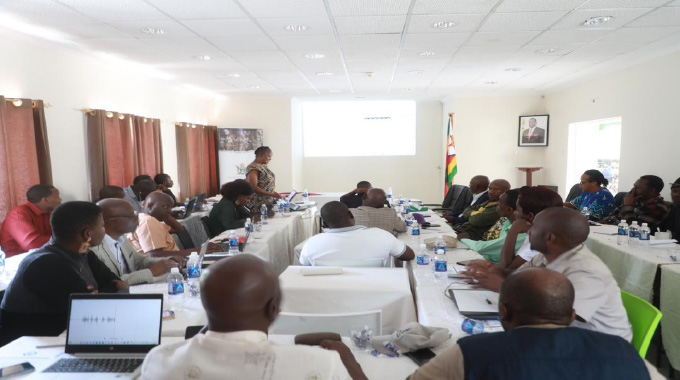
Peter Matika, Senior Reporter
THE Government has taken a major step towards strengthening the promotion, preservation and equitable use of the country’s languages after convening a national symposium in Bulawayo on Saturday to conclude the validation of the long-awaited National Language Policy.
The meeting, which was spearheaded by the Ministry of Sport, Recreation, Arts and Culture, brought together a spectrum of stakeholders, including academic experts, traditional chiefs, cultural practitioners and representatives of language associations.
The symposium marked the final stage in a nationwide consultative process aimed at ensuring that the forthcoming policy reflects the linguistic realities and aspirations of all Zimbabweans.
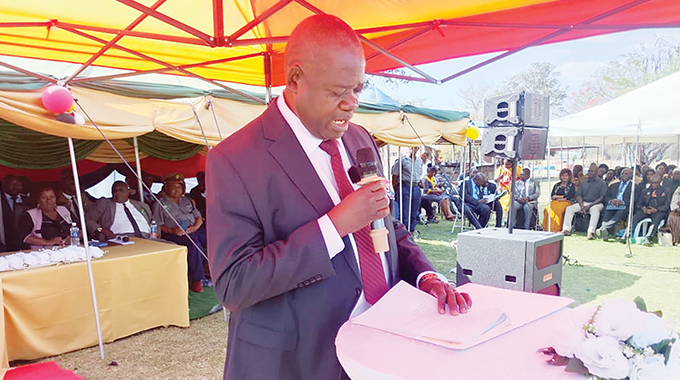
Speaking at the sidelines of the event, the Permanent Secretary for Sport, Recreation, Arts and Culture, Mr Nicholas Moyo, said the Government remained committed to safeguarding cultural identity while fostering inclusivity across all sectors.
He said that the development of a comprehensive language policy was essential for promoting national unity, strengthening local languages, and reinforcing their use in education, media, governance and public life.
“We are trying to come up with a language policy that will encompass all aspects. The policy has come up with three major pillars, the first one being identity. This clearly shows who you are and where you are from; it is quite important. We want to ensure that this is clearly discussed and adjudicated,” said Mr Moyo.
“The second one is unity. Language unites people. It is unfortunate that the colonial regime separated the people through languages. People were separated on the basis of language, and we are saying as Government we want to turn this around and unite our people.”
He said the last pillar being focused on is heritage.
“Language should be used for posterity and we will fight against the extinction of languages, especially the language spoken by the San community. These are some of the key pillars we want to use to complete this policy,” he said.
Traditional leaders who attended the meeting applauded Government for recognising their role as custodians of culture and language.
They emphasised the importance of protecting minority languages and urged for adequate resourcing to support documentation, teaching and community-based language promotion programmes.
““As traditional leaders, we applaud Government for recognising our role as custodians of culture and language. It is crucial that minority languages are protected, and we urge that adequate resources be channelled towards documentation, teaching, and community-based language promotion programmes,” said Chief Sangulube of Mangwe District.
Academic specialists and language associations echoed similar sentiments, stressing the need for a policy anchored in research, practicality and equal representation.
They highlighted that proper implementation would require collaboration between Government institutions, communities and learning institutions.
“As academic specialists and language associations, we strongly believe that this national language policy must be anchored in solid research, practical application and equal representation for all communities. Only then can it genuinely serve the linguistic needs of our nation,” said Mrs Moreta Dube, the National Chairperson for the Zimbabwe Indigenous Languages Promotion Association (ZILPA).
The validation symposium also reviewed feedback gathered from provincial consultations held over recent months.
Delegates agreed that the proposed policy provides a solid foundation for strengthening linguistic diversity, but called for clear implementation mechanisms and monitoring frameworks.
Mr Moyo said the next step would involve final technical adjustments before the policy is submitted to Cabinet for approval.
Once adopted, the National Language Policy is expected to guide Government and public institutions on official communication, curriculum development, translation services, cultural preservation and the status of all officially recognised languages.
Stakeholders expressed optimism that the policy will usher in a new era where every Zimbabwean language enjoys recognition, support and visibility.