

 admin
admin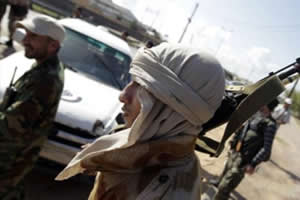
NATO member-states including American, French and British SAS units known locally as “disappearance squads”.
Those increasingly being targeted by “disappearance squads” are family members and associates, even former domestic employees such as gardeners, handymen, and household staff of Colonel Gaddafi’s affiliates.
Torture has become the normal means to elicit information regarding the whereabouts of individuals thought to still be supporting the former government.
Interim leader Mustapha AbdulJalil said Sunday that the NTC intends to disarm militias still roaming the country and skirmishing with each other, but that first the government needs to be able to offer alternatives – jobs, education, and training, the Associated Press reports.
There have also been clashes in Tripoli between fighters from the coastal city of Misrata and Zintan, which has developed a particularly bad reputation for fighting.
Zintanis have also clashed with local Tripoli brigades.
According to a Christian Science Monitor report from Tripoli, Misrata fighters feel “accountable to no one, not even the country’s interim government,” because of how much they suffered during the siege.
They say they’ve earned the right to do what they like, and are showing some disturbing tendencies distinctly at odds with the pro democracy aspirations voiced by Libyans.
For instance, the men from Misrata have unilaterally declared that the inhabitants of Tawargha, a mostly black neighbouring city where many people stayed loyal to Col Gaddafi, will not be allowed to return.
Fighters from Misrata have chased the residents of Tawargha all over Libya, arresting them in refugee camps and jailing them in Misrata. Last week, they began burning houses in Tawargha to make sure that nobody returns.
Efforts to persuade militias to disarm have so far been mostly futile. Many fighters say they don’t mind giving up their weapons, but can’t do it unless rival militias agree to as well, creating a never ending cycle of militias waiting for each other to make the first move.
A Western official told the Washington Post that the infighting raises concerns that there is no common goal in Libya now that Gaddafi is gone.
Meanwhile, Niger’s President Mahmadou Issoufou said last Friday he had granted Muammar Gaddafi’s son Saadi asylum on humanitarian grounds but did not know the location of another fugitive son Saif alIslam, South African media reported.
The announcement will strain already troubled relations between Niger and Libya’s interim rulers, who overthrew Muammar Gaddafi after an eight month uprising and want both sons to stand trial for alleged atrocities.
Saadi, a businessman and former professional footballer, is in Niger after escaping across the border from Libya when National Transitional Council forces captured the capital Tripoli in August.
“We have agreed on granting asylum to Saadi Gaddafi for humanitarian reasons,” the South African Press Association (SAPA) quoted Issoufou telling a news conference at the end of a twoday visit to South Africa.
Interpol has issued a “red notice” requesting member states to arrest Saadi with a view to extradition if they find him on their territory.
Libya’s interim justice minister questioned Niger’s grounds in granting asylum on humanitarian grounds, saying it was usually given to people facing persecution in their own country. www.newvision.co.ug/Counterpunch/ nation.com.pk/Christian Science Monitor.



 Online Reporter