Gibson Nyikadzino
WHEN the West brings goods to Africa, it is premised as a “free trade” transaction, but when China does the same, it is framed as engaging in “unfair trade” practices.
For Africa to have its goods in Western markets, it is given a “free quota” because other sectors are protected for locals.
Ultimately, it is about ownership of the means of production and value chains to keep economies vibrant, diversified and transformative.
Africa’s development should follow a transformative path. There are two choices: quick money for the Treasury or the establishment of structures that provide more durable returns. The political dynamics of resource extraction are seductive because they bring quick money.
However, the economics of value addition are transformative, a little slower, but the best alternative.
The latter is the way out for the continent’s development.
Africa’s richest man, Mr Aliko Dangote, whose US$1,63 billion initial public offering (IPO) for
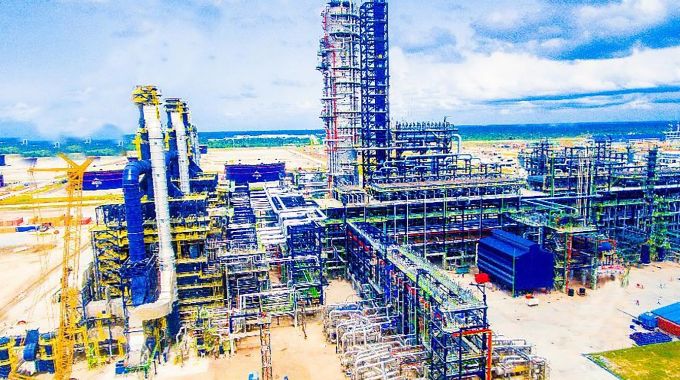
Dangote Petroleum Refinery and Petrochemicals FZE is being handled by Zimbabwean financial advisory firm Bard Santner Inc, recently broke ground for a US$16 billion oil refinery project in Lamu, Kenya.
Mr Dangote’s oil refinery project provides insights into Africa’s inability to transform its goods for the available market despite the abundance of resources.
The first lesson from Mr Dangote’s investment in Kenya is that Africans should not continuously choose the seductive option.
Transformative development means the adoption of a systemic, long-term process that moves communities and societies beyond the status quo of economic growth towards holistic, equitable and self-sustaining change using available resources.
In many sectors that underpin economies, Africa holds vast natural resources. There is arguably no other continent with such a concentration of natural resources.
Projections in the agriculture sector indicate that Africa holds at least 65 percent of the world’s uncultivated arable land, giving it the capacity to feed more than nine billion people, or over 60 percent of the global population, by 2050.
It is also believed that Africa has an estimated 30 percent of the world’s critical minerals, which are crucial for modern technology, economic development and national security, particularly weapons production.
The continent contributes at least 75 percent of global cobalt production and about 62 percent of manganese, vital critical minerals used globally in high-tech batteries, heavy industry, aerospace and metallurgy.
In the energy sector, Africa’s natural gas and oil deposits, accounting for about nine percent of global reserves, can help meet the continent’s energy needs.
It should also be recalled that over the last decade, nearly 40 percent of all new global natural gas discoveries were made in Africa, particularly in Mozambique, Tanzania, Senegal and Mauritania.
What this means is that Africa has many of the resources required to feed and power itself, while its 1,4 billion people also constitute a substantial market. While these African resources should first benefit locals, there are those with a predatory and exploitative mindset, who have always believed that they have the right to come and exploit these resources, ship them to their countries and benefit their manufacturing sectors.
It is through this desire for exploitation that attempts have been made to explain the phenomenon through the “world systems” theory, in which Africa’s resources, located in the “periphery”, enrich countries at the “core”.
Core countries, which are highly industrialised and technologically advanced, seek a systematic supply of cheap raw materials and natural resources, agricultural commodities and low-wage labour
to keep their manufacturing hubs running.
To enhance the exploitation of the periphery, there has also been an emergence of investors backed by these governments.
This creates unequal global markets in which the periphery is structurally bound to the core through uneven exchanges.
There is nothing wrong or inappropriate with African governments doing the same — creating and supporting competent men and women with business acumen to lead investments in critical sectors that serve national and continental markets, instead of merely boasting about natural resource abundance.
Resource abundance does not, in itself, make domestic processing competitive.
Having an abundance of cocoa, gold, oil or critical minerals that are not transformed first for national and then African markets is like taking satisfaction in the aroma of food that one is not going to eat.
What Mr Dangote’s oil project is pointing to in Kenya is what Zimbabwe has been saying for years: there should be local entrepreneurs investing in critical sectors to satisfy the local market through value addition and beneficiation of local resources.
This is a strong lesson that processing Africa’s natural resources is not a single policy lever, but a process requiring coordination across production, firms, State institutions and buyers.
Prosperity is forged
Of importance is for Africans to understand that natural resource wealth alone does not guarantee prosperity.
The United Nations Conference on Trade and Development (UNCTAD) reports that about 60 percent of exports from nine out of 10 African countries consist of unprocessed commodities such as minerals, oil and raw agricultural goods. Some independent observers say this could be even higher, at up to 70 percent of resources being traded without local beneficiation.
What has to be done in Africa is to avoid allowing extractive industries to dominate economies, as they can distort them in dangerous ways and disadvantage other key sectors such as manufacturing and agriculture.
Accepting large foreign capital inflows, particularly from mining or oil revenues, can often cause local currencies to appreciate — a phenomenon economists call “Dutch disease”.
These estimates tell a story of an Africa where there is an asymmetry of attention between resource extraction and manufacturing.
This is one of the continent’s deep economic challenges. The transformation of Africa’s natural resources so that they feed into key supply chains requires years of patient national policies and investment in logistics, power and skills.
Transformative development has to be forged through the establishment of durable value addition, dependent on building firm capabilities, reliable input supplies, infrastructure, skills and market access, with linkage strategies tailored to each sector and country.
There should be deliberate measures to establish a sequenced manufacturing policy that prioritises supplier development, skills, infrastructure, finance and market-building over blanket beneficiation targets.
This might take time, but it is the most durable way to build transformative development initiatives rather than relying on the seductive quick-money approach.