Chronicle Editor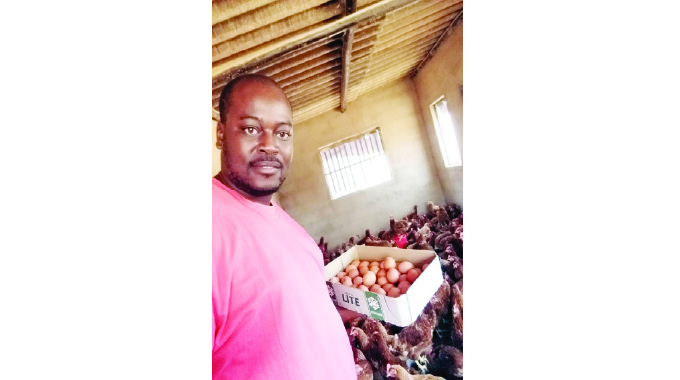
Mthabisi Tshuma, in Ndolwane, Bulilima
A POULTRY farmer in Ndolwane Village, Bulilima District, Mr Mthokozisi Ndlovu has established a large-scale poultry production business and seeks to expand it market footprint to urban markets.
Being located in remote area could not stop him from investing in the business, which rears layer chickens at his rural home where the dozens of eggs are already being sold to locals.
Having started the business in July 2019, he says the success achieved so far empowers him to invade the large city market.
He said he embarked on the enterprise after seeing a gap in poultry farming.
“I realised that most people in our village were doing broiler chicken production so I decided to try something different and also observed the demand for eggs was high,” he said.

“I supply the Ndolwane community, surrounding areas and sometimes even up to Plumtree Town.”
Mr Ndlovu said his output was hovering around 200 eggs per day.
“On a good day, my eggs output production is seven crates daily, which amounts to 210 eggs.
“My goal is now to try it on a larger scale so as to meet the ever-increasing demand,” he said. “This is because I was also inspired by a project I saw on social media in uMzingwane District being done by Mpilo Royal Farming.
“I really wish to physically visit the place so I could learn a lot from the guys there and to also get a loan to expand my production.”
Mr Ndlovu said he wants to take advantage of the bumper harvest recorded by Zimbabwe this year, to scale up production.
Economic experts have also projected that the successful cropping season would impact positively on poultry production as it means improved availability and competitive pricing of stock feed, which is a major input for poultry farming.
Already, official estimates indicate the country’s poultry industry is projected to grow by five percent to 156 078 tonnes this year.
This will be a notable improvement considering that poultry output is said to have declined in 2020.
The drop in output in recent years was attributed to viability challenges emanating from high cost and low availability of stock feed, low demand as well as the disruptions in supply chains for breeding stock.
According to the Mid-Term Budget Review Statement presented by Finance and Economic Development Minister, Professor Mthuli Ncube last week, day-old chick production decreased by 2,5 percent from 73,4 million in 2019 to 71,4 million last year. — @mthabisi_mthire.



 Online Reporter