Online Reporter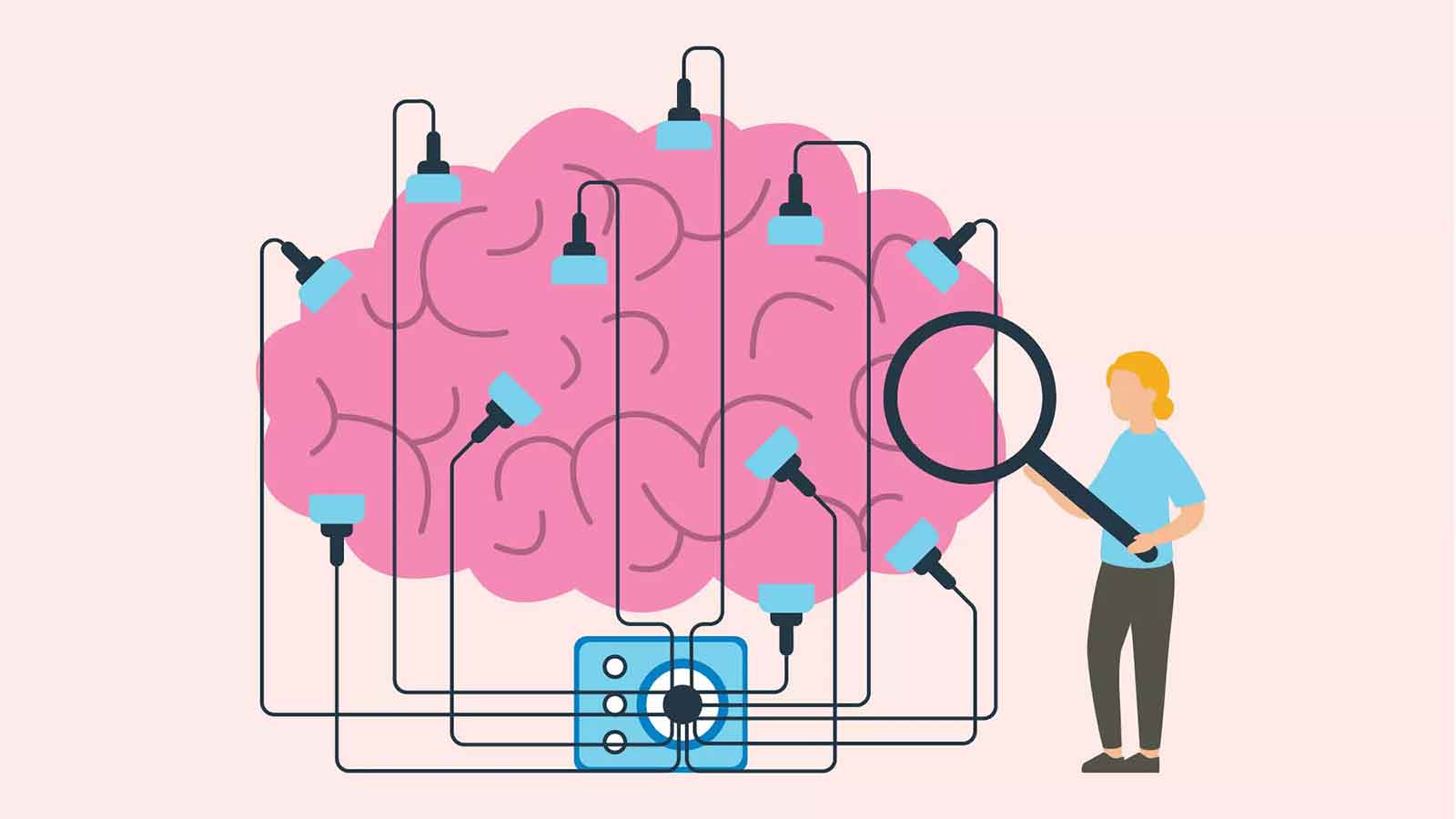
Macdonald Nhakura
The mind that God gave you is not set in stone — it is soft clay. For the disabled, the visually impaired, the childless and the broken-hearted, and for anyone the world has counted out, the science of the changing brain and the Scripture of the renewed mind carry the same message: whatever you face, you can rewire, refocus, and rise.
“One of the greatest discoveries a person can make, and one of the greatest surprises, is to find that they can do what they once feared they could not do.”
Those words are attributed to the industrialist Henry Ford. Scripture had said something bolder centuries before: “I can do all things through Christ which strengtheneth me” (Philippians 4:13).
Between the observation and the promise sits a single liberating truth you are not stuck with the person you were yesterday.
I have watched that truth change lives. It is a truth our nation has embraced at the highest level.
President Mnangagwa, has repeatedly declared that in Zimbabwe’s development journey, no one and no place shall be left behind — a philosophy of inclusivity that summons every citizen, whatever their circumstance or limitation, aboard the national drive toward Vision 2030 and an empowered upper middle-income society.
The same conviction breathes through the Education 5.0 framework, whose heritage-based pillars of teaching, research, community service, innovation and industrialisation are already yielding visible achievements — innovation hubs, industrial parks, and home-grown solutions — all built on the belief that every mind can learn, create and contribute. What the President proclaims for the nation, neuroplasticity confirms for the individual brain: no one is beyond renewal, and no one should be written off.
I have seen this inclusivity at work in the lives of persons with disabilities — men and women once pushed to the margins of education and employment who, given access, assistive technologies and the dignity of opportunity, have risen to excel as scholars, innovators, artists and leaders.
Encouragingly, libraries in Zimbabwe have already begun the drive towards this inclusivity. In support of the Ministry’s thrust that learning must be open to all and hindered by nothing, university and public libraries are introducing assistive technologies that welcome marginalised groups into the national learning journey: screen readers such as JAWS and NVDA,
Braille embossers, refreshable Braille displays, DAISY audio books and screen magnification software for the blind and visually impaired; hearing loops, captioned digital content and sign-language-supported services for the deaf and hard of hearing; and text-to-speech tools, speech-recognition software and accessible workstations for persons with physical and learning disabilities.
Their circumstances did not change first; their minds did. They were not handed new brains. They learned to rewire the ones they had. There is a name for that capacity, and every person reading this article possesses it.
Your brain is not hard-wired, it is soft clay
Neuroplasticity. The word sounds clinical, but its meaning is deeply human. Neuro refers to the brain and its cells; plasticity comes from the ancient Greek plastikos, meaning able to be shaped or moulded. Put them together and you have this remarkable fact: your brain is less like a fixed machine and more like clay.
Just as clay can be bent and reshaped without breaking, your brain can adapt and rewire without losing itself. It reshapes every time you learn something new, form a memory, live through a new experience, or even recover from injury.
Consider the scale of it. The human brain holds an estimated 86 billion neurons, connected to one another like an endless network of roads. Every time you learn something new, you lay down a new road. Every time you repeat a habit, you widen it into a highway.
This is not motivational poetry; it is established neuroscience. Researchers have even found that the brain can continue to produce complex electrical activity for a short time after the heart stops — the capacity for change runs that deep. To me this is no accident of biology. It is a gift from God, wired into us so that no season of life need be our last.
“And be not conformed to this world: but be ye transformed by the renewing of your mind, that ye may prove what is that good, and acceptable, and perfect, will of God.” — Romans 12:2 (KJV)
That verse, written long before neuroscience had a name for it, describes the very thing the laboratory now confirms. Transformation comes by the renewing of your mind.
The brain can be renewed; therefore the life can be renewed. Scripture returns to the theme again and again: “And be renewed in the spirit of your mind” (Ephesians 4:23); “though our outward man perish, yet the inward man is renewed day by day” (2 Corinthians 4:16). The renewal of the mind is not a modern discovery. It is an ancient instruction.
Peel off the label, and re-label the brain
I often invite an audience to try a small exercise. Imagine three sticky notes pressed to your forehead, each bearing a word: FEAR, FAILURE, TOO LATE. Now peel them off, one by one, and replace them: COURAGE, LESSON, NEW START. That simple act of relabelling is neuroplasticity in miniature.
You are not denying your history. You are giving your brain a new instruction about what that history means — and the brain, listening, begins to build the road you have named.
The cost of a mind that will not turn
I must be honest, because this message is not merely sentimental. There is a cost when the mind cannot, or will not, rewire. We have all seen the headlines that arrive too often in our newspapers: a person crushed by a setback — a business collapse, a broken marriage, a job lost, a debt that would not relent — who, unable to reframe the challenge, turns to violence against a spouse and children, or against themselves, before the story ends in a courtroom or a graveyard.
I will name no one, out of respect for the grieving. But we know these tragedies are real, and they are not rare.
I raise them not to shame anyone, but to state plainly what is at stake. Behind almost every such tragedy is a mind that became trapped on a single road — a road marked hopeless — and could see no way to build another. That is precisely the road neuroplasticity, and the renewing of the mind, exist to reopen. The point is not that rewiring is easy in the depths of despair; it is that another road is always possible, and that no one should have to search for it alone. If you are carrying that kind of weight tonight, reach for help — a trusted friend, a pastor, a counsellor, a doctor. Renewal is real, but it is rarely travelled in isolation.
“For every challenge you face, you must rewire the brain and refocus. The road marked hopeless is never the only road.”
A word to those the world pushes to the margins
I have seen the changed mind at work most vividly in the very people society is quickest to write off. Let me share a few stories, because the world is fond of drawing final lines under people, and I have learned that what it calls the end of the road is very often the beginning of a new one.
- Childlessness is not the end of the road
Consider Mother Teresa. She bore no biological children, yet she became a mother to millions, redirecting her whole life into the care of the abandoned and the parentless. She rewired her focus, and built a philosophy of love out of what others would have called a lack.
This one is personal. My wife and I waited three years for our first child, and society was not gentle in that season. The jokes were cruel; my wife was mocked, and I too was ridiculed in certain circles. We had a choice: let those words define us, or rewire our thinking and redirect our focus toward purpose and growth. We chose to rewire, and we let go of the stress those words were designed to plant. Today, by God’s grace, from an empty nest, I am the proud father of four. My eldest is a thriving music icon on a full scholarship in the United States and people say he has my nose, my height, and my head; we look like identical twins. When God says yes, surely nobody will say No!!We defied all odds and kept and rewired our minds to focus on something different and in God’s time, our story was completed.
- Blindness is not the end of the road
The evidence here is overwhelming, at home and abroad. Zimbabwe’s own Paul Matavire, the legendary “Dr. Love,” lost his sight at the age of six to glaucoma and became one of the most decorated musicians this nation has produced. In South Africa, the icon Steve Kekana lost his sight at five, also to glaucoma, and went on not only to a legendary music career but to qualify as an advocate and lecture in law at a university.
In America, Stevie Wonder, blind from infancy, had mastered the piano, harmonica and drums by the age of nine and became a global legend. And the gospel songwriter Fanny Crosby, blinded within weeks of birth by a medical error, rewired her gift toward composition and wrote more than 8 000 hymns, among them “Blessed Assurance.” Their sight was gone; their genius was not. Their brains rewired, and limitation became a launch-pad.
I saw the same truth up close in my friend a professor by profession, who is visually impaired.
We were classmates at university, and I recently met him again at a workshop on assistive devices. In our student days he used to joke that his senses were so sharp he could tell exactly where the most beautiful lady was seated in the lecture room, and who was the best-dressed.
In debate he was unstoppable, quoting facts and figures from the day’s newspapers faster than any of us could answer. One day I asked him his secret. “My friend,” he said, “I use something divinely designed — it is called neuroplasticity.”
The science bears him out. Sighted people take in roughly 80 percent of their information through the eyes, and the remainder through hearing and action. But when one sense is limited, the brain does not simply accept the loss — God compensates, and it rewires, so that the remaining senses sharpen and the mind grows deeper. Hearing becomes finer, touch more discerning, memory more powerful. “You can’t match that,” Darlington warned me with a grin — and he was right.
- Kindness rewires two lives at once
Neuroplasticity works through kindness, too. Many years ago a poor boy went door to door selling goods to pay his school fees. Hungry and down to his last coin, he knocked on a door meaning to ask for a meal, but lost his nerve when a young woman opened it, and asked only for a glass of water.
Seeing the hunger in his eyes, she brought him a large, cold glass of milk instead, and asked for nothing in return. He drank it, thanked her, and went on his way.
Thirty years later that woman fell gravely ill and was sent to a city hospital, where a specialist was called for her rare case. When he heard the name of her home town, something stirred: he recognised the woman who had once shown a starving boy an unearned mercy.
The doctor — Howard Kelly — fought for her life through many days and nights, and she recovered. Terrified of the bill, she opened the envelope with shaking hands, and found written across it in the doctor’s hand: “Paid in full — with one glass of milk.”
That woman had wired a pathway of kindness; that boy had wired a pathway of gratitude. Both roads, laid down decades apart, met again to save a life.