Online Reporter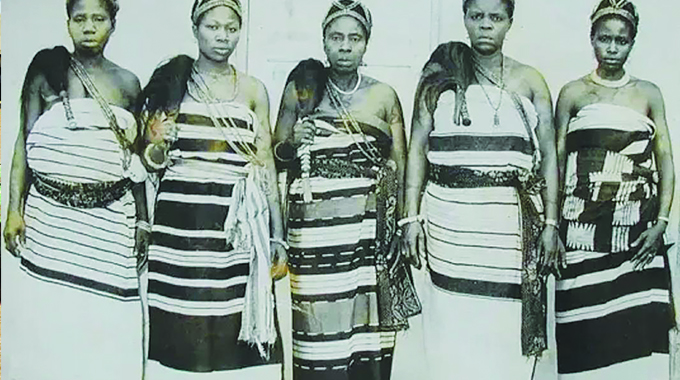
FOR centuries, women have fought for equal rights, opportunities, and freedom. From the suffragists to digital activists, each generation has pushed boundaries, shattered barriers and refused to step back.
Behind every policy change and legal victory there have been fearless feminists organising, protesting and demanding action.
The world today is more equal for women and girls than ever before — but progress is still too slow, too fragile, and too uneven.
Every 10 minutes, a woman is murdered by someone in her own family. Women’s representation in the labour force has remained unchanged for decades. Women and girls contribute the least to climate change and yet suffer the worst consequences. And at this pace, a girl born today will be 40-years-old before women hold as many seats in parliament as men.
In 1995, world leaders committed to gender equality with the Beijing Declaration and Platform for Action, a ground-breaking plan that set bold goals for women’s rights. Two decades later, the Sustainable Development Goals (SDGs) reinforced that commitment with a looming 2030 deadline.
We cannot afford any setbacks. We cannot wait another 30 years to fulfill the pledge for equality. 2025 is our turning point — starting March 8, International Women’s Day, we march forward for ALL women and girls.
Timeline of women’s rights from 1848 to 2025
1848 — The movement to claim women’s rights takes off
At the Seneca Falls Convention in New York, Elizabeth Cady Stanton and Lucretia Mott demand civil, social and political rights for women. It’s a gender equality milestone when they declare: “We hold these truths to be self-evident: that all men and women are created equal.”
1851 — Sojourner Truth demands inclusion
Sojourner Truth, a formerly enslaved woman, delivers her powerful speech “Ain’t I a Woman?” She goes down in history by testifying firsthand to how women may experience gender discrimination differently.
1893 — Women in New Zealand trigger a global quest to vote
New Zealand becomes the first country to grant women the right to vote. It inspires a global suffrage movement advancing women’s rights and paving the way for more just and democratic societies for everyone.
1911 — A million people mark the first International Women’s Day
On March 8, across Europe, over one million people mark the first International Women’s Day by protesting for women’s suffrage and labour rights.
1929 — Nigerian women riot for tax relief
Thousands of Igbo women rise up against colonial rule by singing, dancing, banging on their walls and even tearing down roofs. Their actions force authorities to end unfair market taxes.
1945 — Irish laundresses work hard, strike hard
Tired of unhealthy work conditions, low wages and limited leave, around 1 500 unionised laundresses go on strike. Commercial laundries get hit, and the strike ends in victory for all Irish workers, who gain a statutory second week of annual holidays.
The United Nations is born — with a demand for equality. During the founding of the United Nations after World War II, women delegates push to enshrine gender equality in the founding Charter, which recognises the “equal rights of men and women”.
1946 — The UN Commission on the Status of Women is born
One of the first steps of the new United Nations is to form the Commission on the Status of Women. The first global intergovernmental body entirely dedicated to gender equality, it still shapes women’s rights policies today.
At the inaugural session of the UN General Assembly, Eleanor Roosevelt famously reads an “open letter to the women of the world”, urging increased involvement of women in national and international affairs.
1948 — A first in human history: The Universal Declaration of Human Rights
The declaration famously states that fundamental rights belong to everyone — including all women and girls. It marks the beginning of activism calling upon duty bearers for upholding agreed human rights standards and ending all forms of discrimination.
1970 — Women unite at the First World Conference on Women
Held in Mexico, the conference is a galvanising moment, linking women’s movements from around the world and ramping up global discourse on women’s rights. 1970 also marks the first International Women’s Year and the first UN Decade for Women.
1972 — Unpaid care work gets political
Feminists launch the International Wages for Housework campaign, pushing for recognition of women’s unpaid care work. Activists argue that women’s domestic and care work should be rewarded like any other job — with a paid salary.
1979 — Cedaw becomes the women’s bill of rights
Pushed by the increasingly global women’s movement, the United Nations General Assembly established the Convention on the
Elimination of All Forms of Discrimination against Women. Countries that ratify it – 189 so far — are legally bound to end discrimination against women in public and private life, including through domestic laws.
1981 — A global cry to end violence against women
Honouring the Mirabal sisters, activists from Latin America and the Caribbean declare November 25 a day to call for ending violence against women. In 1999, the United Nations formally designates it as the International Day for the Elimination of Violence against Women.
1991 — 16 Days of grassroots activism to end gender-based violence goes global
What starts as a grassroots initiative in 1991 is now one of the most widespread campaigns. Launched by the first Women’s Global Leadership Institute, 16 Days is observed every year, in every corner of the world, from 25 November to 10 December.
1994 — The Cairo Programme of Action: our bodies, our choices
Feminist activists successfully press for governments to agree to end coercive population targets, such as sterilisations and restrictive birth quotas, at the International Conference on Population and Development. Its historic recognition of sexual and reproductive health and reproductive rights remains a touchstone today.
1995 — The Beijing Platform for Action maps a plan for gender equality
The Fourth World Conference on Women produces the most ambitious blueprint ever to achieve the equal rights of ALL women and girls, outlining 12 critical areas for action.
2000 — First UN Security Council Resolution on Women, Peace, and Security
For the first time, in resolution 1325, the United Nations formally recognises that war impacts women differently. It calls for women’s meaningful participation and leadership in peace and security efforts.

2003 — A mass action for peace ends Liberia’s civil war
Liberian women refuse to endure another moment of a 14-year civil war. They use sex strikes and sit-ins to press for successful peace talks. Not only does the war end but Liberia elects Africa’s first woman Head of State, Ellen Johnson Sirleaf.
2010 — UN Women becomes the global champion for gender equality
UN Women’s creation from four separate UN bodies gives the United Nations a strong, unified voice for ALL women and girls. UN Women advances international standards, coordinates with the entire United Nations system on gender equality and takes actions transforming the lives of women and girls everywhere.
2013 — Malala Yousafzai wakes up the world
After surviving a brutal attack in Pakistan, schoolgirl and education activist Malala Yousafzai marks her 16th birthday by bringing her passion for education for all to her first public appearance at the United Nations.
2015 — Gender equality is placed at the heart of the SDGs
World leaders agree on a plan for global progress through 2030: the 17 Sustainable Development Goals. The fifth goal is to achieve gender equality, which also underpins the success of all the others — from the economy to food security, health, climate action, peace and more.
2017 — #MeToo breaks the silence on violence
Women around the world take to social media and then the courts to expose patterns of abuse across industries and sectors and demand accountability. Numerous mass uprisings protest the gang rape of a student in India, femicides across Latin America, and the kidnapping of almost 280 schoolgirls in Nigeria, among others.
2022 — Equal pay for equal play
The US National Soccer Team finally secures pay parity after a long legal battle, adding to a series of moves to rectify pay disparities in sports globally. Until today, they remain one of the few exceptions. Out of the 100 highest paid athletes in the world in 2024, none are women.
2023 — AI enters the mainstream. So do calls to correct its biases
Excitement about the potential of AI is overshadowed by its gender biases. AI experts and human rights leaders begin urging greater awareness and action to counter bias so that technologies benefit all and do not perpetuate gender discrimination and violence.
2024 — Shame must switch sides
When Dominique Pelicot from France is convicted of drugging and raping his wife over nine years, Gisele Pelicot makes history by refusing anonymity. “It is not bravery,” she says, “It is will and determination to change society.” Her boldness sparks a global call to shift the shame from survivors to perpetrators. — unwomen.org