Online Reporter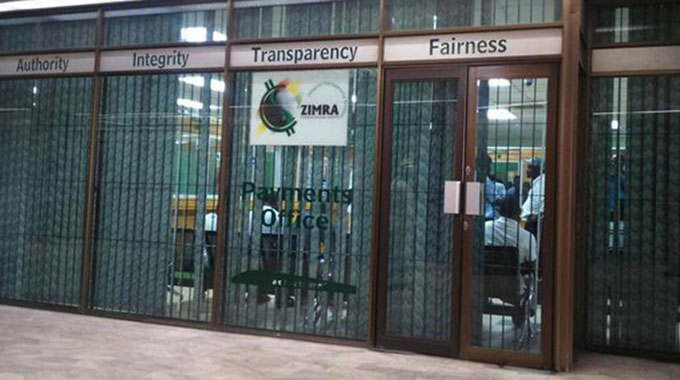
Godfrey Nyoni
GOVERNMENT services, from getting a birth certificate to paying tax or applying for a passport, affect everyone.
In Zimbabwe, many of these services are still slow, manual and difficult to access.
People often spend hours in long queues, important files go missing and simple processes take weeks or months.
This obviously wastes time, increases costs and reduces public trust in institutions.
Around the world, governments are now using artificial intelligence, or AI, to improve how public services work.
The question is whether Zimbabwe can use AI to make public services faster, fairer and more efficient while also protecting citizens from new digital risks.
AI in government means using computer systems that can understand data, recognise patterns, answer questions and automate routine tasks.
Instead of staff checking every form by hand, AI systems can help sort information, detect mistakes and highlight suspicious activity.
AI does not replace public servants but supports them by reducing repetitive work and allowing them to focus on important decisions.
In areas such as tax collection, health services, land records and social welfare, AI can improve speed and accuracy if it is used properly.
Long waiting times are common in registry offices and councils because processes depend on paper files and manual checking.
Paper records can be lost, damaged or changed without detection.
Data is often stored in different places and cannot be easily shared between departments. Corruption and favouritism also thrive in systems that are slow and opaque.
When people do not know how long a process should take, or why it is delayed, trust is lost. AI can help by processing applications automatically, reducing human error and creating digital records that are easier to track and audit.
One major area where AI can improve services is faster processing of applications.
AI systems can check forms for missing information, verify basic details and group similar cases together.
For example, in tax administration, AI could help Zimra analyse returns, detect errors and identify unusual patterns faster than manual methods.
In passport and national ID offices, AI could be used to pre-check applications and flag problems before people even arrive at the office.
This would reduce queues and make services more predictable.
Over time, this would save both citizens and Government workers many hours.
Another important use of AI is in providing information to the public.
Many people visit Government offices only to ask simple questions such as which documents are needed, where to apply or how much a service costs.
AI chatbots can answer these questions through websites, mobile apps or WhatsApp.
A health ministry chatbot could tell people where the nearest clinic is, what time it opens or when vaccination campaigns are running.
A council chatbot could explain how to pay rates or apply for permits.
This reduces pressure on offices and makes services available even after working hours.
AI can also help fight fraud and corruption by analysing data patterns.
If a system notices that one official approves far more applications than others, or that payments are being sent to the same account repeatedly, it can raise an alert.
In procurement, AI can help detect fake suppliers, duplicate invoices and inflated prices.
In social welfare programmes, AI can help identify fake beneficiaries or repeated claims using the same identity.
These tools do not replace investigators, but they help focus attention on high-risk cases and improve transparency.
Better planning is another benefit of AI.
By analysing data from hospitals, schools, councils and population records, AI can help Government understand where services are most needed.
If data shows rising malaria cases in a certain district, the health ministry can send more medicine and staff to that area.
In education, AI can help identify where teacher shortages are growing or where new schools may be needed.
This allows resources to be used more wisely instead of relying on guesswork or outdated reports.
For AI to work well, Government records must be digital.
Birth certificates, land records, business registrations and licensing data should be stored electronically instead of only on paper.
Digital records are easier to search, harder to destroy and easier to back up.
They also reduce forgery and disputes.
For example, digital land records can help prevent illegal sales and multiple ownership claims.
Once data is digital, AI can analyse it to improve services and decision-making.
However, using AI in Government also creates serious cybersecurity risks.
AI systems need large amounts of data, including names, ID numbers, addresses and health information.
If these systems are hacked, this data can be stolen or changed.
A cyberattack on a Government AI system could shut down services, expose citizens to identity theft or allow criminals to manipulate records.
This means that cybersecurity must be part of any AI plan.
Strong access control, encryption, regular security updates and system monitoring are essential.
Staff must be trained to recognise phishing emails and suspicious activity because human error is still the biggest cause of breaches.
Privacy is another major concern. Citizens must trust that their data will not be misused.
Clear laws are needed to control how data is collected, stored and shared.
AI systems must not be used for unnecessary surveillance or political control.
There must be limits on who can access data and why.
Without trust, people will resist digital systems and continue using manual methods.
Bias is also a risk.
AI learns from past data.
If that data reflects unfair practices, the system may continue them.
For example, if certain communities were historically denied services more often, an AI system trained on that data might treat them the same way.
This is why human oversight is essential. Officials must review AI decisions and ensure fairness.
Some workers fear that AI will take their jobs.
In reality, AI mainly removes repetitive tasks such as data entry and simple checks.
It allows staff to focus on customer service, investigations and planning.
Jobs change more than they disappear, but training is needed to help workers adapt.
For Zimbabwe to use AI successfully, it should start with small pilot projects in areas such as health, tax and local councils.
Records should be digitalised first and cybersecurity should be strengthened.
Civil servants must be trained in both technology and ethics.
Local universities and technology companies should be involved to reduce costs and build local skills.
Data protection laws must be enforced and citizens must be informed about how their data is used.
AI can help Zimbabwe improve public services by reducing queues, speeding up processes, detecting fraud and planning better.
But AI is not magic.
It needs good leadership, strong cybersecurity, skilled people and public trust.
If used carefully, AI can make Government services faster, fairer and more transparent.
The real question is not whether Zimbabwe can use AI, but whether it can use it wisely and responsibly.
If that happens, public services can finally work better for everyone.
Feedback: www.piquesquid.com/ 0786526527