dyton mupawaenda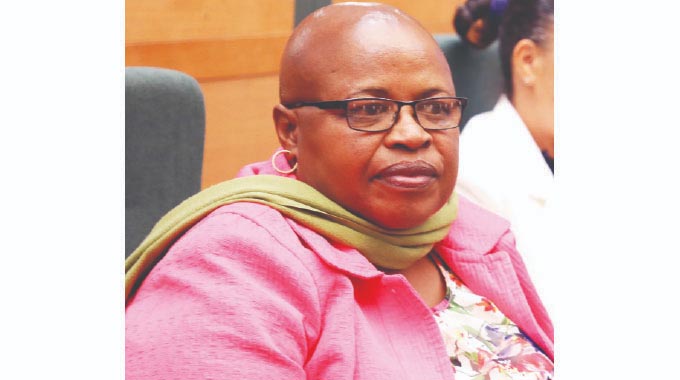
Conrad Mupesa-Mashonaland West Bureau
IT was joy and jubilation at Turf Primary School in Mhondoro-Ngezi district on Monday following the commissioning of two classroom blocks and an ablution services block constructed by platinum miner, Zimplats.
The infrastructure, aimed at decongesting the 40-year-old school with an enrolment of over 3 000 pupils and 100 qualified teaching staff, was constructed at a cost of about U$$380 000.
It also speaks to the growing call from the Government to the private sector to help in the schools’ infrastructure development. Mashonaland West alone has a deficit of 120 schools and at least 1 000 classrooms. Mashonaland West Minister of State for Provincial Affairs and Devolution, Marian Chombo, handed over the new buildings to the Mhondoro Ngezi Rural District Council, which operates the school.
School head, Mr James Katonje, said they had resorted to hot seating and using open space for learning activities due to shortage of infrastructure.
“We welcome the intervention by Zimplats as this has gone a long way in addressing the challenges we have been facing,” he said. “We have an enrolment of over 3 000 pupils and due to shortage of classrooms and ablution services, we resorted to introducing hot seating.”
The district is in the natural region four with scorching temperatures during summer, making it difficult for afternoon learners to cope.
Mrs Loveness Madzivira, whose grandchildren attend the school, was optimistic that the new move was going to see them improve their pass rate.
She and others in the community had watched helplessly as the ballooning population took a toll on the school, but the move by Zimplats has fulfilled its corporate social responsibility pledges.
Last year, the company handed over projects that encompassed solar power systems to provide electricity to classrooms and teachers houses at Chingondo Secondary School and Tangwena Primary and Secondary Schools in the same district.
The projects included the sinking of a solar-powered borehole to provide potable water to the schools and their surrounding communities and renovations of administration offices and classrooms.
Both Tangwena and Chingondo schools were each equipped with computer laboratories, complete with 20 desktop computers each, two HP Printers each and furniture.
Several other schools in the Mhondoro-Ngezi and Chegutu districts that have also been beneficiaries of projects initiated by Zimplats in the past two decades include St Michaels School, David Guzuzu School, Rutara Primary School, Saruwe Primary School, Marshal Hartley School, Saruwe Secondary School, Wanganui Primary School and Wanganui Secondary School.
In his speech read by Zimplats’ head of corporate affairs, the platinum miner’s chief executive Mr Alex Mhembere said by investing in the education sector, Zimplats was seeking to create conducive conditions for both learners and their teachers, especially in the rural areas where schools are constrained by the unavailability of resources.
Zimplats intends to create a better future for all its stakeholders, including communities surrounding its operations in Ngezi and Selous, he said.
“The latest project, which falls under Phase 3 of the school’s expansion programme, saw us constructing two classroom blocks and ablution facilities,” said Mr Mhembere. “Each block has four classes, which will take 40-pupils each, thus absorbing 320 learners in total.”
The teacher-to-student-ratio was previously around 1:55.
The school was constructed 38 years ago and has been upgraded through the construction of staff houses and ablution facilities.
Minister Chombo commended Zimplats for assisting the Government in improving the quality of infrastructure at the schools and challenged other corporates throughout the country to take a leaf from the miner whose interventions extends beyond education to community wellness, infrastructure development and local enterprise development.
“Zimplats deserve a pat on the back because they can never be any wiser choice than this in the sense that education is the most powerful investment in our children’s future and that of our nation,” she said
“The education sector is still suffering from lack of financial resources, inadequate equipment (no libraries, textbooks, computers etc), and poor working conditions for the teachers. Government alone will not be able to bring up these schools to the desired levels without the support from the private sector.
“This is why the Second Republic is placing so much emphasis on public private sector partnership. We must take a leaf from Zimplats by investing more in education. Concurrent with these efforts, we must invest more effectively in learning, improving learning assessment and being accountable to communities for education results. We must invest more equitably to make sure people who are most in need have access to quality learning.”
Zimplats this year spent US$4,7 million in corporate social investment programmes, while at least US$3 million was used in 2022.


 Online Reporter