Online Reporter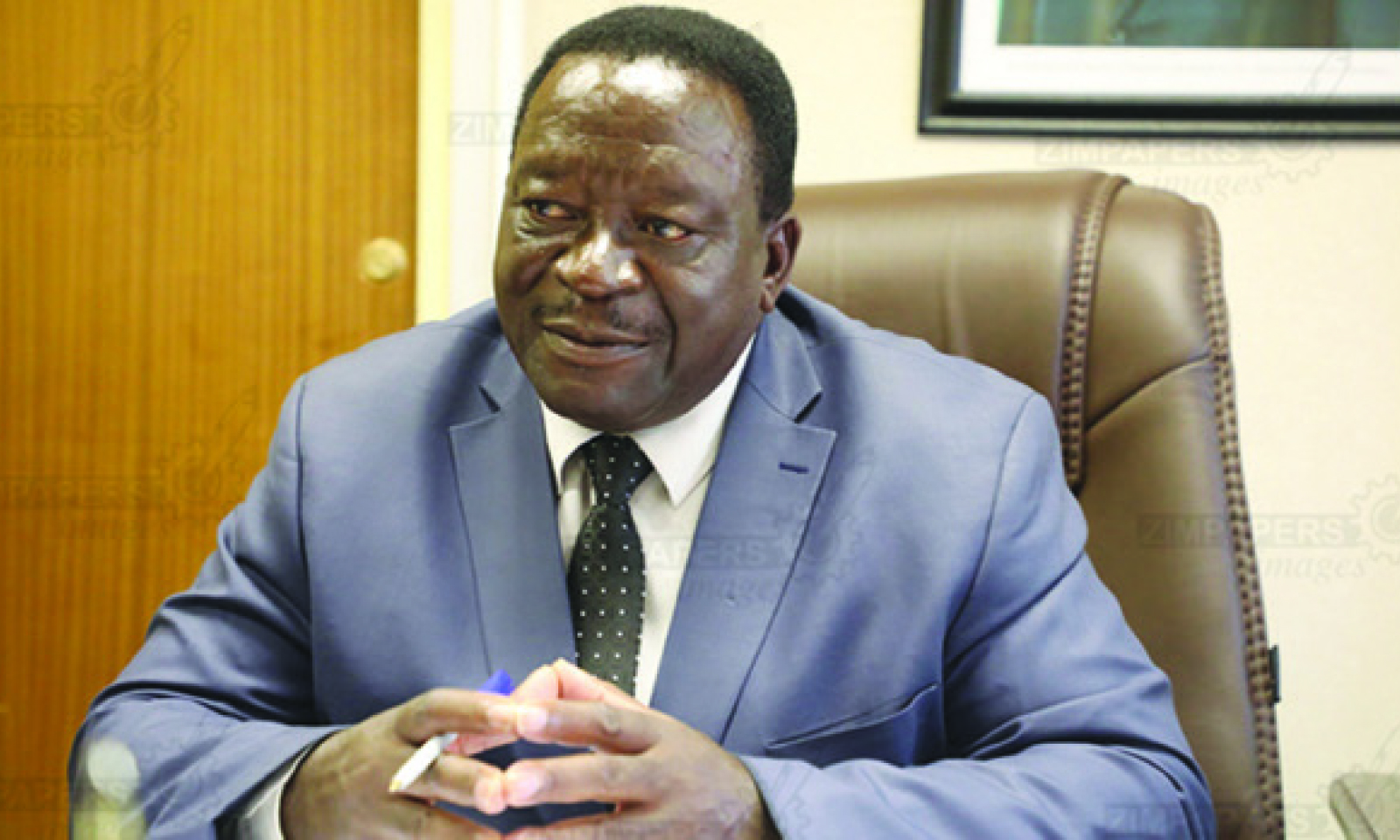
Wallace Ruzvidzo-Interview
THIS past week, President Mnangagwa attended Mozambique’s 50th Independence Day commemorations, during which he expressed the bond of brotherhood between Harare and Maputo. Our reporter Wallace Ruzvidzo (WR) caught up with Ambassador to Mozambique Victor Matemadanda (VM) who spoke at length about his instruction from the President to ensure the two countries’ economic relations match the excellent political relations which were established during the pre-independence era and more.
WR: What does President Mnangagwa’s attendance at Mozambique’s Golden Jubilee commemorations mean in terms of relations between Zimbabwe and Mozambique?
VM: Well, there was a lot of excitement by the ordinary people of Mozambique when they heard that President Mnangagwa was coming and also when they finally saw him.
So, there was a lot of excitement for the ordinary people, but also for the leadership, it was a very good thing.
Not only was it a gesture that shows the relations between the two countries, but also it shows the brotherly support that has been there ever since between Mozambique and Zimbabwe.
There was a time when any occasion that was taking place in Mozambique, Zimbabwe would be playing a leading role and whenever such events were taking place, also in Zimbabwe, the Mozambican government, especially then, President Samora Machel, would make it a point that he attended in person.
And of late, you saw that during the leadership of President Nyusi, when he said, ‘I am known for coming to Zimbabwe, I don’t need an invitation, I just phone in the morning and say, my brother (President Mnangagwa), I am coming for breakfast’. So, it means that these are people that do not need further introduction or introduction at all. They are people that are one and the oneness is shown even by our languages, the languages that we speak.
This is why you heard after the elections; some people were saying Zimbabweans voted in Mozambique. And at times, you hear people saying Mozambicans voted in Zimbabwe. There is nothing like that, but it is the people that use common languages, cultures and traditions and at times, they share the same chief. For example, there are some Ndau people who believe that their chief could be in Zimbabwe. There are also people, around Tangwena areas, who believe that their chiefs, especially in the Tangwena family, are in Mozambique.
So, that is the closeness and the linkages between Zimbabwe and Mozambique, and everyone of us, including our leaders, are very much aware of that, but more so, when people look at the process of liberation, when we teamed up together and defeated colonialism. So, that’s where it comes from.
But even before that, if you look at the history, the empire of Munhumutapa, it extended to these places. For your own information, places like Manica Province, the Manica town, and so forth and so on. You go further to places even up to Tete, you have people that have got a common descendant with a lot of people in Zimbabwe, and a lot of people in Zimbabwe have similar descendants with people on the other side of the border.
So, that is what and who we are. We are one and our leaders are conscious of that and that was, like I have said, also cemented by the fact that we waged the armed liberation struggle together, side by side.
WR: Thank you for that informative and rich answer. And, what was the President’s impression of the 50th independence celebrations in Maputo?
VM: Obviously, the President was very happy and impressed by it. Someone just spoke to me today (Friday) saying the President mentioned it again in Bulawayo (on Thursday) when he was addressing councillors, to say the relations between Mozambique and Zimbabwe are very strong. He was very much pleased by that, seeing that everyone is working towards not only cementing, but improving the relations between the two countries.
But we have said, yes, we have got historical relations and attachments, but this is not translated also into our business cooperation. And this is where we are focussing on: to say the amount of cooperation between our two countries should be seen also in the way we do business, so that we both develop our economies by the trade that will be going on between the two countries, the cooperation and so forth. We want that to be scaled up rapidly, so that our relations translate into our economic activities. So, I’m very positive that this is going to happen.
President Chapo has set up a government, a young government, beautiful, but of course blended with experience and it looks like every one of them is eager to work and deliver. I was impressed by the Minister of Agriculture, with the way he wants to partner Zimbabweans for agricultural development and if that then is translated into action, I think Mozambique, although not being threatened by any hunger, would help to assure food security in Mozambique. We are talking about things like development of the silo system, because they don’t have silos here, and we have said let us see how we can partner so that we develop such, and also modernising agriculture.
WR: What was your assessment of the independence celebrations, seeing that Zimbabwe will also be commemorating 50 years of independence in five years’ time?
VM: It was befitting that the President of Tanzania (Samia Suluhu Hassan) which hosted the FRELIMO from inception throughout the waging of the liberation struggle, to be the guest of honour at the 50th anniversary of Mozambique’s independence.
Because look at Zimbabwe, for example, Zimbabwe is only 45 years old and logically, it cannot be said, although in the trenches people were together, but it cannot be said to know better how everything happened than Tanzania, which actually gave and came to the liberation fighters.
That included (Eduardo) Mondlane, Samora Machel, and others, who were even there, including (Joaquim) Chissano and (Armando) Guebuza. Those had bases in Dar es Salaam, so it was befitting that those would then be addressed by people that welcomed them when they started the journey.
So, basically, that was the reason why the President of Tanzania was invited to be the guest of honour. And for us at the 50th anniversary, we will be having some of our leaders also witnessing the long journey. That includes, obviously, President Mnangagwa. And in our case, unfortunately, most of those that witnessed the formation of the parties and the waging of the liberation struggle are going. But I believe that by that time, many will still be alive and that will be a very good thing.
WR: Thank you for that. And how is Mozambique doing now after the post-election disturbances following their general elections in October last year?
VM: Well, they are getting started. Remember, it is now about two months after they sat down and talked. But there are also many other issues to be ironed out. You know, when people come into an agreement, at times there are issues of implementation that need to be ironed out. In the case of Mozambique, yes, President Chapo and Mr Mondlane had their meeting, which was dubbed the handshake meeting, where they agreed on quite a number of things that were to be implemented and bring peace to Mozambique.
As you know, Mozambique has got a vast number of minerals, it has got land, it has got water, where a lot of development activities can be carried out.
But since Mozambique has not seen much peace from independence, that development is not seen because of the disturbances that have been there from the time they got independence from Portugal. So, we hope that through the intervention of Zimbabwe, we are going to witness peace and after which we think there will be development.
WR: And what is President Chapo’s position in terms of relations between Mozambique and Zimbabwe?
VM: President Chapo is from the younger generation, the group you would call born-free, but he is one born-free who understands both the process of liberation of Mozambique; he also understands the relations between Zimbabwe and Mozambique. He knows that the relations are historical and that we are one. There is no way you can separate Mozambique and Zimbabwe. He understands that and he would want to see that being developed to even higher levels, including socially and economically.
He is eager to see us getting involved in farming, in mining, in fact in all economic sectors of the country. But even socially, Zimbabweans are welcome into Mozambique and there are plenty of them here where we have not witnessed problems of segregation or anything of that sort, which means that the relations are very good.
And President Chapo is also one President who promotes good neighbourliness with Zimbabwe and also wants to maintain the relations that have been historical between Mozambique and Zimbabwe. So, he is very happy and he was very happy, he expressed it, to see President Mnangagwa attending in person.
WR: Okay. Can we expect more economic and political cooperation between Zimbabwe and Mozambique?
VM: Yes, that is what we are all working towards. President Mnangagwa has instructed us to try as much as we can to develop the economic and political cooperation between the two countries, and that cannot be a secret, we are working very hard. We want to see higher levels of cooperation between the two countries in all spheres of life.
WR: Thank you very much for your time, Ambassador.
VM: Thanks for having me, Ruzvidzo.