


 tawandamusarurwa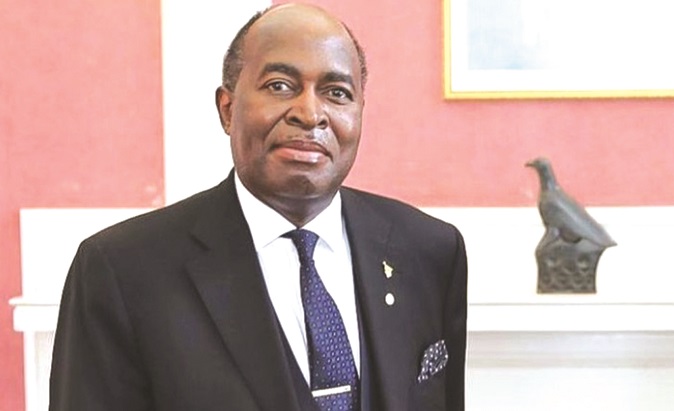
President Mnangagwa joined other world leaders in London, United Kingdom, last weekend to witness the coronation of King Charles III. This was the first visit by a Zimbabwean leader to the British capital in over two decades, a development seen as a sign of improving diplomatic relations between the two countries. The Sunday Mail’s Deputy News Editor LINCOLN TOWINDO (LT) spoke to Zimbabwe’s Ambassador to the UK, Colonel Christian Katsande (Retired) (CK), on the significance of the historic visit and the state of bilateral relations between Harare and London.
*************
LT: Can you begin by telling us what President Mnangagwa’s presence at King Charles III’s coronation means on the state of diplomatic relations between Zimbabwe and the United Kingdom?
CK: Since the ushering in of the Second Republic, Zimbabwe and the United Kingdom have shared an encouraging history of strengthened bilateral cooperation, including the exchange of high-level political and business visits.
The highlights of these visits have been the attendance by His Excellency, the President, Dr E.D.
Mnangagwa, at the United Nations Conference in Glasgow, Scotland, in November 2021, and now the recent high-profile visit to London on the historic occasion of the coronation of His Majesty King Charles III and Queen Camilla on May 6, 2023.
The last time a Zimbabwean Head of State and Government had been to the UK was almost 25 years ago.
Something positive happened to propel our diplomatic relations to where we are and, in diplomatic practice, there is no higher engagement than at the Head of State level.
The presence of His Excellency, the President, on the global stage afforded him unique opportunities to reshape the narrative of the country at this crucial stage of our history whilst sending out to the global business community the resounding message that Zimbabwe is open for business.
LT: How would you characterise the state of the two countries’ relations since your deployment after many years of bilateral rancour?
CK: Our two countries have increasingly become interlinked through cooperation in many sectors, beyond the engagement at political and business levels.
The high-level exchanges and visits have seen the relationship assume an unprecedented width and depth, thus, characterising the trend with an upward trajectory heralding a significant era of bilateral relations.
The mutual recognition of the vast opportunities that exist beyond turning the page holds enormous promise and prospects.
LT: What is your assessment of Zimbabwe’s engagement and re-engagement policy in terms of its efficacy, particularly with regard to bilateral relations with the United Kingdom?
CK: During his inauguration speech, His Excellency, the President, enunciated the foreign policy thrust of reaffirmation, engagement and re-engagement.
Reaffirmation with individual states, and regional and international organisations.
Engagement, extending new frontiers and broadening our embrace beyond the scope and geography of traditional diplomacy, thereby cultivating new friendships and partnerships.
Also, re-engagement, which speaks to rekindling of old relationships and rejoining of international organisations whilst normalising relations with international financial institutions.
The advent of the New Dispensation created enormous political goodwill and generated high expectations among the citizenry, development partners and other stakeholders, who correctly and rightfully saw it as the dawn of a new era for Zimbabwe.
This provided a sense of urgency and the need to prioritise economic growth while adopting a high-performance culture in public service delivery.
Economic diplomacy increasingly became the centrepiece of intensified diplomatic outreach programmes to accelerate the promotion of trade, investment and tourism activities whilst ensuring that the diaspora community was fully facilitated to contribute to national economic growth and development.
LT: How has British capital responded to overtures by Zimbabwe to seek investment opportunities in the country since the advent of the Second Republic?
CK: The UK business community has warmed up to the trade and investment opportunities, as highlighted by the various trade, investment and tourism missions that have penetrated the UK market.
The visit to the UK by Cabinet Ministers and several Government officials is also evidence of the improvement of the two countries’ relations. These include visits by the Minister of Foreign Affairs and International Trade, Ambassador Frederick Shava; the Minister of Finance and Economic Development, Professor Mthuli Ncube; Minister of Mines and Mining Development Winston Chitando; Deputy Minister of Foreign Affairs and International Trade Dr David Musabayana to attend the Second Commonwealth Trade and Investment Summit in November 2022; and the Minister of Information and Communication Technology, Postal Services and Courier Services, Dr Jenfan Muswere, to attend the inaugural Commonwealth Telecommunications Organisation Ministerial Alliance Meeting held in February 2023 in London.
In line with the devolution policy thrust, the Embassy is encouraging Ministers of State in the provinces to visit the UK market and highlight investment opportunities in their provinces.
Already, the Minister of State for Bulawayo Metropolitan province, Judith Ncube, led her team on a visit to the UK in 2019.
LT: Can you outline the state of bilateral trade between our two countries and measures that are being put in place to enhance improved trade relations?
CK: With respect to trade, the total trade (exports and imports) was £144 million in 2022. Exports to Zimbabwe stood at £99 million, while imports were at £45 million.
Zimbabwe’s exports to the UK include precious and semi-precious stones, precious metals, and horticultural products such as peas, blueberries, chillies and vegetables.
Imports from the UK include minerals, fuels and oils, machinery, mechanical appliances, boilers and spare parts.
Our trade relations are covered by the UK-ESA (Eastern and Southern Africa) Economic Partnership Continuity Agreement entered into by the two governments in 2019, which provides duty-free, quota-free access to goods from Zimbabwe into UK markets.
Horticultural and floricultural products have established a high demand in UK markets. The growing exchange of official visits has spurred increased investor interest in Zimbabwe.
Whilst the British Embassy in Harare now hosts a trade office, the Zimbabwean Embassy will soon have a senior trade officer in London to further enhance the trade and investment relations between the two countries.
Several investment conferences and seminars have been held in the UK to highlight the huge investment opportunities in the agricultural, mining, infrastructural development and financial services sectors, among others.
The most recent was the Zimbabwe Capital Markets Conference hosted by the London Stock Exchange and the Financial Markets Indaba, which brought together many corporates and counters listed on the Zimbabwe Stock Exchange and the Victoria Falls Stock Exchange, which is hard currency-denominated.
Institutions that have shown investor interest include the British International Investment (formerly Commonwealth Development Corporation), Private Infrastructure Development Group, OMO Capital, Gemcorp, NMS Infrastructure, Cluff Resources and PGI Group-founded Nyangani Renewable Energy.
Zimbabwe was rated by the UK Lonely Planet as the number three global must-visit tourist destination for 2019, followed by another accolade at the ITB (Internationale Tourismus-Börse) in Berlin, Germany, where Zimbabwe continues to be recognised as the Sustainable Destination of the Year.
The US Tourlane recognition of Zimbabwe as a desirable tourist destination in the post-Covid era is an added plaudit.
The challenge to the growth of tourism from the UK market is the absence of a direct airline between the two countries.
To enhance the mission’s effectiveness, we have created clusters to mirror the National Development Strategy 1 (NDS1).
The key pillars are as follows: agriculture; mining; the financial services sector; tourism; youth, sports and arts (film industry initiative and equestrian windmill stud); cultural heritage; health; education; and infrastructure.
LT: Zimbabwe is presently working towards readmission into the Commonwealth. What is your assessment of Zimbabwe’s chances of readmission?
CK: In May 2018, His Excellency, the President, Dr E.D. Mnangagwa, wrote to the Commonwealth secretary-general Baroness Patricia Scotland, KC, expressing Zimbabwe’s willingness to return to the group after nearly two decades of estrangement.
As part of the process, the Commonwealth secretary-general dispatched the first and second assessment missions to Zimbabwe in June 2018 and July 2019, respectively.
The third and final assessment mission to Zimbabwe was from November 2 to 18 last year.
The Commonwealth Secretariat, on invitation, also sent an observer mission to the 2018 harmonised elections.
The reports of the assessment missions form the basis of the secretary-general’s consultations with the general membership of the Commonwealth at Heads of State and Government level. Zimbabwe hopes its interest to rejoin the Commonwealth will be considered on its merits, taking into consideration the tremendous progress that has been achieved to date with respect to political, economic, electoral and legislative reforms.
LT: Has the British government extended its support to Harare’s re-entry into the group?
CK: The UK government has said the decision on whether Zimbabwe rejoins the Commonwealth is a decision for all member states and is normally reached by consensus.
The UK, like all Commonwealth member states, will respond to the Commonwealth secretary-general’s report.
Given the improved bilateral relations and the fact that Zimbabwe has achieved key milestones in terms of the reform agenda, the expectation is that the UK government will support Zimbabwe’s readmission into the Commonwealth family of nations.
Twitter: kuntowaz



 Bongani Ndlovu
 Online Reporter