Online Reporter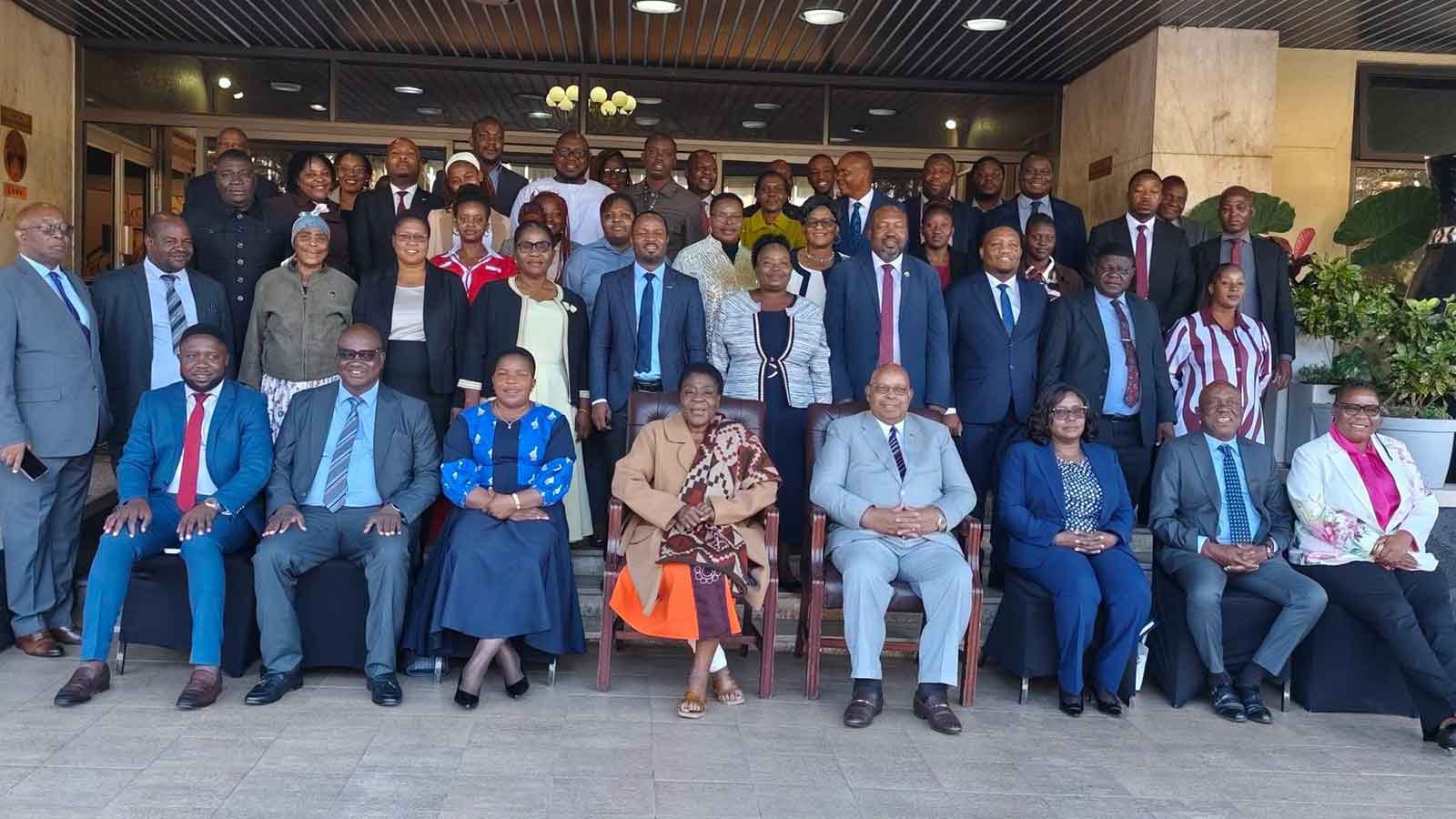
Bulawayo Bureau
SPEAKER of the National Assembly has called on Members of Parliament (MPs) to take full ownership of the budget process and ensure public resources deliver measurable results for citizens.
Officiating at the Capacity Building Workshop on Budget Analysis for the Portfolio Committees on Defence; Justice, Legal and Parliamentary Affairs; Public Service, Labour and Social Welfare; Local Government and Public Works; and Women’s Affairs, Community, Small and Medium Enterprises Development on Saturday,
Adv Mudenda said the role of Parliament in scrutinising public expenditure is not optional but a constitutional mandate that must be exercised with authority and technical rigour.
“For too long, the narrative of the National Budget has been authored elsewhere and delivered to you as a fait accompli (something already decided), consigning you to passive spectators in decisions that directly affect the welfare of the people you are sworn to represent and serve,” he said.
The workshop, he said, marks the beginning of the journey of disciplined mastery of budget analysis.
Central to that journey, he emphasised, is moving beyond perfunctory examination to a forensic analysis of the National Budget across every dimension.
“No committee can discharge its fiscal oversight with authority if it is not familiar with the architecture of the budgetary system it is mandated to interrogate,” he said.
He described the Public Finance Management (PFM) framework as the rulebook that ensures taxpayers’ money reaches the intended beneficiaries and urged committees to interrogate it relentlessly.
He noted that the PFM system rests on legal and institutional foundations that cover the entire budget cycle, from planning and approval to implementation, expenditure, and monitoring and evaluation, with accountability and fiscal oversight placed at the centre.
Citing provisions of the Public Finance Management Act [Chapter 22:19], he said monthly, quarterly and annual reporting obligations create a continuous accountability chain that enables committees to monitor fiscal performance in real-time rather than retrospectively.
“Every accounting officer shall submit quarterly financial statements and reports for submission by the minister to the appropriate Parliamentary Portfolio Committee within 60 days of the end of the respective quarter,” said Adv Mudenda.
“Every accounting officer shall submit monthly financial statements and reports for submission by the minister to the appropriate Parliamentary Portfolio Committee within 30 days of the respective month.”
The same discipline, he added, extends to public entities and State enterprises, with officials enjoined to take effective and appropriate steps to prevent any irregular expenditure and fruitless and wasteful expenditure and any under-collection of revenue due.
Adv Mudenda said the expectation is for Parliament to use the full range of mechanisms available — committee hearings, questions, debates and ministerial statements — to oversee the public finance management process.
He also called for committees to pursue both allocative efficiencies, directing resources to production and productivity with minimal waste.
Emphasis was also placed on pro-poor budgeting.
Which encouraging MPs to use of modern tools such as data analytics, public expenditure tracking systems and performance dashboards, he also noted that sector-specific international benchmarks can guide committees in assessing whether budgets in areas like justice, social welfare, local government, defence and women’s affairs are adequate and properly oriented.