dyton mupawaenda
Collin Matiza–Sports Editor
NAMIBIA’S Minister of Youth, Sport and National Service, Agnes Tjongarero, is the new Chairperson of the African Union Sports Council (AUSC) Region 5 Council of Ministers.
Tjongarero, who replaced Uchizi Mkandawire of Malawi, was conferred the Chairpersonship on December 15, 2023, in Lilongwe, Malawi, during the ordinary session of the Region 5 Council of Ministers meeting.
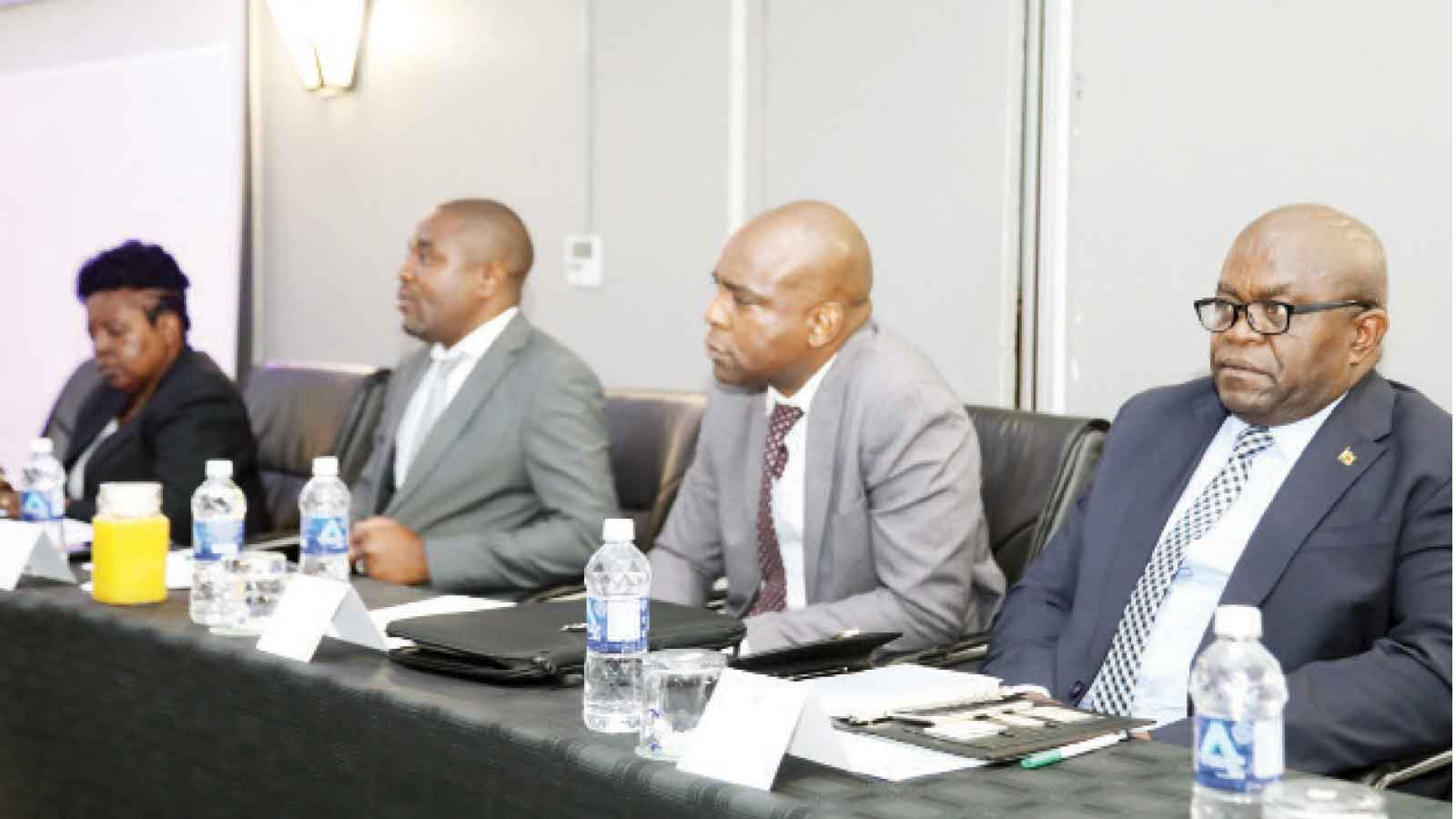
The meeting was attended by five Ministers and four Deputy Ministers from the 10 Region 5 member Countries. Only Mozambique was unable to attend. Ministers Uchizi Mkandawire (Malawi and Chairperson), Motlatsi Maqelepo (Lesotho), Agness Tjongarero (Namibia), Muzi Bongani Nzima (Eswatini) and Elvis Nkandu (Zambia) were joined by Deputy Ministers (Teresa Joao Ulundo Oliviera (Angola), Honest Buti Billy (Botswana), Nocawe Noncedo Mafu (South Africa) and Emily Jesaya (Zimbabwe).
Tjongarero’s elevation was in accordance with Article 30.6 of the Region 5 Constitution which states that “the Chairpersonship of the Council must rotate with the hosting timetable of the ordinary meetings, unless decided otherwise by the majority of Ministers eligible to vote”.
By virtue of being the Council of Ministers Chairperson, Minister Tjongarero doubles up as the Chairperson of the Troika of Ministers.
Ministers responsible for sport in Mozambique and Malawi will join Minister Tjongarero to serve in the Troika for the next 24 months.
Carlos Gilberto Mendes, Secretary of State for Sport in Mozambique, was given the mandate to continue to serve as Troika and Council of Ministers Vice Chairperson as Mozambique will be the next Region 5 Games host in 2026.
Uchizi Mkandawire, the outgoing Chairperson, becomes the third member of the Region 5 Troika of Ministers by virtue of being the outgoing Chairperson.
According to the Region 5 Constitution, membership of the Council is based on the bearer being the Minister responsible for Sport in an AUSC Region 5 Member State. The Chairperson of the Council holds office for a period of 2 years.
An in-coming Council Chairperson must serve on the Troika for two years prior to assuming Chairpersonship of the Council while an out-going Council Chairperson must serve on the Troika for two years after leaving Council Chairpersonship. Namibia did not serve for two years as incoming Chairperson as stipulated in Article 14.3 of the Constitution as they swapped hosting places with Mozambique who requested to host the Region 5 Games in 2026 in order to recover from the effects of Cyclone Freddy.
Council therefore passed a waiver on Article 14.3 paving way for Namibia to assume Chairpersonship by virtue of being the host of the next Games.
The Region 5 Council of ministers is the supreme policy making organ of the organisation.
Among its numerous duties, the Council of Ministers is responsible for making policies and regulations on the administration, organisation and promotion of sport in Region 5 as recommended by the Board of Advisors.
The Council of Ministers is charged with the responsibility to ratify the draft annual budgets and annual audited accounts submitted to it by the Board of Advisors. Council is also responsible for disciplining members and officials including Confederations for any breach of the Region 5 Constitution, its rules, regulations, and by-laws or for misconduct likely to bring Region 5 into disrepute.
It is also one of the duties and functions of the Region 5 Council of Ministers to confer honors and awards on any Member State, team or individual for meritorious service rendered to AUSC Region 5 and for exceptional achievements in national, regional or international competitions.
Tjongarero has the unenviable task of leading Region 5 to excellence under a very punishing operating environment due to post Covid-19 effects and the weight of climate change, in particular the anticipated El Nino weather effects likely to have an effect on economic performance in the sub-region.
The new Region 5 Chairperson will be expected to steer the organisation to sustainable commercialisation under the recently approved Strategic Plan and HEART28 strategy.
Read more on www.herald.co.zw
The Theory of Change dubbed HEART28 aims to accelerate industrialization and digitalization of sport placing sportspreneurship at the centre of the business revenue generation strategies. The Region will be striding towards brand regeneration and vertical integration in terms of diversifying and shifting its capital structure to sustainable productive investment.
The new Region 5 Council of Ministers Chairperson will also be charged with the responsibility of ensuring the stabilization of the organisation under the recently approved organisational er-engineering model.
The model labelled 3S+P is premised upon revitalizing four pillars of strategy, structure, skills and programmes for sustainable growth and viability of the organisation.
With the strides that the Region has made under the collective leadership of the out-going Council of Ministers Chairpersons, Malawi Ministers Msungama, Chimwendo Banda and now Uchizi Mkandawire over the last two years, Minister Tjongarero is geared to ride on the crest of the trajectory in motion to steer the Region to another level.
During the last two years, the Region managed to successfully go through a restructuring exercise which saw the introduction of six Experts Commissions and Permanent Secretaries in the Ministries responsible for sport serving as a Board of Advisors.
The Region also introduced several capacity building initiatives key among them being the Women Leadership Programme and the Management Development Programme jointly offered in collaboration with the Bindura University of Science Education in Zimbabwe.
The Region further reviewed its strategic plan and drew a theory of change dubbed HEART28 to spearhead accelerated momentum towards excellence.
In addition, the Region introduced the Walk for Life, a sport for all event aimed targeting 10 million people including girls, women and persons with disabilities in Region 5 Member Countries to be physically active by 2028.
On Friday December 15, 2023, during the ordinary meeting of Council of Ministers, a Silver Jubilee concept was ratified by the Ministers, paving way for a commemoration of the Region 5 25 years of existence.
The Silver Jubilee commemoration is scheduled to be launched in Zambia on May 24, 2024, on the eve of the regional Annual Sports Awards, during which 25 individuals who made a difference in sport over the last 25 years in the Region will receive a special Silver Jubilee award.
The localized celebrations will see Angola hosting a 3 x 3 Basketball Fiesta. Mozambique is scheduled to host a Jubilee Netball Jamboree, with South Africa hosting a Silver Jubilee Marathon. Botswana is scheduled to host a football and Athletics Legends Jamboree Challenge with Zimbabwe hosting a Cultural night on the margins of the inauguration of the Region 5 Sports Museum.
In addition, 25 deserving school children drawn from all 10 Region 5 Member Countries will benefit from a school fees bursary for the next 25 months.
Malawi will weigh in with a Malawi Cycling Grand Prix as part of the Silver Jubilee celebrations while Lesotho, Eswatini and Namibia will commemorate the Silver Jubilee when they receive the 2024 Region 5 Youth Games Torch during its relay.
The Region receives the new Chairperson with jubilation and is ready to support her in delivering her mandate.
In the same manner the Chairpersonship of the Board of Advisors and Committee of Experts also shifted to Namibia.
The out-going Chairperson of the Board of Advisors who also serves as the Principal Secretary in the Ministry of Youth and Sport in Malawi, Isaac Katopola, handed over the Chairpersonship to the Executive Director of Namibia in the Ministry of Youth Sport and National Service, Erastus Haitengela.
The Chairpersonship of the Committee of Experts like wise, was transferred from Mr Jameson Ndalama the Malawi Director of Sport to Johanna Ndilokelwa Manuel the Director of sport in Namibia.
The African Union Sport Council (AUSC) Region 5 is the sports arm of the African Union, which was once the Organisation of African Unity.
The main aim of the AUSC Region 5 is to use sports to achieve peace, integration and unity in Southern Africa i.e., sport as a vehicle of encouraging people to develop and come together, irrespective of colour, economic status, political, class, or gender.
Members of the Region comprise of Angola, Botswana, Eswatini, Lesotho, Malawi, Mozambique, Namibia, South Africa, Zambia and Zimbabwe.


 Online Reporter