Online Reporter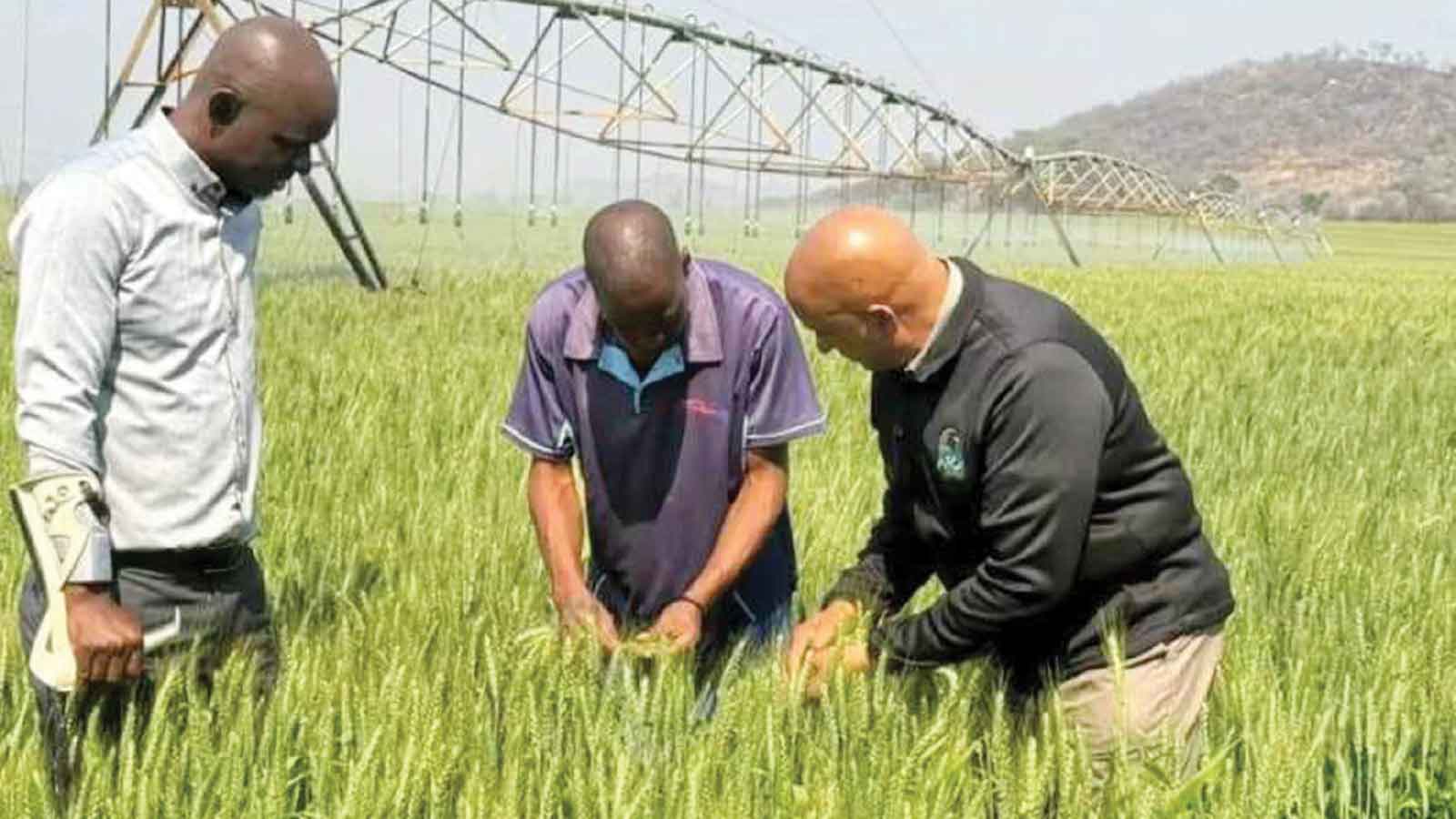
Marjorie Munyonga
The country is emerging out of a highly successful rainy season and yet another successful winter cropping season is on the horizon.
With the country having received largely normal to above-normal rains, and with water being the second most strategic resource for agriculture — coming only after land — the fundamentals for another historic winter cropping season are already in place.
In the past four years, the country has registered incremental gains in winter wheat harvests, placing Zimbabwe as one of the few wheat self-sufficient nations on the continent, thanks largely to tight and sound water resources management.
What now remains is for this trajectory to continue, which is precisely the mandate of the Zimbabwe National Water Authority (Zinwa) as the country’s water resources management lead agency.
The water is there
The dams currently hold more than sufficient water stocks to meet the country’s irrigation and domestic water requirements.
Most irrigation dams are full and still spilling.
As of March 27, 2026, the average national dam level stood at 93,3 percent, compared to the 89,5 percent recorded on the same date in 2025.
The proportion of spilling dams also stood at 68,9 percent.
These statistics show a country that is in a better water security position, in comparison to the previous season.
The country is thus in better stead to deliver yet another highly successful winter cropping season.
Save for isolated dams in Mazowe Catchment and Mzingwane Catchment, the
majority of the dams hold enough water volumes to see the winter cropping season through.
The Government, through the Ministry of Lands, Agriculture, Fisheries, Water and Rural Development, has already pronounced itself on the task at hand.
The country is targeting 662 500 tonnes of wheat, 45 000 tonnes of barley and 243 850 tonnes of Irish potatoes to be planted on 140 500 hectares (ha) of land.
These figures align with the Agriculture, Food Systems and Rural Transformation Strategy 2, the blueprint guiding the development of the agriculture sector in the next five years.
As usual, water resources management is expected to play a central role in pivoting the country towards attainment of these targets.
Accessing the water
The law vests Zinwa with the power and mandate to allocate water from all national dams among competing needs and any person abstracting water from these dams for reasons other than primary purposes should do so in terms of a water abstraction agreement.
This includes irrigating farmers, agricultural estates, mines, local authorities and industries.
A water abstraction agreement is a contract that any person, entity or organisation who needs a reservation for their use of raw water from Zinwa-managed or State-owned dams enters into with the authority for the provision of his or her requirements.
Water abstraction agreements allow Zinwa to effectively plan the allocation of limited water resources available in its storage reservoirs to meet the competing needs of water users.
The agreement forms the contract which spells out Zinwa’s obligations to supply raw water and that of the water user who pays for the services rendered.
Statutory Instrument 206 of 2001 compels everyone using raw water from Zinwa-managed dams to have an agreement.
How to obtain a water abstraction agreement
Any person wishing to use water from Zinwa-managed or State-owned dams should approach the respective Zinwa catchment office from which they would want to abstract water and lodge an application for water, stating the intended use of the water, their physical address, the amount of water required, point of abstraction and the crop intended for irrigation in the case of farmers.
If Zinwa, after considering the application, is satisfied that there is sufficient water in their dams to meet the applicant’s requirements, the two parties will then enter into a water abstraction agreement.
Once a water abstraction agreement is in place, Zinwa will reserve the full allocation as requested by the user in its dams and releases the water as per the user’s orders from time to time until the full allocation gets exhausted.
The agreement holder becomes exclusively entitled to the allocation specified in the agreement, which they are assured to get, and the water cannot be released to any other user.
The user is also expected to instal, at his own cost, a meter or any other acceptable measuring device to measure his consumption and adherence to his allocation.
Farmers wishing to abstract water from Zinwa-managed dams are encouraged to work closely with their extension officers or other people with appropriate expertise to help them fully appreciate the water requirements for different crops.
This helps them in coming up with proper requirements when applying for water.
Leveraging technology
Over the years, Zinwa has been facing serious challenges with farmers and water users who deliberately under-declare their hectarage when getting water abstraction agreements to avoid paying bills commensurate with their water use.
Such under-declarations would distort water demand patterns as these farmers would be using more water than on their agreements and technically eating into allocations belonging to other compliant users.
Zinwa is now leveraging technologies such as the use of satellite imaging and GIS to map and verify hectarages irrigated by farmers.
This will be in addition to the conventional and physical monitoring and surveillance of river channels for purposes of detecting and eliminating illegal water abstractions.
Water users are expected to pay for the service they receive from Zinwa in accordance with the user-pays principle.
The money paid by water users is used for the operation and maintenance of dams and related water infrastructure that enable users to have access to the water resources, given that the country has distinct wet and dry seasons, and, as such, most of the dry season river flows are as a result of dam releases.
Marjorie Munyonga is the head of corporate communications and marketing at the Zimbabwe National Water Authority (Zinwa).