dyton mupawaenda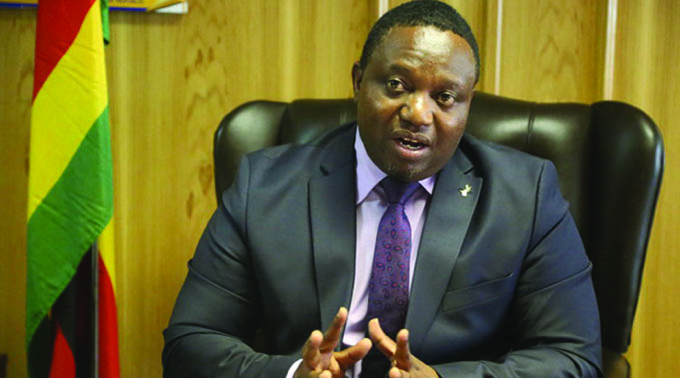
Traffic police details will be replaced by automated systems and all ports of entry will equally be automated while passport, birth and registrations will be applied online, when the Government completes implementing its ICT Integrated Management System, as it goes overdrive to curb corruption. Our Correspondent Daniel Chigunwe (DC) talks to Home Affairs and Cultural Heritage Minister Kazembe Kazembe (KK), who is also ZANU PF Mashonaland Central provincial chair and Mazowe West legislator about these and other issues.
DC: Let me start by congratulating you on three fronts: for winning the Mazowe West constituency for the third term as Member of Parliament; for retaining the 18 constituencies in Mashonaland Central province as ZANU PF chair and for your re-appointment as Minister of Home Affairs and Cultural Heritage. What is your comment on the whole election process and what does this majestic win mean for your province?
KK: To be honest, I have never come across such a free, fair and credible election. It was extremely peaceful and in fact one could not be faulted for thinking that there was no election at all because of the tranquillity that was obtaining. So, in my view it was a well-organised election and also our people demonstrated maturity.
You could see people campaigning, in fact, you could see people from competing parties having fun together, Of course, there were isolated incidents here and there, but nothing really worth talking about.
I would like to thank President Mnangagwa, for continuously, persistently and religiously calling for peaceful elections. Of all the Presidential candidates he is the only one who continuously and religiously spoke about peace.
DC: This is the third time that Mashonaland Central province has retained a 100 percent win in parliamentary seats under your chairmanship, what are the tricks in your leadership bag?
KK: When it comes to politics you need to separate personal interests and interests of the party. Interests of the party take precedence. What am I saying? There are two things, you need to know when to fight and what to fight for and at any given time what one should fight for is the party, of course there are times when you fight for your own personal positions when we go for elections like the provincial chairmanship but it must end there.
Once the elections are over, we shift focus to the bigger picture, which is the party ZANU PF. The party is supreme in any language. When it comes to elections, you focus on the bigger pictur,e meaning you do away with all the squabbles even at the risk of being called weak, it is okay! I was at the receiving at some point and people said he is weak, atengesa, but I was focusing on the bigger picture which means you have to bring everybody who adds value on board.
Forget about internal squabbles, minor divisions, if it means swallowing your own ego to reach out to those people who may not see you as a good person or do not see you as a good leader.
So, as we were approaching the elections, I separated personal interests from party interests and by extension interests of the masses of Zimbabwe. So, I reached out to everybody, I reached out even to people who had contested against me.
DC: What are the main challenges posed against you during the election period and how did you manage?
KK: In every political environment there are always groups some call them factions, but I prefer to call them groups, factions are too strong a word. As a leader you must then be prepared to work with all groups. Be above personal politics. Listen to everybody, there is no input that is inferior.
The good thing is that President Mnangagwa himself was a good candidate. The great work he has done, while some people were saying vote for me and I will do ABCD, he had already done a lot of things so it was easier to campaign for such a candidate, he had done a lot of good work, in fact even when he was campaigning he was campaigning in between a lot of developmental programmes.
So the President did us a good favour and it was easy to articulate the works he had done to the people. While in 2018 we went and asked people to vote for him because we had faith and confidence in him, this time around it was not a question of having faith, we knew now that the man is delivering.
DC: Now that elections are over, you are on record calling for unity in the province, are there any existing disunions and how do you intend to deal with them? What is the future outlook of the party in Mashonaland Central province?
KK: Let me start by answering the first part on the issue of divisions, there will always be some here and there, but personally I will not focus on those I would rather focus on the positive trajectory that the party and the leadership in the province must take. I believe that if we keep people busy doing the right thing those who do the wrong things will fall by the way side.
Who does not want to join a happy train? So my belief is let us now focus on development, when we got voted into office by the people they did not vote so that we can be given seats to sit on or for people to salute us, they voted us because they have expectations, and for those expectations to become a reality, you cannot achieve anything without focusing on developmental issues so as a party our focus is on development, nyika inovakwa nevene vayo.
DC: Your province has been chosen by President Mnangagwa to host the elections victory celebrations, previously you were also given the honour to host the 2023 Independence Day commemorations, what do these gestures mean to you as a province especially in this Second Republic.
KK: We are so excited as a province and we are so humbled. In fact, the President is walking the talk. Remember very well when the President came to Karanda, he said this province is at the centre of his heart. Why? Because of the brutal liberation struggle that we endured as a province.
He said; ‘Chimurenga chakanyanya kurwiwa kuno and the people of Mash Central suffered, so it is at my heart’. He made sure that the first celebrations to be held in a rural setup were held in Mt Darwin.
In my view he kick-started our campaign because that sets the tone and mood for the grassroots campaign. You could tell even with the attendance; it was unheard of. Now that we are going to have our national celebrations in the province again, for us it’s a sign of confidence and endorsement that the President has shown that he is happy with our performance. That will encourage us to do more in the future. As a province all we need to do is continue on this good path and focus on development
DC: Minister I would also like to acknowledge your re-appointment to the Ministry of Home Affairs and Cultural Heritage, congratulations. You have started by launching a formidable fight against traffic menace through the Operation Tame Traffic Jungle, to what extent has this operation been a success?
KK: It has been a huge success. We have managed to unearth a lot of unregistered vehicles, a lot of drivers driving without licenses. We have managed to identify some of the vehicles that have been used in criminal offences so it has been a very worthwhile exercise and we are continuing to ensure that our roads are safe. Over and above that, we are working on deploying automated systems to ensure that we get rid of traffic offenders from our roads.
It’s work in progress where we are planning to deploy an electronic traffic management system which will include cameras, high speed vehicles to ensure that people who violate traffic laws are detected automatically by the system without the interference of any human being, they are detected and fined by the system automatically and if we get to the stage that we intent to get then even your money will be automatically deducted from your account for the committed offense.
DC: We, however, still witness pirate taxis (Mushika-shika) on the road as well as reports of certain traffic police officers taking bribes, what measures are you taking to curb these leakages in the ongoing operation?
KK: This automated system which I have been explaining will ensure the removal of the human element in the whole process thereby addressing that challenge.
Full interview on www.herald.co.zw
DC: We have seen notable developments, especially the upgrading and tightening of security at the Beitbridge Border Post, can we expect the same with all borders even including Kanyemba Border Post?
KK: We will be deploying an Online Border Management System (OBMS). What this basically means is your Robert Gabriel Mugabe airport will now have e-gates where by just a mere presenting of your passport which is now an e-passport the gates will automatically open, the validation will be automatic, that you are eligible to come into the country or not, the system will do it for you.
Talking of borders, you have seen what we have done with Beitbridge now we will do the same with Forbes, Chirundu.
Borders and all others are going to be improved, modernised and to add to that now as immigration through Home Affairs by deploying OBMS, you can apply for a visa online from wherever you are, that will deal with corruption.
This system will be a combination of facial recognition cameras and the actual OBMS. It is on its final stage now. We, however, still have a lot of work to do with other borders that do not have formal set ups, those will be dealt with all security stakeholders.
DC: Minister what other main trajectories form top list agenda under your Ministry?
Basically the future of the Home Affairs is captured in the ICT Systems Integration Strategy, this is what we are implementing. We are planning to computerise our crime management system again this is work in progress that is for the police.
Coming to civil registration we have already started deploying what we call the Enhanced Zimbabwe Population Registration System. As we are speaking servers have already been installed and the contractors are already in the country and work has started. We are trying to computerise the civil registry to the extent that people will be able to apply for their passport online, that’s where we want to get. Yes, we have achieved some milestones in terms of availing our E Passports across the country by way of constructing some state-of-the-art offices in various provinces but the ultimate objective is that you should be able to apply for a passport at the comfort of your mobile phone. This system, when its fully developed, will be linked to the Ministry of Health, when a child is born it will automatically send a signal from the hospital or the clinic.
An automatic notification is sent to the civil registry and the system will initiate the birth certificate without anyone visiting the Registrar office and everything else will be initiated and linked to the family tree and even the ID number will be generated automatically. That will ensure that no one is left without a birth certificate in line with our President’s mantra of leaving no one and no place behind.
DC: Is there anything that you wish to say that may not have been captured in this interview, Cde Minister?
KK: All that I can probably say from the Minister of Home Affairs perspective is to remind our citizens that Zimbabwe is the only country that we have and as the President always say that Nyika inovakwa nevene vayo so I would like to kindly ask our citizens to love their country, to be patriotic, to be loyal and not to be pushed or to be made to fight against their own people by outsiders.
Nobody will come and build our country for us. It is the only country we have. So whatever we do let us think of our country first. Why am I saying this? People should desist from being incited to engage in violence. It will not help anybody, the law will; catch up with them.



 Online Reporter