Online Reporter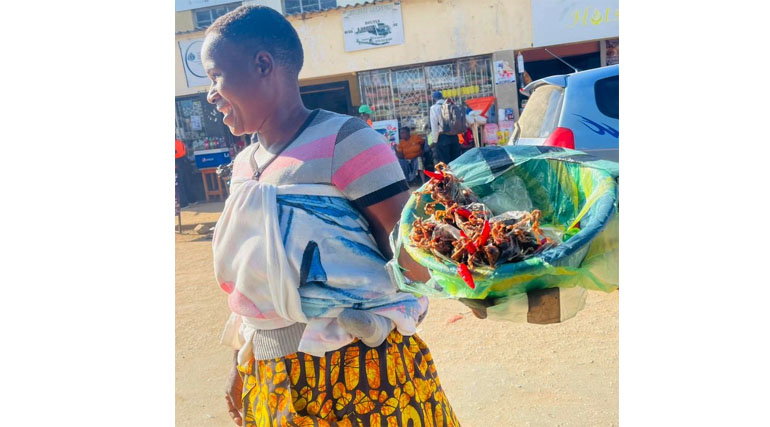
Lloyd Makonya
Correspondent
ALONG the stretch between Chakohwa and Birchenough Bridge, a small, but thriving informal economy pulses with life.
At its centre is an unlikely delicacy, ngozha, the tiny fried quelea birds that have become both a culinary curiosity and a crucial source of livelihood for many.
For Mai Chipo, a young mother from Birchenough Bridge, these small birds are more than just a snack for passing travellers, they are survival.
Balancing a baby wrapped securely on her back, she tends to her modest roadside stall with quiet determination.
A shallow container beside her holds neatly packed portions of ngozha paired with fiery red chillies. For just a dollar, customers get a packet of six birds, crispy and deeply satisfying.
“On a good day, I can make up to US$25. It helps me put food on the table for my family. This is what I depend on,” she said with a soft smile.
Her story is echoed by many women and youths in the area, who have turned to the harvesting and sale of quelea birds for their livelihoods.
The route, a busy trade transit corridor provides a steady stream of customers from truck drivers, bus passengers to private motorists looking for a quick, affordable snack.
Often referred to as “the little full chickens,” ngozha are prized for their crunchy texture and rich taste.
For travellers, one bite is enough to understand their enduring popularity. Yet beneath this thriving micro-economy lies a complex and often contentious issue.
Quelea birds, though abundant and sometimes considered agricultural pests due to their destruction of grain crops, are still part of Zimbabwe’s wildlife ecosystem. Their commercial harvesting by rural communities raises concerns among conservation authorities, particularly the Zimbabwe Parks and Wildlife Management Authority (ZimParks).
Environmental experts caution that unregulated hunting, even of species considered plentiful, can disrupt ecological balance over time. While quelea populations are large, their role in the ecosystem including seed dispersal and as prey for other wildlife cannot be overlooked.
“The challenge is finding a balance. Communities need to survive, but conservation must also be sustainable. Without proper management, today’s solution can become tomorrow’s problem,” said a local environmental officer familiar with the issue.
This tension between livelihood and conservation is not unique to Birchenough Bridge. Across Zimbabwe and much of Africa, rural communities often rely on natural resources for income, creating an ongoing need for policies that integrate economic realities with environmental stewardship. Experts suggest that education and awareness programmes could play a crucial role in bridging this gap. By equipping communities with knowledge about sustainable harvesting practices and encouraging alternative income streams, authorities can help ensure that both people and ecosystems thrive.
Back at her stall, however, Mai Chipo’s focus remains firmly on the present.
“In the meantime, this is what I have. People love ngozha and it helps me survive,” she said.
For her customers, the delicacy is a momentary pleasure, a crunchy treat enjoyed on the road.
For Mai Chipo, it is something far more profound, a lifeline and for now, demand endures and the small birds continue to carry a weight far greater than their size, feeding both appetites and livelihoods, one packet at a time.