Chronicle Editor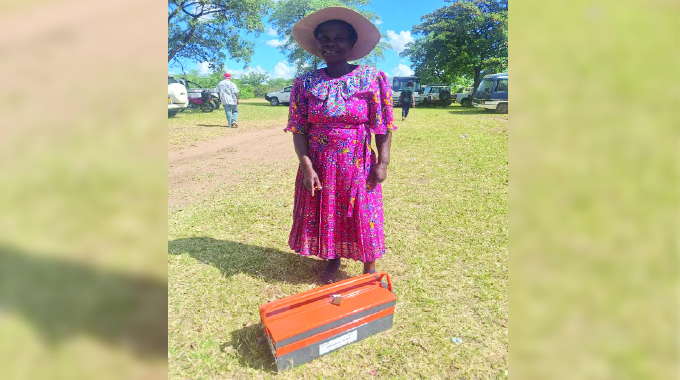
Mkhululi Ncube, [email protected]
IN Nkayi, a district in Matabeleland North Province, Zimbabwe, women are challenging traditional gender roles. Breaking barriers, they now perform tasks that were traditionally reserved for men.
Armed with a dominantly red toolbox containing tools like the burdizzo, dehorning equipment and injections for dosing and vaccines, these women serve as Community Animal Health Workers (CAHWs). Their duties include educating communities on disease prevention and proper livestock care.
Mrs Nomathemba Ncube, from Dobhane Village in Ward 26, joined as a volunteer due to her passion for farming and the desire to manage her livestock effectively. The knowledge possessed by some of these CAHWs rivals that of local college graduates.
“We educate the community on disease prevention, like now we have been educating on January diseases prevention with the importance put on dipping cattle. Our district is also prone to lump skin diseases so we educate on that as well. We also teach communities on proper construction of kraals for cattle and goats as well as fowl runs for chickens.
“The work we do has helped a lot in reducing deaths of livestock, especially to those who implement what we teach them. In my village, we have mobilised each other and contributed money to buy vaccines for lump skin diseases so that we doze our cattle for prevention,” she said.
Mrs Sikhathazile Mpofu from David Village in Ward Nine highlights the programme’s significance. Notably, it has equipped her with tool kits to address livestock diseases directly. No longer dependent on her husband’s availability or the need to hire external assistance, Mrs Mpofu can now confidently tackle livestock challenges.
“I can castrate, dehorn, deworm and doze without any challenge because I have been trained. As women, we are the ones at home while men are at work so you face challenges when your livestock become sick and you do not know what to do.
“We have to empower ourselves to manage our livestock in support of men. Our veterinary officers are not always available due to the large areas they cover, so we became the first port of help. We can stabilise sick livestock whilst plans are being made to get the professional to come,” she said.
Mrs Mpofu stressed the importance of educating farmers about proper livestock identification. She encouraged the use of ear tags with phone numbers and dip tank numbers. This way, if livestock get lost, they can be easily identified.
Ms Otilia Ndlovu from Gwelutshena Ward Four, Maphane village, shared her experience of a three-week intense training that covered various topics. The focus was on prioritising disease prevention over expensive treatments, especially since vaccines are not readily available within the district.
“The training covered a lot of areas, which are handy in our work. Like this year is a drought year, we were taught on feed supplements, which farmers can give to their livestock. We are also creating awareness on destocking now, so that farmers do not lose their cattle to drought. We monitor the movement of livestock and report to police if we suspect suspicious movement of cattle,” she said.
Mr Mhlupheki Dube, the Amalima Loko Programme Livestock Coordinator for Lupane, Tsholotsho and Nkayi, explained that the Community Animal Health Workers (CAHWs) are carefully selected, with assistance from local leadership and government officers in the veterinary department. Their training spans three weeks, covering both theoretical knowledge and practical aspects of health management.
“The extension services of Government are a bit overstretched in terms of coverage at the community level, so these CAWHs act as first responders in terms of animal health issues in support of the existing Government extension arms like your veterinary services. They work under the supervision of experts from the Government and have duties they cannot do due to the limitations of their training.
“We have seen this helping a lot, recently these CAWHs were able to identify suspected foot and mouth disease, which was confirmed by the veterinary services. This helps in disease surveillance and animal health management,” he said.
Mr Dube explained that the CAHWs programme intentionally includes female participants as part of their gender component and social behaviour change policies. Through training, these women have demonstrated their capabilities, measuring up to their male counterparts.
“Traditionally, issues to do with cattle are handled by men, but with training by all standards they have measured up to the men in terms of what they do and we are happy with their inclusion. We expect them to charge a nominal fee to replace their equipment and consumables and also get something for their efforts. This year is drought and we are using them to mobilise the community to pull resources together to purchase stock feed in bulk, which can be delivered to the community rather than buying as individuals,” he said.
The CAHWs programme will play a crucial role in preventing such disasters. Their training and expertise will help address livestock health issues, ensuring better care and management. By empowering these CAHWs, communities can avoid losses like the unfortunate incident faced by the family in Nkayi. —@themkhust


 Online Reporter