Online Reporter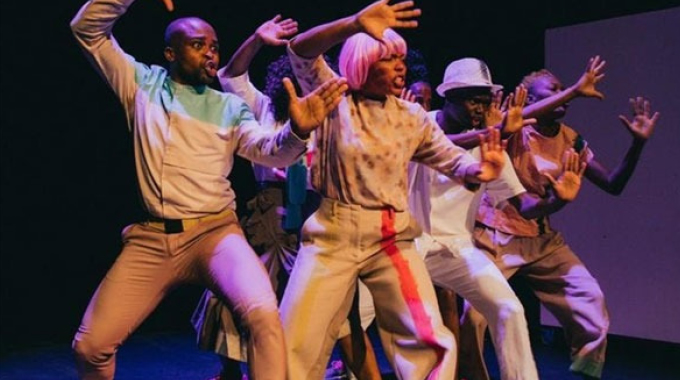
Mthabisi Tshuma, [email protected]
DEEP in Mangwe District, at a place called Mphoengs, is home to one of the country’s creative pride, Nkululeko Dube. This is a man who has refused to let the rural thickets of his upbringing define the path of his future.
Dube is the visionary behind the globe-trotting, internationally acclaimed dance outfit, Inkululeko Yabatsha School of Arts (Iyasa).
As the name suggests, the group has produced outstanding talents within the Cultural and Creative Industries (CCIs), including Sandra Ndebele, Nkwali, Benhilda Punky, DJ Prince Eskhosini, Newman Trindad, Bekithemba Phiri and Richard Ndlovu, among many others.
At the recently held National Arts Merit Awards (Nama), Dube received recognition under the Special Awards category — the Arts Personality Award.
According to the National Arts Council of Zimbabwe (NACZ), Dube has sparked a dance genre revolution in the country, one that has captured global attention. His lasting legacy as a mentor can be seen in the impressive careers of the artistes he has nurtured.
“He has been instrumental in landmark national productions, most recently producing The Great Zimbabwe — a monumental musical, performed by Zimbabwe’s national ensemble on the international stage, in Osaka, Japan, to widespread critical acclaim. He is, without question, a giant of Zimbabwe’s arts and culture, and a living testament to the transformative power of artistic vision,” said Nacz.
Zimpapers Arts and Entertainment Hub reporter Mthabisi Tshuma (MT) caught up with Nkululeko Dube (ND), the Kalanga boy who has conquered dance stages across the globe, to learn more about the man and his work.
In a wide-ranging interview, he opened up about his feelings on the Nama recognition and more. Below are excerpts from the interview.
MT: What does this recognition mean to you, and how does it reflect your more than 25 years’ contribution to the arts?
ND: My love for the arts was ignited in early childhood, and it grew stronger through my school years. At Mzingwane High School, together with the late Babongile Skhonjwa and a circle of passionate colleagues, we built a vibrant theatre club whose energy simply could not be contained within the school walls. That was the moment I truly felt there was something within me worth nurturing — a calling that the arts could give voice to.
That conviction deepened through college and university, and when I went on to teach at Mpopoma High School, I encountered a remarkable group of students who shared the same fire. Together, we built a formidable school drama and dance club that captured the attention of the entire country.
Among those students were Sandra Ndebele, Prelude Sibindi, Tsungai Tsikirai, Nkosana Ncube (now known as DJ Prince Esikhosini), Futurelove Sibanda, and many other extraordinary performers. Within just a few years, they carried that dream to the United States of America, and upon their return in 2001, Iyasa was born.
I have been a professional artiste for over 30 years — and my journey in the arts began even before that. This award feels particularly fitting as it coincides with Iyasa celebrating its 25th anniversary. It is, in many ways, a tribute to an entire legacy and a milestone shared by everyone who has been part of this story.
MT: Having witnessed the Zimbabwean arts scene evolve significantly, what is the most notable change you have observed, and how has Iyasa adapted?
ND: Perhaps the most transformative shift has been the revolution in Zimbabwe’s dance landscape. We played a significant role in giving birth to a thriving, professional dance sector in this country, and in doing so, inspired the formation of many other dance companies. What is equally important to note is that while our dance work is what we are most widely known for, Iyasa has consistently demonstrated that we are a versatile institution.
We have recorded hit songs like Bump Jive, Bump Shibilika, and more recently, the widely popular S’jaiva Sibancane — a reminder that we have always been more than one thing.
On the international stage, we have presented diverse theatre productions and continue to build meaningful collaborations with institutions around the world.
More broadly, I have been encouraged to see significantly more young people choosing the arts as a career, and notably, more women actively taking their place in the sector. This represents a genuine milestone. It tells me that Zimbabweans are increasingly recognising the arts as a legitimate and respected profession — something that was not always the case. These are just a few of the many positive changes I have had the privilege of witnessing.
MT: What first sparked your passion for dance, and how did your family and community support your early artistic journey?
ND: Mbongeni Ngema was among my greatest early influences. He showed me — and indeed the world — how music, dance, and theatre could be a powerful tool for empowerment, and a meaningful voice, especially for young people.
I was born in Plumtree, and from the very beginning of this journey, I was fortunate to have support around me.
My family has always been a cornerstone of my success. My father, who served as headmaster at Mzingwane High School during my years there, was particularly instrumental.
While he firmly believed I needed to complete my education before fully pursuing my passion, he also gave me the freedom and encouragement to follow my dreams. I am proud to say I achieved both — and to this day, I never stop reminding young people that education and artistic ambition are not opposites.
Talent alone is not sufficient, and neither does it serve as a credential you can present to the world. We all require academic grounding, even in the arts.
Iyasa has always been the product of a collective. Many people and institutions have contributed to our story — from international promoters to families who invited us to their weddings and private events; from entertainment venues like the New Windermere, Savanna, Harare Sports Diner, and Metropolis, to national galas and the many NGOs and corporates who engaged our services. Renowned artistes have also given generously of their time and expertise in training the hundreds of young performers who have come through our doors.
MT: What advice would you offer to young artistes starting out, and how can they navigate the challenges of building a career in the arts?
ND: I do not claim to have all the answers, but I will share what I have learnt. Master your craft, and give yourself the gift of time. Understand who you are before you seek to define your art. Stay humble, but commit to learning every single day.
Your first and greatest competition is with yourself. When you can honestly say you are better today than you were yesterday, only then are you truly ready to face the world.
Remember this: there are extraordinary dancers, musicians, and artistes out there whom the world has never heard of.
That tells you that talent alone is not enough to build a career. You must put yourself out there. Learn from others. Success is rarely a solo achievement — it is built through collaboration, relevance, and a genuine connection with your audience and your market.
If self-management is not your strength, find someone who excels at it and let them help you. Be humble, disciplined, patient, and hardworking. Give it time — Great Zimbabwe was not built in a day.
Cherish your clients and your fans. They are not merely your income; they are the very wealth of your career. And when you choose the arts, you choose a public life — your image and your integrity are everything. Above all, root your creativity in your own originality.
Do not be seduced by every passing trend. The wisest path is always to set the trend rather than simply chase it — learn from what is happening around you, but never lose your own voice.
One more thing, stay relevant but grounded. No soul is beyond criticism, and none is without flaw. Perfection was never the goal — growth is. Learn from every stumble, and never underestimate the power of two simple phrases that have humbled the mighty and healed the broken: thank you, and I am sorry. They are not weaknesses — they are the quiet foundation of lasting character. Never allow fame to consume you. Fame doesn’t necessarily define fortune.
MT: Iyasa has been a launchpad for many talented artistes. How do you approach the nurturing and mentoring of emerging talent?
ND: We take great pride in catching them young. We run a very active and structured junior programme, and we think of ourselves less as a performance group and more as a training institution. While we celebrate the stars that emerge and gain public recognition, we are equally committed to bringing through newcomers and raw, unpolished talent.
For us, discipline is everything. We would rather work with a disciplined artiste of average ability than a gifted one without a moral compass. We train the character before we train the craft. The mentoring is rigorous and intensive — and importantly, it does not rest on our shoulders alone. Iyasa has always been a collective effort, and many respected professionals are involved in shaping the next generation of artistes who come through our doors.
MT: What is next for you and Iyasa? Are there any exciting projects or plans on the horizon?
ND: Iyasa lives on, and we continue building our brand each and every day. We have several exciting projects in the pipeline, and beyond those, we remain steadfast in serving our community — from weddings and private events to international tours and major stages.
In July, we will be in the United Kingdom for the Doek & Slay UK edition, and we have a team of young performers set to tour Germany — and likely other countries — from May through July. We are also in the midst of preparing to celebrate our 25th anniversary, alongside many other ongoing projects. Our philosophy is simple: to dare is to do — and we have no intention of stopping anytime soon.
MT: This award comes after such a long journey in the industry. What is your reflection on receiving it at this stage of your career?
ND: I have been honoured with awards before — among them the Nama Legend at 40 accolade, which carries its own significance. This one is equally special, but it also carries a deeper reminder: that time is the truest measure of resilience. Focus on your craft. The world is watching, even when you cannot see it. And recognition becomes all the sweeter when it arrives with a long enough story to tell.
I hope this inspires every young person reading this never to give up on their dreams. Do not create for awards, create from a place of dedication and commitment — and let the awards, if they come, simply be the confirmation of a life well lived in service of your passion.
MT: Thank you so much for your time nzekulu.
ND: The pleasure is mine basekulu.
Follow on X: @mthabisi_mthire