

 admin
admin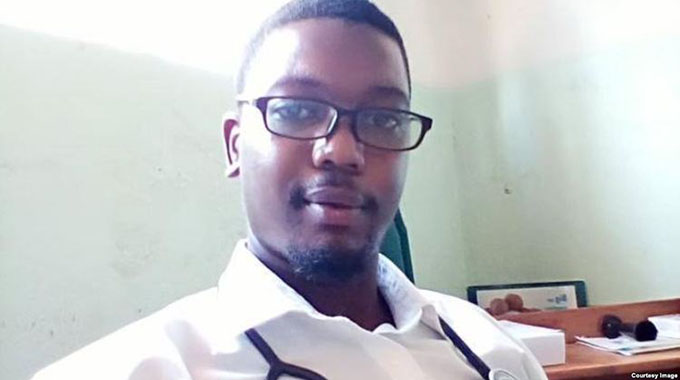
On March 1, 2018, junior doctors – the majority from Mpilo Central Hospital in Bulawayo – downed tools in protest over poor conditions of service and working environment.
Days later, other junior doctors from central and provincial health institutions joined the strike.
Today, (Tuesday, March 27) marks 27 days of the strike and medical consultants from different departments have started expressing concern on the state of affairs in public health institutions threatening to also withdraw their services if the current impasse between the junior doctors and their employer (The Health Services Board) is not resolved as a matter of urgency.
Our Senior Health Reporter, Paidamwoyo Chipunza (PC) talks to the Zimbabwe Hospital Doctors Association spokesman Dr Mxolisi Ngwenya (MN) to understand more on the impasse.
PC: It is almost a full month since members of the ZHDA withdrew their services from public health institutions. What really are the sticking issues in your negotiations with your employer?
MN: Government is negotiating in bad faith. They haven’t given a framework to provide drugs and medicines. Issues to do with on-call, risk and rural allowances remain unaddressed.
PC: But Government recently announced a review of these allowances by 50 percent, why did you turn down the offer?
MN: Government revised nurse allowances, not for doctors. For us, they only offered 50 percent of $1,50 which is 75 cents for on-call. They totally ignored rural and medical allowances.
PC: 75 cents? Can you shed more light on that figure?
MN: Government in 2014 agreed and promised to review doctors’ on-call allowance to $10 per hour. For the record, doctors work 160 hours per month, which means using the current on-call allowance, we are getting paid $1,50 per hour.
However, Government negotiators in the bipartite negotiating forum claimed that we are working 72 hours per month, which means according to their calculations we are earning $5 per hour. This is gross misrepresentation of facts on the ground. There is even a memorandum to that effect from the Permanent Secretary’s office indicating that we work 160 hours per month, thus we are currently paid $1,50 per hour.
Basing on these figures, that means Government’s offer of 50 percent increase is actually 75 cents in simple terms, which is way too far from the agreed $10 per hour of 2014.
PC: When was the last time Government reviewed your allowances and by what margin?
MN: Government promised an increase of $10 per hour in 2014. Since then, it only reviewed our on-call by 30 cents last year.
PC: Year in, year out, junior doctors down tools over conditions of service, does this mean Government has not been responding to ZHDA’s demands over the years?
MN: Previous ZHDA executive has been trusting the HSB and Ministry (of Health and Child Care) and giving in to negotiations before issues are solved, awaiting changes. But we are now realising that we were fooled. A good example is the on-call allowance that has caused today’s crisis. This figure was agreed on in 2014 and Government promised to pay us but four years down the line, we are still crying over the same issue. No meaningful review has been effected.
PC: How do the current conditions of service in the public health sector compare to those of your counterparts elsewhere in the region?
MN: I earn slightly above $400 a month, which ends up at about $800 including housing, transport and medical allowances against other doctors elsewhere. But you should take into consideration that transport and housing allowances are used for such purposes so I take home just about $400 yet other doctors earn over $3 000. To be precise, doctors in South Africa earn about $3 400 and those in Namibia earn $3 200.
PC: Among your demands you include improvement of medicine supplies and equipment in hospitals but Government has announced that it has so far disbursed $22 million under the Health Levy since December. To what extent has this improved the supply of drugs and availability of basic equipment in public health institutions?
MN: Where is the $22 million? Where are the drugs and medicines? We are yet to see an improvement in the supply of drugs in public health institutions. Just recently, Harare Hospital was struggling to assist babies suffering from bronchiolitis due to shortage of oxygen flow masks. Children had to share masks, further compounding their situation as they re-infect each other. What medical equipment could this $22 million have bought outside these necessities? In short, what we are saying is we are yet to see the impact of this so-called $22 million on the ground. People are still getting prescriptions to buy drugs.
PC: To what extent then have you engaged Government with regards to your grievances and how has been the response so far?
MN: We have met maybe three times in the last 24 days with the HSB. The Zimbabwe Medical Association (ZiMA) has also chipped in to assist with negotiations but there is still no light at the end of the tunnel. Government continues negotiating in bad faith, claiming we are paid $5 per hour and avoiding facts.
PC: Government’s latest stance is to deny all those who took part in the strike a salary and allowances, how do you respond?
MN: They should rescind that unconstitutional statement with immediate effect. The Act quoted is wrong, and we gave them notice. Industrial action is every worker’s right.
PC: A team of senior medical consultants met with the Presidium, that is Vice Presidents Kembo Mohadi and General Constantino Chiwenga (Retired), and later on President Mnangagwa appealed that you return to work, what became of the meeting?
MN: Nothing was communicated to us officially with regards to the way forward, so we believe we are still on the negotiating table.
PC: What then do you suggest as a long-term solution to this recurrent impasse between doctors and the HSB?
N: The HSB and ministry should be scrutinised and put to task. How can they take over two months to address these issues? We feel they are not giving the crisis the urgency it deserves yet people are suffering in hospitals.


 Online Reporter