Chronicle Editor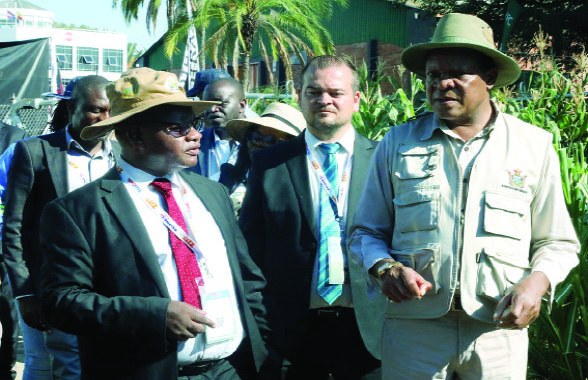
Nqobile Tshili, [email protected]
ALL the food insecure individuals in rural areas are entitled to 7,5kg of maize for five months starting in May before the allocation is increased from October until the next harvest season as the Government steps up measures to cushion communities from the El Nino-induced drought, a Cabinet minister has said.
Zimbabwe is among the Southern African states that have been hard hit by El Nino weather conditions, which have crippled the summer cropping season due to poor rains that resulted in crop failure.
President Mnangagwa has since declared the farming season a State of Disaster to enable the Government’s efforts to mobilise resources to feed the food-insecure citizens.
In an interview in Bulawayo last Friday, Lands, Agriculture, Fisheries, Water and Rural Development Minister, Dr Anxious Masuka, said due to El Nino, the country this year recorded a 77 percent cereal crop production decline.
He said the Government has since come up with a food mitigation strategy to assist communities until March next year.
“We think that Zimbabweans need not panic in terms of crops, there are sufficient plans by the Government to ensure that everyone will get something. The Ministry of Public Service, Labour and Social Welfare has just completed a household-based village coordinated vulnerability assessment and this is in addition to the second round of crop assessment, so we have enough plans,” he said.
“We want to feed everyone in the rural areas at 7,5kg (maize) per person per month between now and September. From October, when we think that they will have finished what they harvested, we will then increase to 8.5kgs per month.
“So, the Government has taken sufficient steps to ensure national food security between now and March 2025.”
Dr Masuka said the country has 430 000 metric tonnes of wheat, maize and traditional grain in its reserves and expects to salvage something from the El Nino season.
“We are also looking to glean from this El Nino season, those that have done traditional grains and harvest. We have 75 000 tonnes of maize under irrigation, so we anticipate some harvest of some sort,” he said.
“So, collectively, we think we will have 744 metric tonnes of cereal. As the private sector and as the Government, we have said that the 400 000 metric tonnes that we require for feed must be imported by the private sector,” said Dr Masuka.
He said the private sector will be expected to import maize to feed mostly urban centres, as countries such as South Africa, which is believed to have had excess grain, is one of the nations where the country will seek to import from.
Dr Masuka said Silo Food Industries as a state entity is also expected to play an important role in the provision of mealie-meal and providing stability in mealie-meal prices.
He said the Government is expecting to sustain increased supplies to ensure no one starves.
“Zimbabwe is a comparative and a competitive advantage producing wheat this winter rather than maize and sorghum, so the Government has taken a deliberate winter wheat-based food security strategy, where we are going to produce on 120 000ha to yield between 600 metric tonnes and 624 metric tonnes, which will aid a substantial amount to our strategic grain reserves,” said Dr Masuka.
The minister said the Government is targeting to drill 10 000 boreholes between May and November as there is a projection of a 70 percent shortage of water in the communities, which will affect both people and livestock.
“We now predict that over 70 percent of the wards will not have sufficient water for livestock, over 70 percent of wards in rural areas will not have enough grazing to last to the next season,” he said.
“So, we want to mobilise fodder, we want to drill boreholes in villages. We will drill 10 000 boreholes between now and November, a thousand boreholes every month where two to three villages come together and that will be a centre for livestock and people.”
Dr Masuka said the Government will also install a one-hectare solar-powered garden to improve diet and nutrition within communities during the drought period.
He said the Government will also be establishing two fish ponds per village and warned farmers particularly in southern parts of Matabeleland, Midlands and Masvingo not to panic and sell livestock, as this has resulted in some of them being ripped off.
“These are the plans. We also know that because of drought the livestock sector, especially in Matabeleland, Masvingo and Midlands will be affected.
“In the first quarter we have seen a 43 percent increase in the number of livestock, which has been sold in Matabeleland South,” said Dr Masuka.
“Consequently, the price has come down to US$150 per livestock when farmers should be getting better value,” said Dr Masuka.— @nqotshili.



 Online Reporter