Online Reporter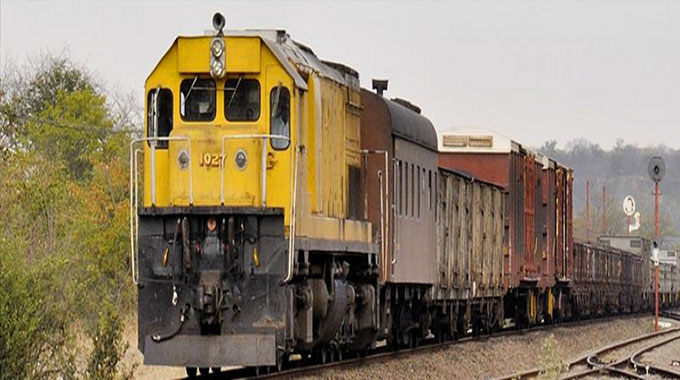
Rutendo Nyeve, Victoria Falls Writer
THE National Railways of Zimbabwe (NRZ) has set an ambitious target of transporting 3,03 million tonnes of freight this year, leveraging a comprehensive rehabilitation of its ageing rolling stock as the parastatal seeks to reclaim its strategic role in the national economy.
The projection follows a near-miss performance last year, when the rail operator achieved 95,3 percent of its 2025 freight target, signalling both lingering operational challenges and signs of gradual recovery.
In 2025, NRZ aimed to move 2,13 million tonnes of cargo across the country but managed 2,03 million tonnes, falling short by about 100 000 tonnes. Management attributed the shortfall to persistent capacity constraints, including limited locomotive availability, frequent breakdowns caused by ageing equipment, fuel shortages and other logistical challenges.
NRZ public relations manager Andrew Kunambura said the inability to uplift all available business was largely due to these structural issues.
“The failure to uplift all sourced business was due to capacity and operational constraints, mainly shortage of fuel, aged rolling stock, which is now susceptible to frequent breakdowns and failures, and other logistical issues,” he said.
Once the backbone of Zimbabwe’s freight and passenger transport system, NRZ has over the years seen its capacity eroded by underinvestment, sanctions-related procurement challenges, vandalism and competition from road haulage. At its peak in the late 1980s and early 1990s, the rail network moved more than 18 million tonnes of freight annually, servicing mining, agriculture, manufacturing and regional transit traffic.
The decline in rail capacity has placed pressure on the country’s road network, increased logistics costs for industry and accelerated road damage due to heavy trucks carrying bulk commodities better suited for rail.
Against this backdrop, NRZ’s 2026 strategy is anchored on the rehabilitation and refurbishment of locomotives and wagons, which management believes will be a game-changer.
“Target for this year is 3,03 million tonnes and we are anticipating meeting it because of a major shift in terms of rolling stock availability,” said Mr Kunambura.
He said the railway company has intensified refurbishment works at its Bulawayo workshops, long regarded as the nerve centre of NRZ’s engineering capacity.
“As we speak, in the first week of January, we released a newly refurbished locomotive and we anticipate releasing five more, which are undergoing refurbishment at our Bulawayo workshops in the first quarter of 2026,” he said.
Beyond locomotive refurbishment, NRZ is also focusing on improving wagon availability and adopting more effective fuel procurement strategies to stabilise operations and reduce service disruptions.
“We also anticipate improved wagon availability and new, effective fuel procurement strategies going forward. With the growing production in the mining, manufacturing and agriculture sectors, we are anticipating great availability of business,” he said.
Mining, particularly coal, chrome, nickel and ferrochrome, remains one of NRZ’s biggest freight drivers, while the recovery of agriculture and manufacturing is expected to further boost demand for rail services. The rail operator also plays a critical role in regional transit traffic, linking Zimbabwe to ports in Mozambique and South Africa.
The 2026 target represents an increase of nearly one million tonnes over the 2025 goal, signalling renewed confidence in the ongoing rehabilitation programme and the resilience of key economic sectors.
A functional and capacitated NRZ is viewed as critical to Zimbabwe’s economic growth, providing a cheaper, safer and more environmentally friendly alternative to road transport for bulk commodities, while reducing pressure on highways and improving regional trade competitiveness.
Mr Kunambura said teams at the Bulawayo workshops and procurement offices were working around the clock to ensure the refurbishment programme translates into tangible performance gains. He added that achieving the 3,03 million tonne target would mark a significant turnaround for the national rail operator, restoring confidence among clients, supporting local industry and breathing new life into a vital national asset.