


 malvernmugadzikwa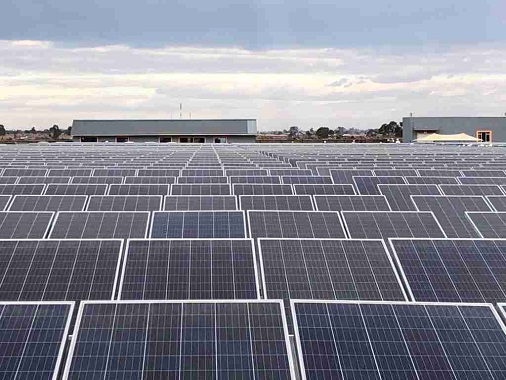
Dr Emmanuel Fundira
THE National Social Security Authority (NSSA) underwent leadership change in July 2022, preceding a period marked by instability and governance challenges.
Since then, NSSA has recorded significant progress across several strategic areas.
The board has stabilised NSSA by addressing systemic governance challenges and restoring organisational confidence, ushering in a period of steady operations and enhanced stakeholder trust.
Implementation of forensic audit recommendations
Efforts by the board, together with management, have gone a long way in restoring public confidence in NSSA’s operations.
It should be noted that the board facilitated the forensic audit by ensuring it proceeded without obstruction, allowing the appointed auditors to complete the process within nine months, from September 2022 to May 2023.
Once the Government-initiated forensic audit was concluded, the board and management were tasked with implementing its recommendations.
These included enhancing governance frameworks, initiating disciplinary action on implicated individuals and improving compliance mechanisms.
Despite some challenges, including pushback from those implicated, the board and management successfully implemented the recommendations without causing major instability to the authority.
The focus was on financial prudence, plugging leakages and enforcing disciplinary measures against implicated individuals.
The liquidation of investment properties without due procedure has been stopped and is now something of the past. Transparency and accountability have been fully restored.
NSSA successfully conducted the long overdue 2020 annual general meeting (AGM) in 2023. AGMs for 2021/2022 were held in 2024. Preparations for the 2023 AGM are underway.
The exit meeting with the Auditor-General’s Office for the 2023 financial statements was successfully held recently.
Financial soundness
In July 2022, the Pension and Other Benefits Scheme (POBS) was teetering on the edge of insolvency, relying heavily on the Accident Prevention and Workers Compensation Scheme (APWCS) for liquidity support.
A range of strategies were initiated to plug leakages and restore financial health, with a focus on enhancing investment income.
By the end of July 2022, the scheme became financially sound and capable of supporting pension payments independently.
By the third quarter of 2024, USD cash reserves had exceeded US$49,37 million from an initial base of US$2 million in July 2022.
The overall investment portfolio value increased by 39 percent in 2023 and 35 percent in 2024, reaching US$787,2 million.
Also, the claims-to-contributions ratio improved to 53 percent, reflecting efficient financial management.
Staff costs were maintained at 15 percent of total income, significantly below the Public Entities Corporate Governance (PECOG) threshold of 30 percent.
By the end of October 2024, the surplus stood at US$86,75 million, with projections indicating it would surpass US$100 million by year-end, providing funds for future investments.
Increased payouts
In 2022, the minimum pension was paid in the local currency, equivalent to US$20.
Over the past two years, this amount has steadily increased due to prudent financial management. This has enabled the authority to enhance pension payments despite adverse economic circumstances.
By the end of 2024, minimum retirement pensions had risen to a minimum of US$60, while injured workers’ pensions reached a minimum of US$70, well above the occupational pension scheme average of US$17.
NSSA’s commitment to improving pensioners’ welfare is evident in these steady increases.
The authority continues to review pensions in response to economic conditions, ensuring consistent adjustments.
NSSA is now the leading pension fund in Zimbabwe, with the capacity to pay bonuses while other pension funds have lagged behind.
Furthermore, reforms such as the introduction of an indexed insurable earnings ceiling and intensified risk-based collection mechanisms have bolstered the scheme’s sustainability and enhanced its financial position.
Partial USD payments
In response to economic volatility and inflation, NSSA introduced partial US dollar disbursements in 2023.
This initiative has ensured that pensioners receive a portion of their benefits in a stable currency, cushioning them from the adverse effects of inflation.
By 2024, NSSA had consistently adhered to payment schedules, contributing to improved client satisfaction ratings.
This achievement reflects NSSA’s ability to navigate challenging economic environments while maintaining focus on beneficiary welfare and operational efficiency.
Revenue collection
NSSA’s contribution collection improved significantly, supported by nationwide blitzes and risk-based compliance initiatives.
In 2024, revenue collection reached 318 percent of the annual target, with US dollar contributions bolstered by a revised insurable earnings ceiling set at US$700.
Cumulative contributions exceeded ZiG2,12 billion (inclusive of US$139 million).
NSSA has implemented several legislative reforms that have seen the entity receiving US dollar contributions from both employer and employees, including the Government.
Digital transformation
NSSA undertook a successful migration from the Zimbabwe dollar (ZWL) to the ZiG currency system, enhancing operational efficiency.
There were no disruptions to operations, particularly the ability to pay beneficiaries every month.
NSSA achieved 90 percent completion of major digitisation projects, including the addition of procurement, human resource and inventory modules to its enterprise resource planning system.
At the 2023 International Social Security Authority awards ceremony, NSSA won a certificate of merit with special mention for enhanced compliance enforcement through embracing information and communication technology (ICT) and collaboration with other statutory bodies/agencies.
Further to that, NSSA received a certificate of merit for the establishment of internet kiosks for ease of access to the organisation’s services, as well as a certificate of merit, in recognition of implementation of the self-adjusting framework that is reviewed quarterly and indexed against the cost of living.
Investments in national development
By collaborating with private sector players, NSSA has aligned its investment strategy with Zimbabwe’s Vision 2030, focusing on impactful projects that stimulate economic growth.
On the energy front, NSSA invested US$8 million in the Centragrid Solar Power Station, which now feeds 23 megawatts into the national grid.
For agriculture, in 2024, US$20 million was allocated for wheat farming and agricultural development through Treasury Bills.
In infrastructure, NSSA invested US$2 million in road construction to support the New City project and provided additional funds for enhancing connectivity to critical national assets.
Development of serviced stands in Borrowdale and Glaudina contributed significantly to investment income, generating US$4,17 million in profit.
In terms of collaborations, NSSA partnered with the ILO (International Labour Organisation) Decent Work Country Programme to address the needs in the construction sector, enhancing social security coverage for informal workers.
Cumulatively, NSSA invested over US$34 million in national development projects in 2024, underscoring its commitment to sustainable growth.
Addressing informal sector needs
NSSA conducted a comprehensive priority needs assessment for the informal economy, in partnership with the Zimbabwe National Statistics Agency
This initiative lays the foundation for a social security scheme tailored for the small and medium enterprise (SME) sector.
Stakeholder engagements have enhanced awareness and buy-in for the scheme’s development.
In terms of improved occupational safety and health, NSSA reduced workplace injuries significantly, achieving a lost time injury frequency rate (LTIFR) of 2,24 against a target of 2,6.
Over 6 800 inspections and 360 training sessions were conducted in 2024 to improve workplace safety.
Major initiatives included the Safety and Health at Work Conference and Engineers’ Occupational Safety and Health Conference, aimed at promoting a zero-harm culture.
NSSA’s collaboration with social partners and international organisations like the ILO has strengthened.
Partnerships under the Decent Work Programme have fostered significant advancements in addressing sectoral challenges.
2025 targets
We look forward to finalisation of the recruitment of a substantive general manager and addressing the issue of more than 35 acting positions at middle to senior management levels, which continues to stifle decision-making processes.
Also, we hope to see finalisation of the revised draft organogram and grading system designed to bring in increased operational efficiency and delivery.
Scaling up and enhancing ICT systems in line with current global trends and providing tools and systems that enable efficient communication, data management, analysis and risk management are also imperative.
Last but not least, we look forward to continued guidance and wise counsel from the parent ministry.
Dr Emmanuel Fundira is the NSSA board chairperson. He was responding to questions from The Sunday Mail’s Emmanuel Kafe.



 Online Reporter