Online Reporter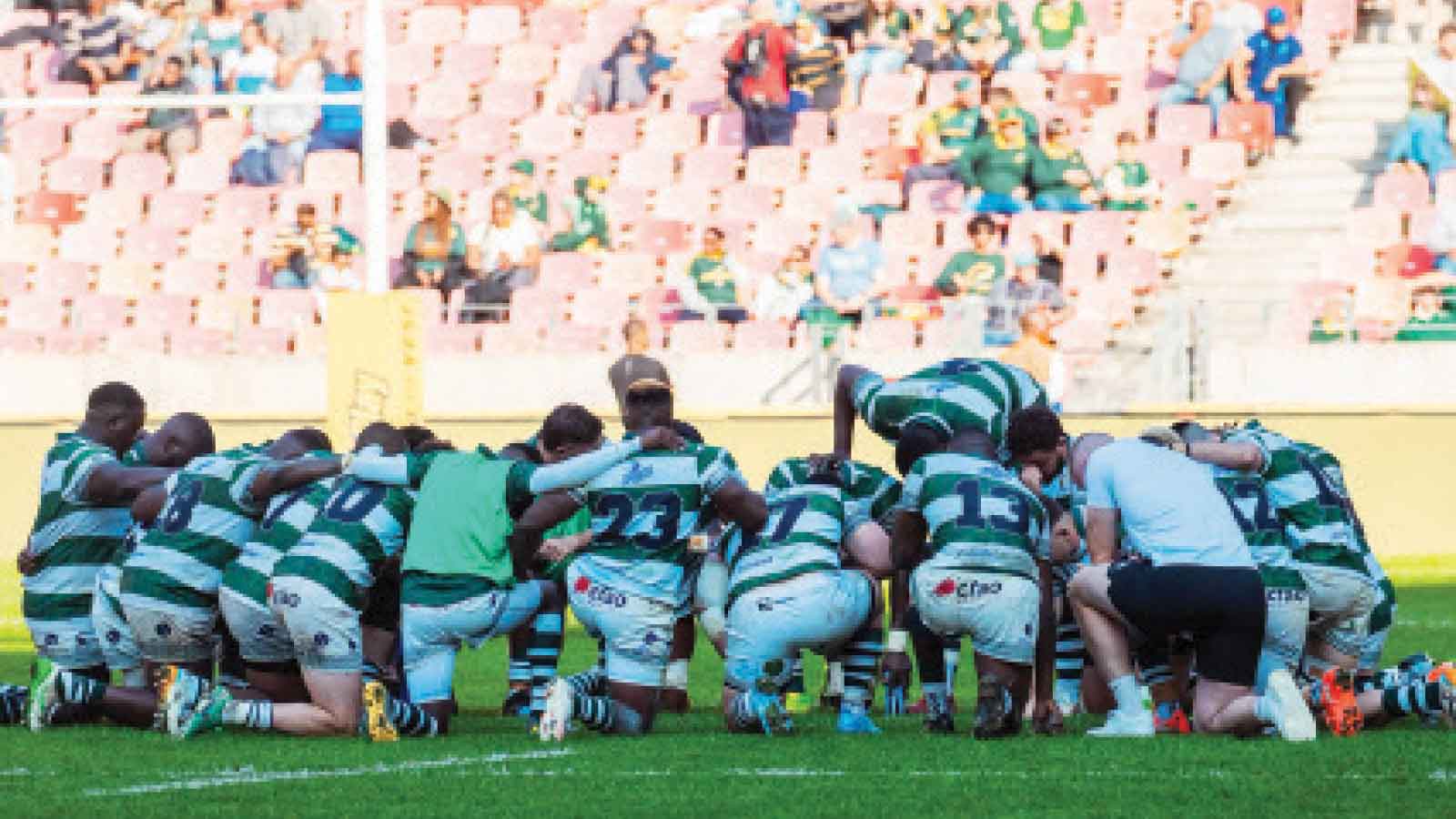
Tinashe Kusema, Zimpapers Sports Hub
ZIMBABWE captain Hilton Mudariki has made two bold statements that paint quite a different picture of the Sables humbling 40-nil defeat at the hands of a well-balanced and highly motivated South Africa A side at the weekend.
The hosts put six unanswered tries past Zimbabwe at the Nelson Mandela Bay Stadium last Saturday, with Yaqeen Ahmed, Markus Muller, Haashim Pead, Nico Steyn, Oman Khan and Jaco Williams all touching down for the Springboks’ aspirants.
Ahmed chipped in with three conversions while fullback Luan Giliomee added two more as South Africa put up a clinic in front of their home fans.
“Obviously we are disappointed with the result,” said Mudariki.
“We felt we prepared well and there were periods of the game when we showed what we are capable of.
“However, we weren’t consistent enough as a whole and credit to the opposition, who executed their plans better than we did.
“We know we are capable of better performances and that’s something we will be looking to address before the Nations Cup campaign,” he said.
While it will be easy to chalk off Mudariki’s sentiments as a captain defending his charges and doing some damage control, the Sables skipper does go on to make a couple of key observations from the match.
Observations that, once supported by the statistics from Saturday’s match, paint a completely different story.
The first, according to Mudariki, is that game and result down to two key factors, efficiency and consistency.
“I think it all came down to a few key moments in the game,” said Mudariki.
“At this level, small mistakes can make a big difference, and we weren’t clinical enough when opportunities came our way.
“We also allowed the opposition to gain momentum during important periods of the match,” he said
According to the statistics gathered by the publication, the 40-nil scoreline was not a blowout performance, but a blowout in execution.
This comes with the discovery that, for the most part, Zimbabwe matched South Africa’s A dominating possession at 58-42 percent split.
South Africa A dominated field position, not ball time as Sables 48 percent against South Africa A 52 percent.
When it came to territory, the Sables won that battle with a 59 percent against the hosts 41.
Zimbabwe actually spent more time in South Africa A’s half.
However, the key difference here is that the hosts made better use of their time with the ball.
The hosts made 18 entries into the Sables 22metre box as opposed to Zimbabwe’s four.
Their 18 entries produced six tries while Zimbabwe failed to make any.
That was the biggest difference between the two teams as Sables had territory but couldn’t get into the red zone.
South Africa A turned every entry into points at – 2.22 tries per 22m entry against the Sables’ zero.
The Sables had the ball and field position, but South Africa A defended their 22m and attacked Sables’ 22m way more efficiently.
“We will be looking at improving our consistency, sharpening our execution and making better decisions in key moments,” said Mudariki.
“The Nations Cup is around the corner, so it’s important that we learn from this match and continue building as a group,” he said.
In other departments, the Sables managed to match and, sometimes, outperform the hosts.
In terms of ball carries, it was 122-119 spilt which means that the Sables weren’t outworked.
It was a similar situation with line breaks as South Africa A had nine as compared to the Sables’ six.
Again here, efficiency came into play as the hosts converted their breaks into tries while the Sables didn’t.
Ruck Speed is another department that Sables coach Piet Benade will need to work on.
At zero to three seconds, South Africa A had 64 percent as compared to the Sables 40.
South Africa A got front-foot ball, while the Sables played slow ball, killing their momentum.
Mudariki reserved praise for his forwards, who actually outperformed their opponents as they put up quite a shift.
It is one of the positives that the Zimbabwe Sables camp can take away from the match as it puts them in better standing going forward.
“Positively, I thought the effort and commitment from the players was excellent and there were some encouraging individual and team performances,” he said.
“On the negative side, our execution under pressure wasn’t where it needs to be and there are aspects of our game that we know we can improve.”
Insofar as set pieces are concerned, Sables’ scrum was a weapon.
The forwards won 10 out of 10 scrums with a 100 percent while the hosts won only 80% of theirs. Sables actually won this battle.
The lineouts saw the Sables win 13 out of 26 as compared to the hosts 15 out 17 which gave South Africa A a slight but not decisive edge.
Another positive Benade and his men can take from that game is the Sables defensive efforts.
Zimbabwe were the more disciplined of the two teams.
Admittedly, they conceded more penalties (8-7) but they did not receive a single card while the hosts finished with 14
men after Ahmed was shown red due to a dangerous tackle on fullback Tapiwa Mafura.
The Sables made 132 tackles and missed 29, while South Africa A made 142 and missed 22.
South Africa A made more tackles and missed fewer, which was the main difference on the day.
Zimbabwe did win more turnovers, seven, as compared to South Africa A’s four, which means the Sables competed more at breakdown.
Put into perspective, the match was not the blowout that the 40-nil scoreline suggests.
Rather, it was a wake-up call for Benade and his Sables squad.
Sables won the scrum battle, had more territory, and forced more turnovers, seven-four.
What this means is that a foundation is there now for the team to build on, namely scrum, territory, breakdown compete.
The next step now requires them to build on the efficiency, converting territory and into 22m into tries while fixing that gainline defence.
The Squad already appears unmoved from the defeat and, luckily, came out of the tie unscathed from an injury
standpoint.
“Disappointment is natural after a loss, but we have a resilient group of players,” said the skipper.
“We will take the lessons from this game, move forward and focus on being better in the next challenge.
“There is nothing major to report in terms of injuries.
“A few players picked up the usual bumps and bruises that come with a physical game, but we will continue to
monitor everyone over the coming days,” he said.