Online Reporter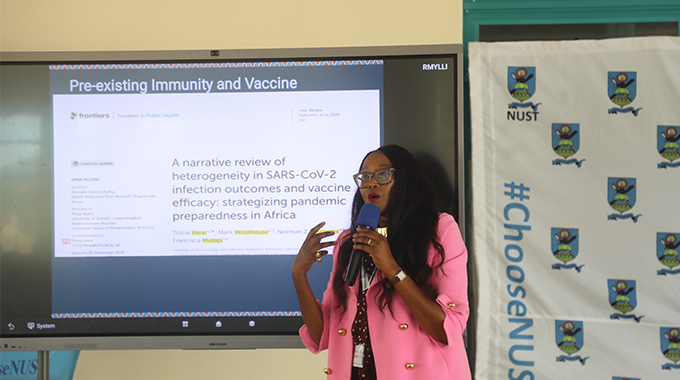
Raymond Jaravaza, [email protected]
THE National University of Science and Technology (Nust) is breaking new medical ground through the establishment of a national and regional biobank that will collect, process, store and manage biological samples for biomedical research to support the development of new medicines and vaccines.
The ground-breaking medical facility will be known as the Nust Institute of Immunopharmacology and Biobanking, whose vision is to become a leading African centre of excellence in advancing Immunopharmacology, vaccine innovation and clinical research to combat infectious diseases.
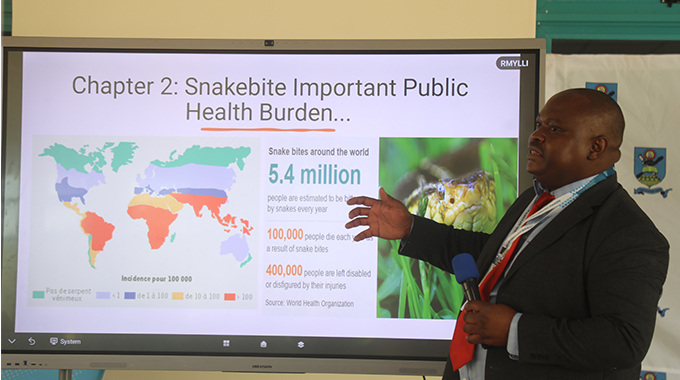
The institute was launched yesterday at the university’s Professor Phineas Mogorosi Makhurane Technovation Centre, where leading figure in Global Health Infection and Immunity and co-director of the Global Health Academy at the University of Edinburgh, Professor Francesca Mutapi, outlined its importance in addressing Africa’s pressing medical challenges.
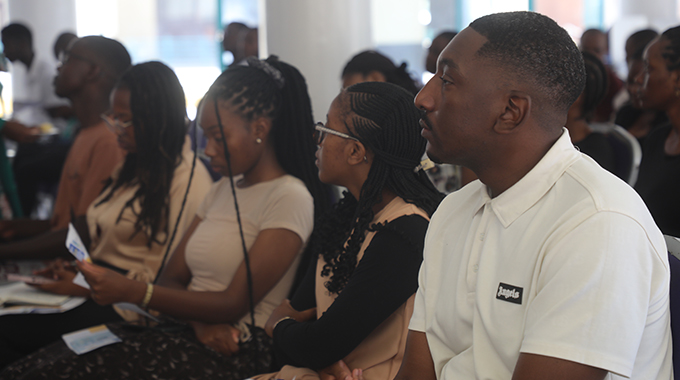
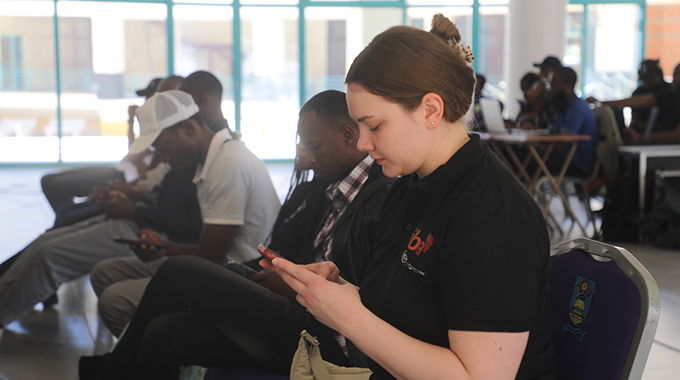
Prof Mutapi was joined by academics and researchers from Zimbabwe, Uganda and Scotland, as well as Nust medical students.
Speaking on the sidelines of the launch and a series of lectures by medical professionals, Prof Mutapi said the biobank and its related research would lead to cheaper drugs and vaccines for Zimbabwe.
“One of the most important advantages of a biobank is that it can be used to develop diagnostics, drugs and vaccines in-country. An example is our work on bilharzia, the number one disease that affects children in Africa after malaria, where Tiba (Tackling Infections to Benefit Africa) is working on developing a diagnostics that works for a specific country so that vaccines can be produced in that particular nation,” she said.
Prof Mutapi said producing medicines locally reduces the regulatory requirements associated with importing new drugs.
“When a particular drug is made in Zimbabwe for Zimbabweans we don’t have to test it over and over again to see if it will work for the local populations thereby shortening time spent on research and ultimately production.
“A drug might be good in the laboratory but turn out to be a bad product in the field as seen by some interventions that are developed in western countries but fail to work in Africa. Those medicines are usually expensive as the process of producing and testing them costs a lot of money so pharmaceutical companies have to recoup the costs by making the drugs expensive,” she said.
She added that local production significantly reduces costs for patients, making the establishment of a biobank at Nust critical.
Tiba is a continental multi- disciplinary research programme that studies how different African health systems tackle infectious diseases.
Prof Mutapi said Nust was a natural choice for the biobank because of its strong track record in scientific excellence.
“Nust is a university that already has an inbuilt culture of translating science into practical solutions so establishing a biobank here was an easy decision. A lot of academics think that the destination of our science research is publication in some high profile journals but we believe that improving health and saving lives is equally important.
“The second reason why we selected Nust for the biobank is that Tiba works not by pushing for solutions but by responding to pull factors that offer solutions. We strongly believe in African science by African scientists within Africa for Africans,” she said.
The biobank will serve as an organised library for human biological samples such as blood, tissue and saliva, enabling disease studies and supporting the development of diagnostics and improved medicines and vaccines.
“We know that Africa has the highest genetic variations greater than the rest of the world put together and genetics affect how people react to vaccines and drugs. Now, if all the drugs are made in Europe and optimised for the populations of that continent, those medicines might not work so well in Africa,” said Prof Mutapi.
“We need to know the genetics of the African populations without necessarily taking samples from every person in the continent but taking samples collected by hospitals and during research studies and keep them in one safe, secure place for many years.”
Prof Mutapi said that when it is time to develop diagnostics, drugs or vaccines, researchers will consult the biobank.
“When it’s time to check if a particular drug or vaccine will work in Africa, our first port of call is to go to those stored samples for further research and tests. That is why biobanks are very critical in the medical field. Having a biobank at Nust also guards us against trials of new medicines in Europe, for example, which have less chances of working on African populations,” she said.