Chronicle Editor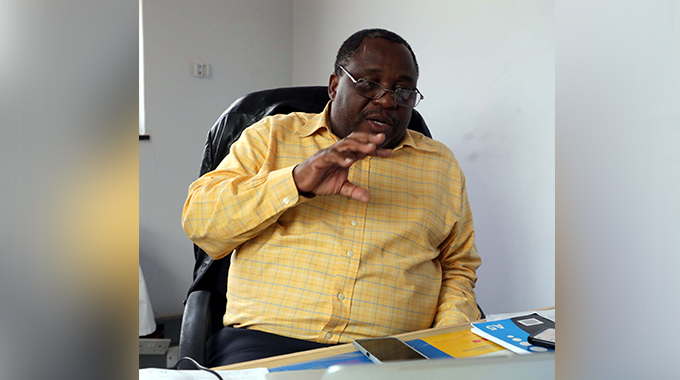
Raymond Jaravaza, [email protected]
SINCE acquiring specialised equipment for its DNA testing facility in 2014, the National University of Science and Technology (Nust)’s Applied Genetics Testing Centre (AGTC) has conducted over 10 000 paternity tests, representing at least over a thousand tests per year.
This has positioned the university as a leader in innovation and technology in the country and the lab is registered with the National Biotechnology Authority, as well as the Medical Laboratory and Clinical Scientists’ Council of Zimbabwe.
The University Council approved funding for AGTC and acquired specialised equipment that was imported in August 2014 paving the way for its operationalisation with fully compliant scientists manning it.

Besides paternity tests, Nust’s AGTC has in the last 10 years conducted over 500 human forensics tests, used to determine the identity of individuals burnt beyond recognition in road accidents, home, veld and any other fires.
The university’s AGTC is instrumental in assisting law enforcements authorities to conclusively identify criminals involved in heinous crimes such as rape where the perpetrators leave evidence like semen samples, which the courts of law can use to convict suspects.
Nust head of Applied Genetics Testing Centre, Mr Zephaniah Dhlamini, highlighted the above milestones in an interview yesterday.
“It’s been 10 years since the AGTC was opened and we have done over 10 000 paternity tests in addition to over 500 human forensic tests to identify individuals burnt beyond recognition or dismembered in road accidents, plane crashes or fires,” said Mr Dhlamini.
He also said some of the university’s achievements were showcased during the recent Presidential Innovation Fair 2024 Awards ceremony in Harare, which were presided over by President Mnangagwa last month.
“At the Presidential Innovation Fair 2024 Awards, our innovations were judged by a team of adjudicators and we won in two categories as AGTC.
“The first category that we won was the Presidential Best Innovator, which was the grand prize that came with US$50 000. We also won the Best Innovative University category.”
The awards are aimed at celebrating learning institutions and individuals’ achievements that are rooted in heritage based Education 5.0.

Various institutions of higher learning, including universities and polytechnic colleges, corporates and individuals received awards, certificates and trophies for their sterling performance in the innovation ecosystem.
The ceremony was held under the theme “Innovation for attainment of Vision 2030”.
In his keynote address, President Mnangagwa said the innovations dovetail with the Second Republic’s philosophy nyika inovakwa nevene vayo/ llizwe lakhiwa ngabanikazi balo.
“Government will continue to provide a favourable environment for start-ups, this includes support capital and support markets,” said President Mnangagwa.
In 2022, Nust started manufacturing Polymerase Chain Reaction (PCR) kits following the delivery of a US$86 000 reagents manufacturing machine.
At that time, the country had been importing PCR kits for Covid-19 tests and the Government had in the previous year released funds to Nust to procure the Oligomaker reagents manufacturing machine, which reduced tests costs by 60 percent.
At the height of the Covid-19 pandemic, a conclusive PCR test cost around US$60 but once the machine became operational, the cost reduced to around US$20.
Besides making Covid-19 testing kits, the machine also makes reagents to test for other viruses including HIV.


 Online Reporter