admin
admin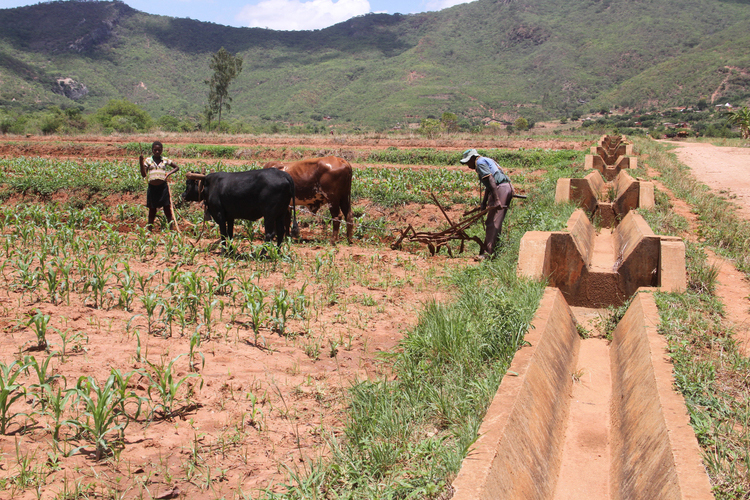
THE Gairezi River, whose source is on the slopes of Zimbabwe’s highest mountain, Mount Nyangani, is an outdoor enthusiast’s dream.
Home to a variety of fish species, among them the famed trout, yellow fish and eels, the river’s environs are ideal for mountain biking, tubing and kayaking.
Doted on the river’s course are stunningly beautiful waterfalls, pools and rapids.
Apart from being a tourist attraction, the river is a source of livelihood for thousands of families, particularly in Nyanga North where Nyakomba Irrigation Scheme is situated.
The Nyakomba Irrigation Scheme, which is set to become the country’s biggest functional irrigation scheme, draws its water from the mighty Gairezi.
In 2015, the Japanese government extended a US$15 million grant aid for the development of the scheme.
The developmental project, which has since kicked off, will result in the construction of irrigation facilities.
Both A1 and A2 farmers are set to benefit.
As part of the project, water canals and pumps will be repaired and replaced.
Flood protection structures for the existing facilities are set to be installed and irrigation equipment sourced.
A new irrigation block that covers 146 hectares, projected to benefit 230 smallholder farmers is set to be constructed at a cost of $5,9 million.
Currently, the scheme measures 674 hectares, accommodating 861 smallholder farmers who are subdivided into five blocks.
The completion of the scheme is expected to improve agricultural productivity.
This will go a long way in addressing food and nutrition security.
Nyakomba villagers are excited about the project, which they say will transform their livelihoods.
Mrs Christine Gwezere, who heads one of the irrigation scheme’s five blocks, said the grant is set to improve productivity.
“We are currently facing acute water shortages since two of our three pumps are not functional. This means that only one household, instead of three, is capable of irrigating its plot at a particular time.
“Once the other pumps are replaced, we will be able to operate at full throttle,” Mrs Gwezere said.
She said once the pumps are replaced, the farmers will be able to plant their crops throughout the year.
In Mrs Gwezere’s block, which has 128 farmers, each household was allocated 0,5 acres and the farmers grow beans, yellow maize, onions, cabbages, paprika, tomatoes, cucumbers and tabasco chillies.
The sizes of plots differ from one block to another.
Mrs Gwezere bemoaned the bad state of roads, which she said is scaring away potential buyers.
“I am hopeful that part of the funds will be used to rehabilitate the roads.
“We are having problems when it comes to markets for such perishable products as tomatoes and green beans.
“Buyers are not willing to come here since the roads are very bad,” said Mrs Gwezere.
According to Ms Tsitsi Makombe, the local Agricultural Extension Officer, the farmers produce, on average, four tonnes of maize per hectare.
She, however, said the farmers are capable of producing up to eight tonnes of maize per hectare if given the necessary financial support.
For Tabasco chillies, the farmers produce on average 18 tonnes per hectare whilst 1,5 tonnes of beans per hectare can be realised.
For paprika, the farmers produce two tonnes per hectare.
Ms Makombe said the rehabilitation of the irrigation facilities will transform the irrigation scheme into one of the most productive in the country.
“As you are aware, climate change can no longer allow us to depend on the rains.
“Farmers will now be able to plant their crops all year round. The number of farmers will also increase, which translates into an increase in production,” Ms Makombe said.
She said funds must be poured into such projects so as to mitigate the negative impact of drought and achieve food security.
When The Sunday Extra visited the scheme last week, engineers were carrying feasibility studies for the expansion project.
The engineers were designing the expansion project and rehabilitating pump stations.
The Nyakomba Irrigation Scheme was established between 1997 and 2000 with funding from the Japanese International Cooperation Agency (JICA).
Owing to the financial challenges, production decreased and the Government battled to rehabilitate the scheme after it was damaged by cyclone-induced floods in 2006.


 Online Reporter