admin
admin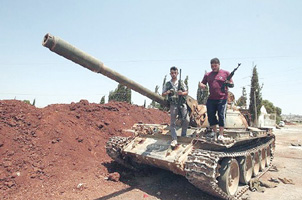
Obama’s order, approved earlier this year and known as an intelligence “finding”, broadly permits the CIA and other US agencies to provide support that could help the rebels oust Assad.
This and other developments signal a shift toward growing, albeit still circumscribed, support for Assad’s armed opponents — a shift that intensified following last month’s failure of the UN Security Council to agree on tougher sanctions against the Damascus government.
The White House is for now apparently stopping short of giving the rebels lethal weapons, even as some US allies do just that.
But US and European officials have said that there have been noticeable improve-ments in the coherence and effectiveness of Syrian rebel groups in the past few weeks. That represents a significant change in assessments of the rebels by Western officials, who previously characterized Assad’s opponents as a disorganised, almost chaotic, rabble.
Precisely when Obama signed the secret intelligence authorisation, an action not previously reported, could not be determined.
The full extent of clandestine support that agencies like the CIA might be providing also is unclear. White House spokesman Tommy Vietor declined comment.
A US government source acknowledged that under provisions of the presidential finding, the United States was collaborating with a secret command centre operated by Turkey and its allies.
Last week, Reuters reported that, along with Saudi Arabia and Qatar, Turkey had established a secret base near the Syrian border to help direct vital military and communications support to Assad’s opponents.
This “nerve centre” is in Adana, a city in southern Turkey about 60 miles from the Syrian border, which is also home to Incirlik, a US air base where US military and intelligence agencies maintain a substantial presence.
Turkey’s moderate Islamist government has been demanding Assad’s departure with growing vehemence. Turkish authorities are said by current and former US government officials to be increasingly involved in providing Syrian rebels with training and possibly equipment.
European government sources said wealthy families in Saudi Arabia and Qatar were providing significant financing to the rebels. Senior officials of the Saudi and Qatari governments have publicly called for Assad’s departure.
Meanwhile, Syrian rebels have shelled an airbase used by regime forces to pound the northern city of Aleppo, with a human rights watchdog reporting the killing of dozens near Damascus in a series of government raids.
“Menagh military airport was bombarded yesterday morning by a tank captured previously by the rebels,” the Syrian Observatory for Human Rights said of the base 30km north-west of the country’s commercial capital.
“We hit the airport using a tank that we captured from the Assad army. We attacked the airport a few times but we have decided to retreat at this time,} a rebel fighter named Abu Ali said.
The UN confirmed on Wednesday that rebels battling President Bashar al-Assad’s regime now had heavy armour, and that its military observers had seen the Syrian military use a fighter jet to attack rebels in Aleppo.
Intense explosions were reported along Syria’s border with Turkey as the fighting rages.
The blasts have come from near the rebel-held town of Azaz, across the border from the Turkish town of Kilis. The area is a key route for refugees and rebels heading to fight in Aleppo, some 50km away.
The pro-opposition Syrian Observatory said government forces at the airbase had used artillery and rocket launchers to bombard the town of Tel Rifaat, which lies between the base and Aleppo.
President Bashar al-Assad’s troops, meanwhile, pounded the strategic Salaheddine district in Aleppo itself with tank and artillery fire while rebels tried to consolidate their hold on areas they have seized.
Heavily armed government troops are trying to drive a force of a few thousand rebel fighters from the city in a battle whose outcome could be a turning point in the conflict.
Mobile phone connections have been cut since Wednesday, leading to speculation among residents that an increase in military action might be imminent. — Al Jazeera.



 Online Reporter