admin
admin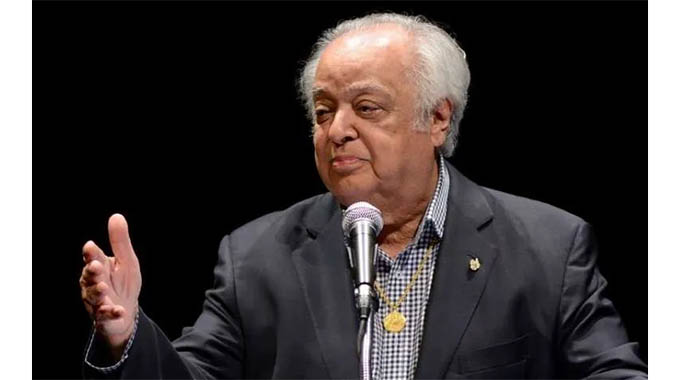
Elliot Ziwira-At the Bookstore
Sir Shridath Surendranath “Sonny” Ramphal, who died on August 30, 2024 aged 95, was a remarkable diplomat and champion of social justice as he played a crucial role in the decolonisation of Rhodesia into independent Zimbabwe during his tenure as secretary-general of the Commonwealth from 1975 to 1990.
As the longest-serving secretary-general of the Commonwealth, the Guyanese politician and lawyer is particularly remembered for his decisive role at the Lancaster House Conference of 1979, which gave Zimbabwe her first Constitution in 1980.
Advising Patriotic Front leaders, Robert Mugabe and Joshua Nkomo at the Conference, Sir Ramphal skilfully navigated the complexities of Rhodesia’s transition, advocating for majority justice, predominantly on the contentious land issue.
In an obituary updated by The Guardian following the journalist’s death in 2014, Kaye Whiteman, aptly points out that there was no love lost between Sir Ramphal and British elites, mainly due to his stance on social justice and equality.
He avers: “But in the diplomacy of the Lusaka Commonwealth heads of government meeting, the Lancaster House Conference and after, Ramphal was consistently there, working for the solution he was seeking in favour of the African majority.
“It meant that he was seriously unloved in the upper echelons of the British government, but this was a burden he bore with equanimity. It came with the territory” (The Guardian, September 1, 2024).
Whiteman adds that Sir Ramphal’s steadfastness in pushing through the settlement equally earned him “an enormous reputation in the developing Commonwealth, and built up the position of secretary-general as pro-active and dynamic, much more than a mere bureaucrat”.
At the helm of the Commonwealth, he would later on confront apartheid in South Africa, contributing significantly to its waterloo in 1990, and courting vitriol from Western media and other imperialistic forces. He was also pivotal in promoting regional integration in the Caribbean and forging just ties between Europe and the developing world in the early 1970s.
As tributes continue pouring in, the Caribbean Development Bank (CDB) paid homage to “a titan of Caribbean and global diplomacy” for his contributions to humanity. The bank said in a statement shortly after Sir Ramphal’s passing: “The Caribbean Development Bank and the entire Caribbean community have lost a true statesman, a regionalist par excellence, and an internationalist whose contributions have shaped the course of history.”
It emphasised that his legacy will inspire future generations to remain alive to the essence of diplomacy, justice and solidarity.
“A believer in the power of education as a force for good, it is no surprise that the British Columbia-based Commonwealth of Learning was created during his tenure, making high-quality education available across the Commonwealth,” noted Canada’s Prime Minister, Justin Trudeau, in statement on September 2, 2024 in honour of the advocate for racial equality.
Curiously, the period between 1975 and 1980 was particularly telling for relations between Britain and the Commonwealth owing to the obstinate Rhodesia crisis stemming from Ian Smith’s Unilateral Declaration of Independence (UDI) in November 1965.
Sir Ramphal was of the view that the land issue could neither be brushed aside nor wished away if lasting solutions were ever to be achieved between Britain and the black majority. At the Lancaster House Conference, delegates from the Patriotic Front of ZAPU and ZANU, and the Zimbabwe-Rhodesian government haggled for more than three weeks over the land issue.
Lord Carrington, who was fighting on the side of white Rhodesians, his kith and kin, pressed for a clause that protected individual property rights in the Constitution. On the other hand, the Patriotic Front wanted to do away with the existing land tenure in Rhodesia after independence. Having built a legacy around the land, white Rhodesians did not want to let go. From the word go, therefore, the major “stumbling block” was land.
Sir Ramphal told New African magazine (2007/2008:5) that Lord Carrington was playing both hands. He was negotiating with Mugabe and Nkomo on one hand, and Ian Smith, and General Peter Walls, on the other. He maintained that “there was no way he (Lord Carrington) was going to get a constitution that did not guarantee the status quo on land.”
With Europeans determined to hold on to African land, the settlement, as Sir Ramphal noted, was flawed from the beginning.
Lord Carrington was negotiating in bad faith, allotting himself the lordship to preside over the allocation and ownership of heritage in “backward” Africa, convinced that Europeans had a right to it by virtue of supremacy.
Notably, the ZANU policy statement of August 21, 1963, committed the party to, among other resolutions, “repeal the Land Apportionment Act, the Land Husbandry Act, and to replace them with a new Land Redistribution Law; to create a National Land Board to effect an equitable redistribution of land and abolish the destocking of cattle” (Zvobgo, 2017:11).
Sir Ramphal reveals that “there was a sleight of hand because when Mugabe and Nkomo threatened to leave Lancaster House, unless the land issue was dealt with in a way which would allow for land redistribution, the fudge was: ‘You will be helped to pay the compensation that the constitution requires to be paid.'”
Playing God, Lord Carrington, according to the esteemed diplomat, told the Patriotic Front: “If you do not agree to the provision of the draft Constitution, but other delegates do, the Conference will resume without you” (New African, 2007/2008:5).
What he meant was that the British government, Bishop Abel Muzorewa, Ian Smith and General Peter Walls could negotiate for a settlement without the Patriotic Front.
This reasoning reprises itself in the supremacist concept of othering on which colonialism hinged.
In the absence of the human worth theory wherein some beings are considered superior to others because of race, colonialism cannot be fully understood.
Arguably, challenges weighing down on the postcolonial nation-State of Zimbabwe can be tracked to that aspect.
To buttress that viewpoint, on October 17, 1979, the Daily News, Dar es Salaam, Tanzania, observed in an editorial comment that Lord Carrington insisted on pleading “poverty on an issue his country handled so well when decolonising Kenya”.
Thus, the British lord was an obstacle to social justice.
The Zambia Daily Mail (Lusaka) issue of October 18 1979 reported: “Things are not going well at Lancaster House. And if the talks on the independence of Rhodesia collapse, the man to lynch is Lord Carrington. Lord Carrington has become an obstacle and dynasty at Lancaster House to prove his lordship.”
It added: “His intention is to see that the negotiations fail by frightening away the Patriotic Front delegation. . . The man has no regard for the dignity of the black people. His attitude towards the Patriotic Front is openly biased, hostile and nasty, and it is dangerous for the ultimate outcome of the talks” (New African, 2007/2008:13).
The above citation is significant, not only of Lord Carrington’s heavy-handedness, lack of respect for the dignity of blacks, hostility and nastiness towards the Patriotic Front, but it reflects on the Hegelian philosophy of supremacism.
The British lord, and, indeed, his fellow colonists, wanted the negotiations to collapse.
They were banking on Muzorewa to legitimate their continued stay on Zimbabwean land. The proposed Declaration of Rights, which was not to be amended for 10 years, the issue of dual citizenship and property rights were all meant to drive white hegemony.
The persistent argument is: if the same Rhodesians, who insisted on being European through their own constitution, even though they were in Africa, could clamour for dual citizenship in a new Zimbabwe, a nation unknown to them, what would happen to Zimbabweans, who belong to no other country, if their land remains in the hands of Rhodesians?
This question, among others, remained unanswered at Lancaster House, hence impeding land reforms in Zimbabwe.
Because “treachery” has always been the white man’s way, Sir Ramphal drives the point home, the idea at Lancaster House was to maintain a semblance of legitimacy. This led to the concoction of a document by the Americans through Kingman Brewster (the American Ambassador).
In the document, Sir Ramphal maintains, the Americans pledged to “support the establishment of an agricultural development fund” to help defray any compensation, provided that it was “matched by the British government and had an international character” (New African (2007/08:6).
Although “solid assurances were recorded in the documents of the Conference and notified to all Commonwealth countries”, Sir Ramphal insists, no particular sum was specified, making it difficult to enforce compliance in future.
Another condition that compromised the noble plan of the new nation’s Government set by the Zimbabwe-Rhodesia delegation at the Conference involved compulsory acquisition of land.
According to Sir Ramphal, there was no mention of any contribution on the part of the Zimbabwean Government.
The Patriotic Front never accepted the responsibility to compensate white farmers in future.
Interestingly, the British, the Americans and their Rhodesian cousins did not believe the Patriotic Front would win the historic 1980 elections.
The settlement, therefore, was premised on deception. It was simply meant to uphold entrenched European values at the expense of Africans in an attempt to forestall progress on the land question.
As Chigwedere (2001) affirms, and collective memory concurs, the Lancaster House Conference was a disputation of heritage aimed at legitimising robbery and justifying murder in the name of modern negotiation. The Lippert Concession of 1891 testifies to the same. Raftopoulos and Mlambo (2009: xxviii) point out that the Lancaster House Agreement gave Zimbabwe a constitution in 1980, which “embodied a series of compromises over minority rights, in particular on the future of land ownership.” Thus, it was not surprising that around the late 1990s, the colonial agenda in place since 1890, started rearing its ugly head. Everything to do with upsetting the status quo on land ownership was shot down.
Claire Short’s letter on behalf of the United Kingdom repudiating responsibility to their own historical blunders, claiming that she was “Irish”, and were also “colonised and not colonisers”, was, according to Nathaniel Manheru, “an inimitable mixture of shamelessness and sanctimony” (New African: 2007/2008:27).
Denying responsibility was meant to create fertile grounds for rebuke on the post-2000 Fast Track Land Reform Programme.
Therefore, as Zimbabweans are afforded opportunities through the Government’s commitment to equitable land ownership, Sir Shridath Surendranath Ramphal’s legacy extends beyond his extraordinary achievements. He remains an embodiment of a just and equal world for posterity, whose tireless dedication to humanity’s progress is both inspirational and indelible.



 Online Reporter