Online Reporter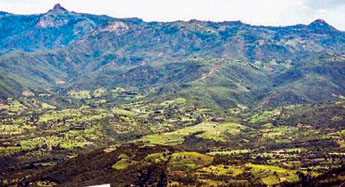
Liberty Dube
Tourism Correspondent
AT Honde View, the Eastern Highlands do not merely appear before you, but they fall away dramatically.
From the edge of the escarpment, the lush Honde Valley stretches into the distance, a vast green tapestry of tea estates, forests, rivers and mountain peaks fading towards Mozambique.
Far below, water cuts through the landscape, while mist gathers around the mountains, giving this corner of Manicaland an almost cinematic quality.
But the view is only the beginning.
Beyond the lookout lies a landscape shaped by water and mountains, where the Chipote River gives life to the beautiful Chipote, or Kapunga Falls, and where the nearby Pungwe River, Mutarazi Falls and Mahwemasimike mountain range form a remarkable natural circuit for travellers seeking Zimbabwe beyond the familiar.
Honde View offers one of those rare travel experiences where the journey itself becomes part of the destination.
As the road winds through the Eastern Highlands, the landscape changes with every turn. High mountain country gradually gives way to the dramatic escarpment, and suddenly the Honde Valley opens beneath you.
Green slopes plunge towards the valley floor, while plantations, forests and waterways create a mosaic of colour below.
On clear days, the horizon seems to run forever. When mist rolls across the mountains, the scenery takes on an altogether different character — softer, mysterious and almost otherworldly.
It is a place to pause, not because there is nowhere else to go, but because the view demands a moment.
For photographers, Honde View is a natural canvas.
For travellers, it is an invitation to explore. And for Manicaland, it is a powerful reminder that some of Zimbabwe’s most compelling tourism experiences are found where roads lead away from the obvious.
The story becomes even more captivating when the journey continues towards Chipote Falls.
Formed by the flowing waters of the Chipote River, the falls offer a more intimate encounter with the landscape.
Here, the drama of the Eastern Highlands is no longer experienced from a distant viewpoint; it is heard in the rush of water, felt in the cool mountain air and seen in the rocks and vegetation surrounding the river.
Water moves through the rugged terrain, cascading over rock and creating a tranquil spectacle in the middle of the lush Honde Valley.
The surrounding greenery provides a striking contrast to the white movement of the water, while the sound of the river creates a natural soundtrack for visitors.
For travellers who value authentic experiences, that is the attraction.
There are no elaborate attractions required. The river, rocks, forest and mountains have already done the work.
What makes Honde Valley particularly appealing is that Chipote Falls does not stand alone.
It sits within a broader landscape of remarkable natural attractions, including Mutarazi Falls, the Pungwe River and the Mahwemasimike mountain range.
Together, they create the foundations of an exciting eco-tourism circuit.
A visitor could begin at Honde View, taking in the vast panorama before descending into the valley.
The journey could then lead to Chipote Falls, followed by explorations of the surrounding rivers and mountain landscapes, with Mutarazi and Pungwe adding further dimensions to the experience.
The result is not simply a day of sightseeing but it is an encounter with an entire ecosystem. There are mountains to explore, waterfalls to discover, rivers to follow and forests to listen to.
For birdwatchers, the Honde Valley offers another reason to linger.
The combination of mountain vegetation, forests, rivers and cultivated landscapes creates habitats that support a rich variety of birdlife.
Here, the forest is not simply scenery. It is alive.
In the early morning, before the valley fully awakens, birdsong rises through the trees. A traveller walking quietly along the landscape can find that the experience changes from simply looking at nature to actively listening to it.
That is the beauty of birding in the Eastern Highlands: patience is rewarded. A movement in the canopy, a flash of colour among the leaves or the call of an unseen bird can transform an ordinary walk into a memorable wildlife encounter.
For specialist birders, nature photographers and travellers seeking slower, more immersive experiences, this is precisely the kind of destination that can turn a short visit into a longer stay.
Honde View and Chipote Falls also speak to the wider potential of Manicaland’s eco-tourism sector.
Today’s traveller is increasingly drawn to destinations that offer authenticity — places where the attraction is the landscape itself and where tourism can be built around conservation, local communities and responsible exploration.
Honde Valley has those ingredients in abundance.
Its waterfalls, rivers, mountains, forests, birdlife and agricultural landscapes can support a range of experiences, from scenic drives and photography to hiking, birdwatching and nature-based excursions.
The opportunity lies in connecting these attractions into compelling itineraries rather than treating each one as an isolated destination.
Imagine a tourism trail that begins with the sweeping panorama from Honde View, follows the valley towards Chipote Falls, traces the waters of the Pungwe and leads onward towards Mutarazi and the Mahwemasimike Range.
Such a circuit would give visitors something increasingly valuable in modern tourism.