Online Reporter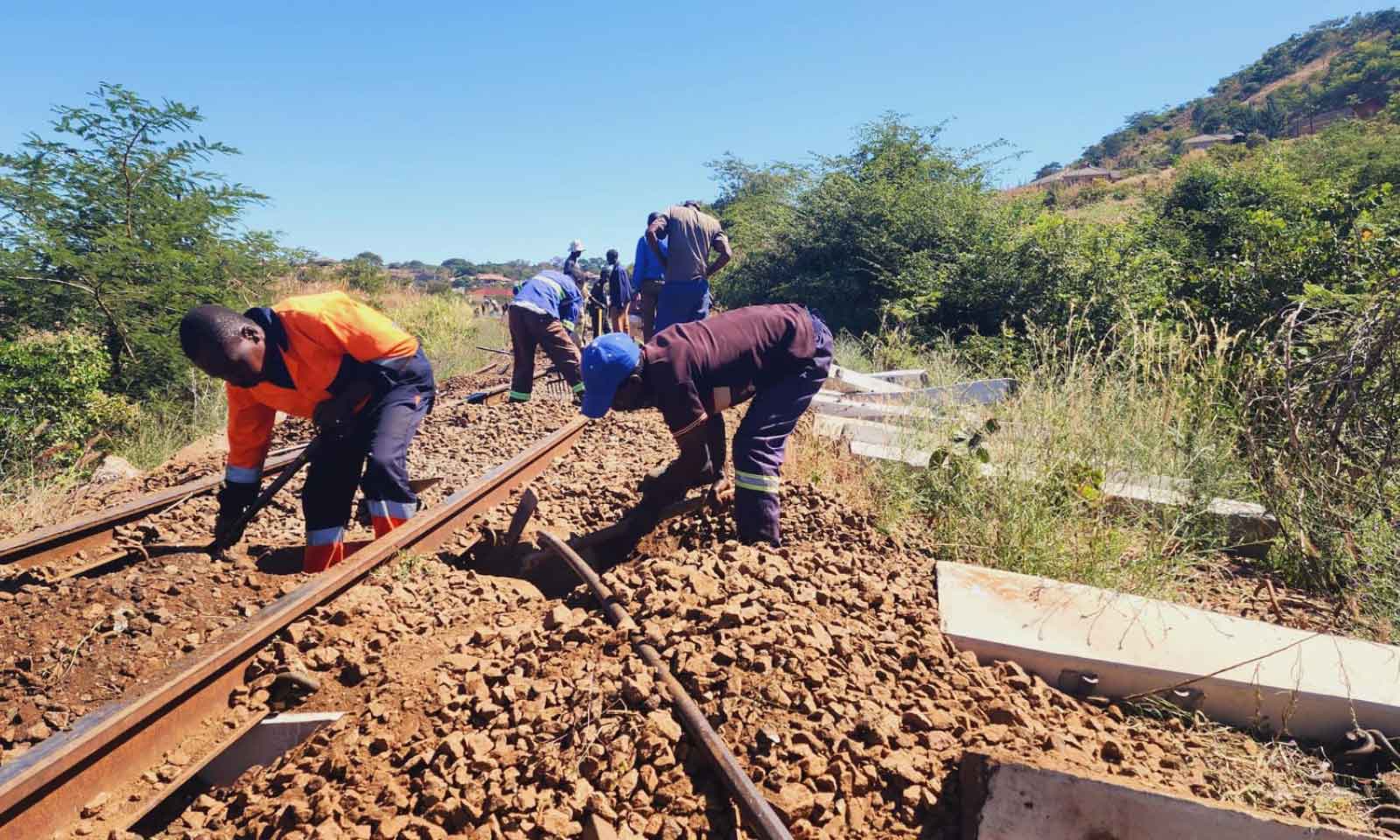
Lincoln Towindo
Deputy National Editor
FOR decades, Zimbabwe’s railway system was the heartbeat of one of Africa’s most industrialised economies.
It was a vast steel network that moved millions of tonnes of goods across the country and beyond.
Trains roared from Hwange’s coalfields to the furnaces of Kwekwe, ferried copper from Zambia to ports in South Africa and Mozambique.
They carried thousands of passengers daily between towns and cities.
Rail was the engine that powered Zimbabwe’s manufacturing, mining, agriculture and trade.
At the turn of the century, that heartbeat weakened.
Years of underinvestment, ageing equipment, vandalism and power challenges pushed the National Railways of Zimbabwe (NRZ) into near collapse.
Freight volumes crashed from a peak of 12,4 million tonnes in 1998 to below three million tonnes in recent years, barely a fraction of the system’s full capacity ranging around 18 million tonnes.
Strain
With each passing year, more cargo shifted to road, placing enormous strain on the country’s highways.
No road felt this strain more severely than the Bulawayo-Hwange highway.
It was on this stretch where convoys of haulage trucks transporting vast amounts of coal and an assortment of other minerals created an almost 24-hour procession of heavy-duty traffic.
This route is the main artery linking Zimbabwe’s largest coalfields to power stations, industries and export markets.
With rail failing, haulage trucks became the only option.
The result was predictable.
The road deteriorated faster than it could be repaired.
Many sections suffered near structural failure, driving up maintenance costs and posing serious safety risks.
Regeneration
The Government is pursuing an extensive programme to reverse the two-decades-long decay of rail infrastructure, in what is being billed as the country’s most ambitious transport reform initiative in a generation.
Through a range of interventions that are outlined in the National Development Strategy 2 (NDS2), Zimbabwe’s latest economic plan, unveiled recently, the authorities are pursuing a sweeping five-year rail redevelopment programme to restore it as the backbone of national logistics.
According to the NDS2, key priorities under this programme will include “upgrading the rail gauge to regional standards, investing in modern signalling systems to improve efficiency and safety and procuring new, modernised locomotives and wagons to enhance capacity and reliability across the rail network”.
The journey towards reviving the rail sector began in earnest when the Government placed the NRZ under the Mutapa Investment Fund (MIF) in 2023.
The move brought NRZ under a centralised sovereign investment vehicle with a mandate to restructure, capitalise and professionally manage key State-owned enterprises.
By shifting NRZ into Mutapa, the Government sought to streamline decision-making, improve financial oversight and create a platform capable of mobilising long-term capital for large infrastructure projects.
The restructuring marked the first substantive step towards rebuilding the rail network and realigning it with national economic priorities.
The vision is to substantially increase freight throughput and passenger numbers over the next five years through multiple broad-based interventions expected to upscale the country’s rail network in the medium term.
“NDS2 will target to increase freight throughput from the 2025 baseline of 2,1 million tonnes to 12 million tonnes by 2030 and passenger numbers from 3 500 to 700 000 annually,” reads the NDS2 document.
“During NDS2, the railway sector will target three core areas, namely: rail infrastructure rehabilitation and upgrade; rolling stock recapitalisation; as well as signalling and telecommunications modernisation.”
Upgrades
One of the most significant initiatives outlined in NDS2 is the upgrading of the Mutare-Harare-Chirundu railway corridor.
This link is central to creating a new north-south trade route to undergird regional integration in the Southern African Development Community (SADC).
The corridor will allow goods to move seamlessly between Zimbabwe, Zambia and the Democratic Republic of Congo, while reducing congestion at border crossings.
For exporters and importers, it will mean shorter transit times, lower costs and improved access to regional markets.
The authorities estimate the project will cost US$1,2 billion.
This project will include the construction of a new 217-kilometre railway line linking Lion’s Den in Zimbabwe to Kafue in Zambia.
It is scheduled for implementation between 2027 and 2030.
Another major development on the cards is the Mvuma-Manhize-Rusape railway line.
“This line will provide a critical link connecting iron and steel production at Manhize with domestic and export markets, thereby supporting value addition and industrialisation,” adds the NDS2 document.
The Dinson Iron and Steel Company plant in Manhize is on track to become one of Africa’s largest steel producers.
To reach its full potential, it requires an efficient rail transport that allows its products to move efficiently to both domestic manufacturers and export markets.
Without this rail link, thousands of trucks would be forced onto national highways, naturally causing immense damage to the roads.
The project, which is expected to cost about US$550 million, will be implemented through a public-private partnership (PPP) arrangement.
Critically, the authorities are also planning for a comprehensive rehabilitation of about 1 700 kilometres of existing track.
This initiative will be “implemented from 2026 to 2030 and will be funded through Government and Mutapa Investment Fund (MIF), as well as public-private partnerships. The project will achieve a 30 percent increase in train speed and a 50 percent reduction in derailments”.
Under this programme, there will be extensive work on replacing worn-out sleepers, adding and compacting new ballast stones beneath the track, realigning rails and upgrading switching points at major junctions.
Rail yards will also be repaired.
It is estimated that this work will require US$480 million.
Alongside these major upgrades, the authorities are also planning for the rehabilitation of 60 critical bridges and culverts between 2026 and 2028.
These structures are essential for maintaining uninterrupted rail movement across rivers and valleys.
Strengthening them will enhance safety, reduce the risk of service disruptions and prolong the lifespan of the entire network.
The work is estimated to cost of US$60 million.
Fleet rebuild
Apart from reorienting the infrastructure, work is also planned on rebuilding NRZ’s rolling stock.
This initiative will likely be one of the most consequential undertakings set to be implemented under the five-year programme.
To restore NRZ’s hauling power, the Government plans to procure 30 new mainline locomotives between 2026 and 2029 at an estimated cost of US$210 million.
These will replace the current ageing fleet and improve the company’s ability to move bulk cargo efficiently.
With the new locomotives in place, the NRZ is expected to increase its freight haulage capacity to more than 6,7 million tonnes per year, a major step towards the 2030 freight target.
In addition, the plan also includes an undertaking to purchase 841 new wagons and refurbishing 1 000 existing ones.
This will require about US$120 million, and funding is expected to be sourced through the Government and the Mutapa Investment Fund.
Wagons are the workhorses of any freight system.
Increasing their availability enables any bulk transporter to move larger volumes.
Passenger service
The passenger service will also be upgraded.
“There will be a passenger coach modernisation project through refurbishment of 50 passenger coaches, introduction of air-conditioning and Wi-Fi facilities and procurement of modern diesel multiple units (DMUs) at a cost of US$25 million, to be implemented over 2027-2030.”
DMUs are faster, more efficient and more comfortable than traditional trains.
This US$25 million investment will be central to reviving the urban and intercity passenger rail services.
The railway revival plan also includes major investments in train control technology.
The Government will instal a modern, entry-level train control and automation system across 1 000 kilometres of track between 2026 and 2029, at a cost of US$150 million.
This system will provide real-time monitoring of trains.
It will also improve communication between stations and locomotives, and significantly reduce the risk of accidents caused by human error or outdated equipment.
To support digital operations, the Government will also complete laying a 735-kilometre fibre optic network between 2026 and 2028 at a cost of US$30 million.
This fibre backbone will carry communication signals, data and control instructions, creating an integrated, modern rail communication system capable of supporting future expansions and the reintroduction of electrified services.
Return of electric trains
Zimbabwe was one of Africa’s early adopters of mainline rail electrification when it electrified the 305-kilometre Harare–Dabuka corridor in 1983.
The electrified line made operations cheaper, faster and more efficient and helped push freight volumes to 12,4 million tonnes by the late 1990s.
“However, electricity supply challenges, lack of maintenance and widespread vandalism eventually led to the suspension of electric operations in 2009 and subsequent decommissioning of the electrified section,” reads the NDS2.
The Government now intends to rehabilitate and re-electrify this entire corridor.
Re-electrification is expected to reduce long-term fuel costs, support environmental sustainability and enhance the competitiveness of rail transport.
Partnerships
Having conceded that rail is essential for the mining industry’s development, the new programme will also encourage mining companies to partner the Government in rehabilitating key railway lines.
Hwange’s coal producers, led by the Hwange Colliery Company, will be encouraged to contribute to the refurbishment of the corridor that links their coalfields to markets.
The authorities say this partnership is crucial because coal and other minerals represent some of the heaviest cargo moved in Zimbabwe, and returning this bulk freight to rail will drastically reduce truck traffic on the Bulawayo-Victoria Falls highway.
“Private sector involvement in infrastructure development aligns with broader NDS2 initiatives to revitalise the country’s railway network, also embracing engagement of international investors in the recapitalisation and restoration of NRZ under public-private partnerships to its former status as a key economic artery.”
While it is clear that Zimbabwe’s rail revival is a long-term endeavour, requiring billions of dollars in investment, sustained political commitment and strong partnerships with private and international players is critical.
However, for observers, the vision laid out under NDS2 to rebuild a modern, efficient, safe and competitive railway system that once again serves as the backbone of national economic activity is clear.
If fully implemented, the programme will usher in a new era where bulk cargo returns to rail, industries regain their competitive edge, roads last longer and Zimbabwe reclaims its position as a regional logistics hub.