


 admin
admin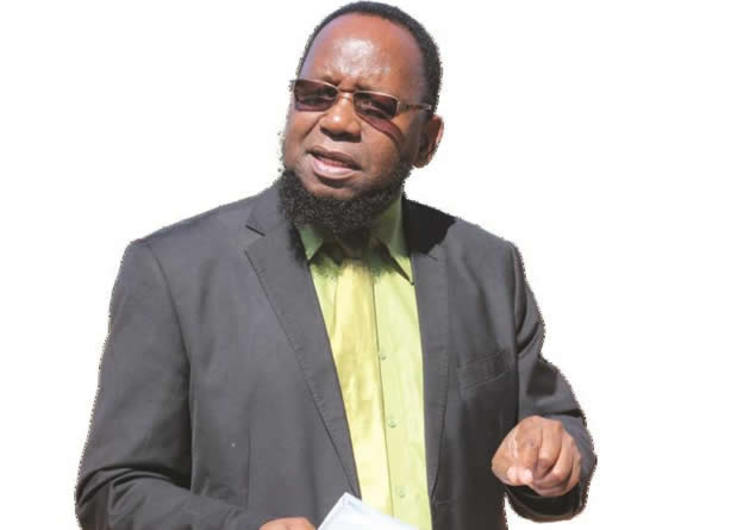
Wes Gatula
On the 16th of August, The Sunday Mail published two articles that were of particular interest to our education system. The first article was on the education reforms – curriculum review (2016-2020) and the second one was on exams and assessment.
I am a product of our excellent and rigorous education system from the early 1980s which has seen Zimbabwe producing some of the best academics, scientists, health professionals, lawyers, you name it. I can safely say as a country, Zimbabwe has an array of educated people who contribute immensely to economies of other countries as well as ours.
In this open letter to the Minister of Primary and Secondary Education, I am arguing that changes to the Zimbabwe education system are imperative.
However, the Minister has to first address key issues that are slowing down the quality of our education system.
I am also arguing that for these fundamental changes to be effective, the planning has to be realistic. The education system took a plunge in 2007-2008 due to a number of reasons.
The economy had taken a slide due to inflation, resources were scarce and teachers were leaving the country, others were just not reporting for duty. This immensely affected standards and the quality of education.
The leadership of David Coltart (2009-2012) in the lnclusive Government attempted to redress some of the issues, especially resources and getting teachers back to the classrooms. In my opinion, he rescued the education sector. The key issues that need to be addressed before embarking on ambitious and costly curriculum changes include an analysis of schools available in relation to numbers.
We have a hot-seat system which has become a norm since the adoption of the education for all policy at independence. This policy was introduced to allow all children into school, some were not in school due to the war or because of the educational policies by the previous government which had resulted in a lot of black children being unable to attend school. This policy resulted in a higher demand for school places when the schools were few, hence the introduction of the hot-seat system to absorb as many students as possible.
Thirty five years on, the system is still in place. Whether it will be sustainable by the end of the review period of the new curriculum is a million dollar question.
Take note that due to this system, the learning time was severely reduced. To try and implement this ambitious curriculum against this background sounds myopic. Each school that is currently practicing hot seating needs more classrooms to allow more classroom time. In addition, class sizes are beyond imagination because a class ratio of 1 teacher:50 students is not sustainable (I am aware it’s slightly less in other schools).
It puts pressure on resources that are already inadequate, compromises delivery of lessons and is a burden to teachers.
Also the availability of qualified teachers is a huge challenge. The Minister was in the news recently and promised to revamp this area. However, are these promises realistic? Some of our classrooms continue to be manned by unqualified teachers and have been since 1980. Why?
How are you going to replace these teachers overnight and will they have the required skills? Are teachers taking courses to upgrade their competence skills? Then there is the introduction of ICT, do we have enough teachers with the necessary knowledge and skills to teach this effectively?
Wouldn’t it be prudent to ensure that teachers get ICT training during their teacher training courses? Unless the aim of ICT is to give children a basic knowledge of computing rather than application and functionality.
There is also need to reorganise schools and make councils more accountable for their schools.
Schools must run efficiently without a lot of red tape. Some schools are doing well under difficult circumstances, however they would do better with more autonomy. Finally, adequate funding is needed to enable the current situations to be managed efficiently. Infrastructure needs to be rehabilitated, books need to be bought.
The above key issues in my opinion are imperative to the fundamental changes that have to be brought into the education system. I therefore strongly argue that bringing major changes to a system that is lacking stability and quality has major repercussions.
Education needs a huge budget to stabilise the current state in our schools. It is one thing to move with the 21st century ideologies and developments in education, but quite another to do so against a background where the above issues are not properly addressed. The recommendations in the last issue of The Sunday Mail indeed have a lot of sound views that can bring new dimensions to our education system. However, there is need to tidy up before spending resources to implement this. There is no doubt that some of the recommendations outlined are relevant but the crux of the matter lies in the applicability of these in the different schools in our social spectrum. Will this allow accessibility of the curriculum by all?
There will always be problems if you try to put an old tube with patches in a new tyre or vice versa. Chances of a tyre burst are likely in high temperatures or in bumpy roads. Such is the road we are trudging on. Comrade Minister, isn’t it prudent that while consultations are in progress, we stop and take stock of the realistic situation in our schools? Are those the schools we need in the next 35 years? How then do we address these issues that will derail progress and standards and send us to the drawing board again?
I strongly recommend the setting up of an education standards board that will have the mandate to work with school heads and councils to raise standards. These standards will then become a barometer with which we tap in from the recommendations for 2016-2020. l also strongly recommend wider consultation with parents and other stake holders. Proper or realistic planning must be done in order to further develop our education system.
◆ Wes Gatula works in the education sector and writes in his personal capacity – Our Zimbabwe our Sovereignty.



 Online Reporter
 Bongani Ndlovu