admin
admin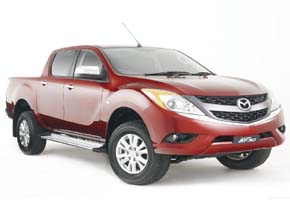
But then is there a motor industry to protect here in Zimbabwe?
Instead of making noise and proposing policies that should help the motor industry, captains of this industry should first look and ask themselves, what it is that they are doing wrong.
It is an undeniable fact that Zimbabweans need vehicles, for instance, Zimbabwe Revenue Authority (Zimra) was clearing over 450 vehicles at one point daily through Plumtree and Beitbridge border posts.
Clearly with such need for vehicles locally, if we can have our own car assembly producing affordable cars, wouldn’t it satisfy such demand at a profit?
However, it is a tragedy that while Government is trying to protect the two local car producers, Willowvale Mazda Motor Industries’ (WMMI) and Quest Motors, both based in Harare, vehicles are far from being affordable.
The prices of Mazdas sold from Willowvale are only within the reach of corporates and the elite, not the middle class such as civil servants.
On average civil servants earn $500 a month and it will be virtually impossible for a nurse or a teacher, at any level, to afford a $36 000 Madza BT50, let alone another simple vehicle besides an ex-Japanese one.
History has it that the automotive industry in the People’s Republic of China has been the largest in the world measured by automobile unit production since 2008 for the simple reason that locally produced brands are within the reach of the populace.
In 2009, China produced 13,79 million automobiles, of which eight million were passenger cars and 3,41 million were commercial vehicles. Of the vehicles produced, 44,3 percent were local brands (including BYD, Lifan, Chang’an (Chana), Geely, Chery, Hafei, Jianghuai (JAC) Great Wall and Roewe.
Which car manufacturing industry is there to protect here in Zimbabwe? In any case the ban on imported cars could cost the Government millions of dollars in revenue.
However, stakeholders in the local motor industry have appealed to Government to stop importation of second-hand vehicles deemed unsuitable for the country’s terrain.
Motor Industry Association of Zimbabwe (MIAZ) president Mr Benjamin Khumalo said some of the vehicles, mostly from Japan, were incompatible with the local terrain and were risky to road users.
Khumalo said lately it had become easy to bring second-hand vehicles into Zimbabwe, raising suspicion of underhand dealings and circumvention of relevant regulations.
He said prior to the year 2000, MIAZ could sell about 25 000 vehicles per year, but last year the number dropped to 7 200.
In the last two years over 40 000 second-hand vehicles were imported into the country.
More cars on the roads would logically translate to more money to the state in the form of tollgate fees, taxes and vehicle licence discs through the Zimbabwe National Road Administration (Zinara).
So if the Government could commit itself to manufacturing small and affordable cars that the public are opting for beyond our frontiers, it can make more revenue from the sales.
Vice-President of the MIAZ, Sternford Sibanda has maintained that introduction of the smaller and cheaper cars was an advantage for the industry, as some workers will afford to buy them.
“The country has not had newer models of small cars and the small car will be good for the market,” Sibanda says.
He believes the improvement in the economy would consequently improve the fortunes of the motor industry presently hard-hit by a shortage of cash.
A local car distributor, Mr Thabani Bangane said most people were in need of affordable vehicles and they are eventually forced to resort to imported vehicles, as they could not afford locally manufactured brands.
“The basic fact is that people need cars, so if Government can avail small car units there will be no reason for having to import them. What drives people to import cheap quality vehicles from abroad is that their locally manufactures cars are not affordable,” said Mr Bangane.
He said although it made sense to protect the local industry in principle, it was not practical as long as prices of locally assembled vehicles are not affordable to the majority of people.
“People want affordable vehicles and if the ban is implemented, most people won’t be able to buy cars,” said Mr Bangane.
Indeed there is a need to protect our own local motor industry but that should happen when there is a motor industry to talk about.
The WMMI that we have has a capacity to manufacture about 800 a month, but at its peak it produces up to 9 000 units a year and the other assembly plant used to also push the same number of units to give a total of 18 000 units while the total market for new vehicles was around 25 000 units per year.
WMMI recently suspended Mazda 3 production amid Government’s decision to effect a ban on vehicles older than five years.
To protect its motor industry, South Africa imposed a total ban on the importation of second hand vehicles, which has allowed its major assembly plants to increase production and this should be the way to go for Zimbabwe but the new vehicles should be affordable to the majority of people.



 Online Reporter