


 Sundaymail Editor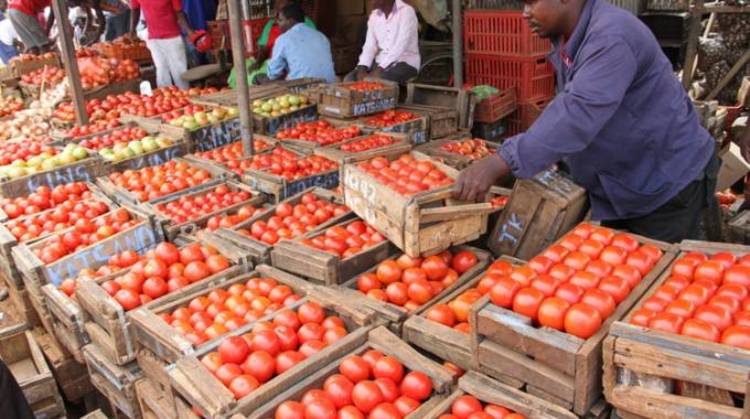
Word from the market with AMA
Last week, someone vented his frustrations on social media after buying four tomatoes for US$1 from a vegetable vendor in a leafy suburb in Harare. The vendor justified her pricing on the basis that the tomatoes were imported from Zambia. This indeed makes sad reading for a country like Zimbabwe with regards to the Government’s thrust of food and nutrition sufficiency.
There is no justification for Zimbabwe to import tomatoes from its northern neighbour given that the country is endowed with good soils and climatic conditions suitable for tomato growing. Import substitution is vital in ensuring that the country realises its aspirations as espoused in the National Development Strategy 1.
A survey carried by the Agricultural Marketing Authority (AMA) revealed that these tomatoes were being smuggled from neighbouring countries by unscrupulous people. Smuggling tomatoes into Zimbabwe is tantamount to shooting ourselves in the foot. It implies that we are exporting jobs to other countries and the country is losing the much-needed foreign currency.
There is no doubt there is a ready market for tomatoes in Zimbabwe because the vegetable forms part of every meal. Fresh fruits can be used in salads and cooked with relish. Cultivars grown for processing are canned and made into purées, sauces or juices.
According to FAOSTAT, a United Nations arm that provides food and agricultural statistics, in 2020 Zimbabwe imported two tonnes and exported four tonnes of tomatoes after producing 25 113 tonnes. In 2016, Zimbabwe imported 102 tonnes of tomatoes valued at US$106 000.
Zimbabwe’s highest tomato production was in 2015 when it produced 25 323 tonnes from 3 508 hectares. Globally, major producers of tomatoes are China, India, Turkey, US, Egypt and Italy. The global average production for tomatoes from 2015 to 2020 was 216 396 496 tonnes.
That tomatoes are nutritious could be another reason why they are on demand all-year round. They are rich in vitamins, carbohydrates, protein, fat, among other nutrients. Tomatoes are juicy and sweet, full of antioxidants, and may help fight several diseases.
They are especially high in lycopene, a compound linked to improved heart health, cancer prevention, and protection against sunburns.
Because tomatoes are perishable, before one decides to venture into tomato farming, there is need to think about market. Is it in the village, at the growth point or town? How are you going to get your tomatoes to the market?
Farmers need to think of the cost of production, seeds, fertilisers, and other pest and diseases control chemicals against prices obtainable on the market. Tomato farming is one of the few lucrative and less capital-intensive agribusiness to venture into.
Anyone can venture into tomato farming provided they have the resources and knowledge to do so. The good part is that farmers can venture into it anywhere in Zimbabwe as long as there is a reliable source of water. Tomato planting is usually around March and April.
Tomato farming is very simple as it can be carried out at any capacity; either at the backyard (in urban settings), plot or farm (for commercial purposes). Major varieties grown in Zimbabwe are from Prime Seed Co and Avanos and include Roma VF, Tengeru 97, Star 9006, Royale Plus, Rodade, Daisy F1, Supersweet F1, Thomas F1, CandellaF1, Akella F1, Alambra F1, Perseo F1 and Vectra F1, among others.
Tomatoes thrive well on any soil provided it is fertile and well-drained. However, agronomists encourage farmers to avoid growing tomatoes on land that had tobacco because the crop is sensitive to chemicals used in tobacco farming. Farmers must avoid smoking close to tomatoes as this could pass viruses to the plants. However, tomatoes are also sensitive to weather. They are susceptible to frost so farmers are encouraged to grow them in warm areas during winter.
Farmers are encouraged to consult Agritex representatives in their areas on which control measures to take when pests or diseases are observed in the field. This way you are guaranteed to get the best control measure available and alternatives as well.
Tomato farming in Zimbabwe remains lucrative. It is undoubtedly one of the agribusinesses that can rack in cash all-year around. Starting a tomato farm is easy.
All it requires is seriousness and one will discover that making money is not difficult after all. Zimbabwe can’t afford to rely on imports when it has everything to meet its tomato requirements.
Word from the Market is a column produced by the Agriculture Marketing Authority to promote market-driven production of agricultural products. Feedback [email protected] or [email protected]



 Bongani Ndlovu
 Online Reporter