

 daniel chigunwe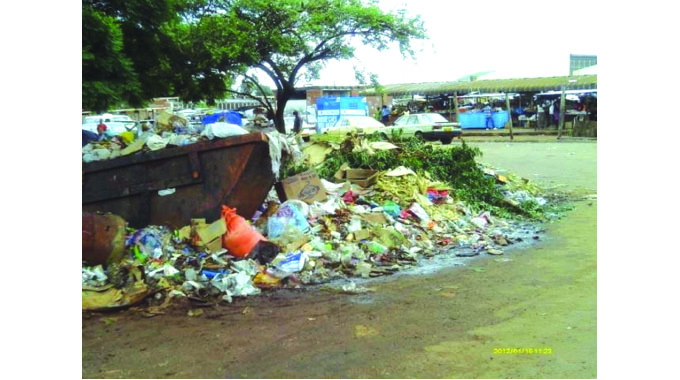
Zimbabwe’s major cities have witnessed an urbanisation surge since 2000.
From 1980, well managed cities under Zanu PF had the beauty of the their scenery kept afloat by well-manicured lawns, a fine air with a perfumed fragrance and nicely tarred roads.
With refuse collection, potable water and road networks well looked after, the demise of these beautiful cities fell hard at the hands of the opposition political parties in 2000.
In Harare, where the Sunshine City status beamed and kept many Hararians with broad smiles, aspirations of a healthy city started to fade when administrative local power visited the political newcomers.
Proper town planning which was a characteristic menu for Zanu PF was replaced with corruption and an unwillingness to do things properly.
An intact, systematic and scheduled programme for service delivery was quickly replaced by haphazard behaviour that allowed people to flock to undesignated areas, leading to a sprouting of squatter camps and unplanned locations.
The architecture of Harare was completely changed. The alternative to its beauty was the beastly mind that relegated the environment and opened it to mismanagement.
Cholera and typhoid outbreaks, unrepaired hostels in Mbare, uncollected garbage everywhere, potholed roads all over, poor waste management practices and corruption have bedevilled citizens that are now clamouring, once again, for redemption from Zanu PF.
The Zanu PF government, in the Second Republic, has managed to balance the interests of Hararians and those of the State by ensuring a return to the old order when the purity of Harare matched its deeds.
Through the Emergency Road Rehabilitation Programme (ERRP), Zanu PF has taken over the burden of the people.
Government has descended from the high seat of power to address the concerns of many people who have for years been neglected by the opposition.
In doing so, there is an anticipated quick rebirth of the cities and towns, that have been administered poorly by the opposition since 2000, when the nation goes for by-elections on March 26.
The twin barrel of victory is formulated in President Mnangagwa’s belief that sustainable cities that are envisioned in Zimbabwe cannot be divorced from the National Development Strategy (NDS) 1 and the United Nations’ (UN) Sustainable Development Goals (SDGs).
SDGs are a bold and universal embodiment of agreements to end poverty the world over in all its dimensions by coming up with an equal, just and secure world for people and the planet to ensure prosperity.
An interlink between the NDS 1 and the SDG 11 has formed the bedrock of the plan to make all cities prosperous and human settlements inclusive, safe, resilient, sustainable and backed by green energy policies.
By 2030, when Zimbabwe becomes and upper middle income economy, it will provide access to safe, affordable, accessible and sustainable transport systems.
Vulnerable citizens, those of old age and people with disabilities have suffered immense segregation under the administration of the opposition in local authorities as they fail to get adequate services that are friendly to their special conditions.
The rural-urban divide has continued to widen the poverty gap, triggering rapid urbanisation that has resulted in a growing number of slum dwellers, inadequate and overburdened infrastructure and services and worsening air pollution.
Today, the world’s population has approximately 7,5 billion people.
Global statistics also show that more than half of the world’s population now live in urban areas. By 2050, the figure is expected to rise to 6,5 billion people, two-thirds of all humanity.
With these changes, Harare under the opposition, has not managed to identify one suburb that is a prototype of their futuristic plans. Those in the opposition who have been mandated with prompting a swift delivery of proper service have turned a blind-eye to what is necessary to improve urban livelihoods. Now, the Zanu PF game changing policy that is enunciated in the NDS 1 and the Devolution Agenda is bridging the needs of both the rural and urban populations to equal access to opportunities, services and an equitable redistribution of the huge national cake.
Through devolution, the NDS 1 policy on going green and the SDG 11 target of ensuring resilient cities and areas has started bearing fruit as government has moved in to support positive economic, social and environmental links between urban, peri-urban and rural areas by strengthening national development.
In the face of natural disasters, which also drive migration to urban areas, numbers are also expected to increase due to impacts of climate change. To mitigate these problems, climate agricultural practices have been adopted as people rebuild their lives after the devastating effects of cyclones and heatwaves.
As it stands, Zanu PF is thinking globally and acting locally by seeing that the vast majority of Zimbabwe’s urban policies are aligned with SDGs and can be disaggregated by key themes of the sustainability agenda.
A priority is for all citizens.
For Zimbabweans, both in urban and rural constituencies, the need to survive and prosper is only found in an intelligent urban planning that creates safe, affordable and resilient cities with green and culturally friendly environments.
These developments, new platforms and thoughts will improve the ability to report on the performance of cities in the area of sustainable development.
If people are allowed to be democratic, it would be a mess to be democratic in failure by giving the mandate to run local authorities to those who have failed for the past two decades. Zanu PF has already exhibited its concern to address the needs of the people by adopting roads in urban areas and improving the public transport system.
He who tries deserves an opportunity to flourish together with the people, than he who never tries, but only alert in faking love for the people.



 Online Reporter