Online Reporter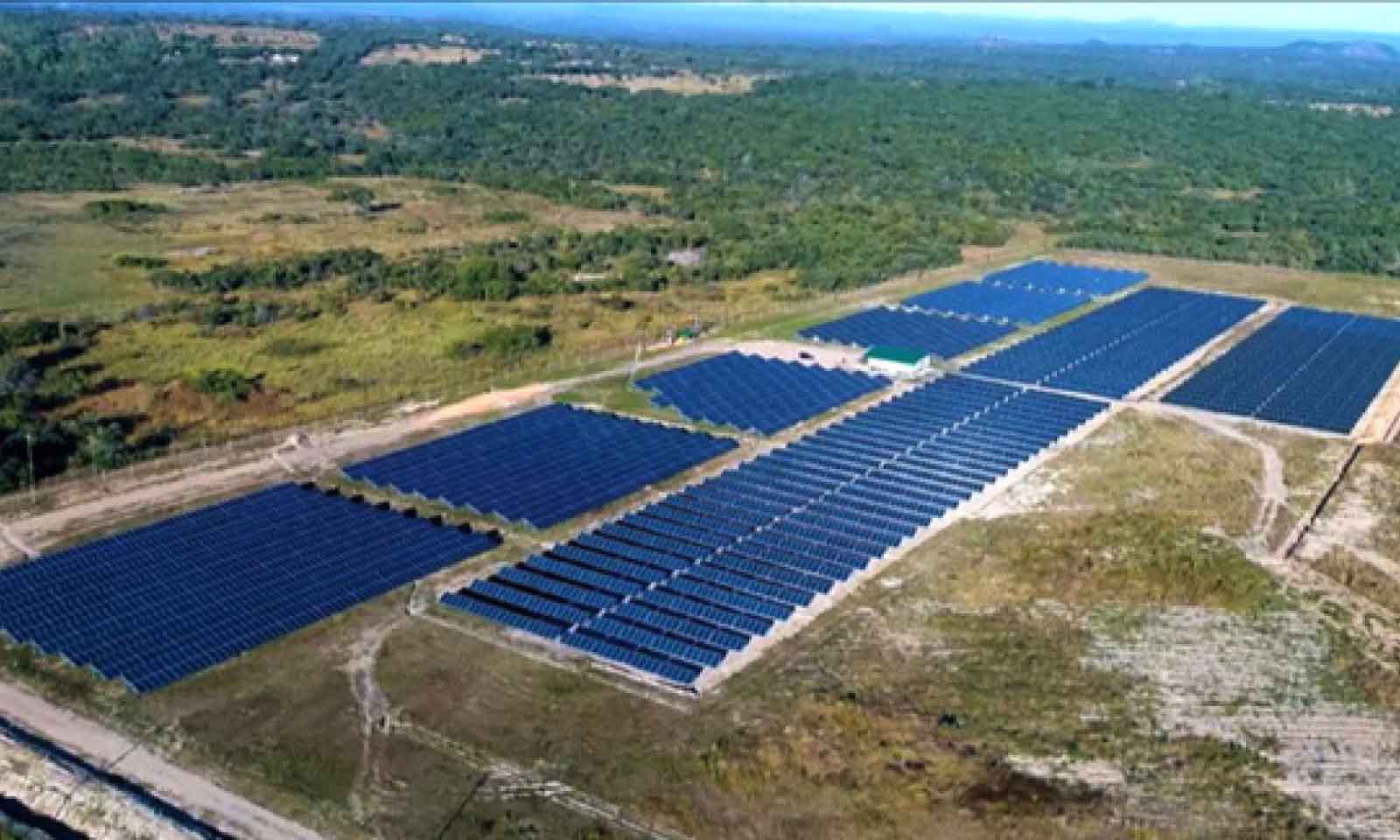
Edington Mazambani
THE Zimbabwe Energy Regulatory Authority (Zera) has undertaken several solarisation projects, primarily focusing on health institutions.
Additionally, mini grids have been expanded through the Rural Electrification Fund.
Notable projects include a 200-kilowatt (kW) system in Hakwata, Chipinge, and another in Bemba, Tsholotsho.
These systems provide electricity to entire communities, supporting irrigation schemes, welding businesses, grinding mills and rural homes.
Another key mini grid is located in Machawa, Gwanda, which powers three irrigation schemes, a clinic, a business community and surrounding homes.
There has been significant penetration of solar systems in both rural and urban areas.
Zera itself has implemented solar schemes for its staff, with an installed capacity of between 200kW and 300kW.
Moving forward, Zera plans to conduct a study to establish the exact level of rural electrification, particularly focusing on off-grid solar systems.
Contribution of clean energy
to national grid
When including hydroelectric power from Kariba, about 43 percent of the country’s electricity comes from renewable sources.
However, independent power producers contribute only 1,6 percent to the national capacity.
To accelerate growth, the Government has introduced a support agreement for renewable energy projects.
A pilot project in Midlands aims to generate 30 megawatts (MW), with additional projects expected to follow under this framework.
We are using this one project for now so that we can learn and improve on the package.
But we should see quite a number of projects coming up for commissioning using the Government support implementation agreement.
Challenges in transitioning
to clean energy
The biggest challenge is funding.
Zimbabwe is currently unable to access financing from major international institutions like the World Bank, International Finance Corporation, African Development Bank and European Investment Bank for reasons we all know (sanctions).
However, there has been a shift in their approach towards Zimbabwe, with the World Bank now involved in capacity-building initiatives to prepare the country for potential future funding.
At present, the pace of transition remains slow due to financial constraints.
Despite this, Zera continues to explore alternative funding sources and partnerships to drive clean energy projects forward.
All new projects undergo a grid impact study conducted by the Zimbabwe Electricity Transmission and Distribution Company (ZETDC).
This ensures that the grid can handle additional capacity while maintaining stability.
One of the major challenges with solar energy is intermittency, which can affect grid reliability.
To mitigate this, Zimbabwe is now embracing battery storage solutions.
The ZETDC has issued an international tender seeking industry players to instal battery storage systems.
These batteries will allow solar-generated energy to be stored during the day and transmitted at night, improving grid stability.
Policy implementation
and incentives
Zera is responsible for implementing national energy policies, including the National Energy Policy (2012), Renewable Energy Policy (2019) and Biofuels Policy (2019).
These policies set targets for renewable energy contributions and biofuel blending levels.
To incentivise investment, renewable energy projects are given a five-year tax holiday, after which they enjoy a reduced tax rate of 15 percent, instead of the standard 25 percent.
They also benefit from national project status, easing the movement of goods.
Additionally, Zera has conducted studies to advocate the removal of VAT (value-added tax) on renewable energy equipment to lower costs.
Although the Renewable Energy Policy mandates specific energy mix contributions, current electricity shortages mean that all available energy sources are being utilised without strict enforcement of renewable quotas.
However, as capacity improves, Zera will ensure compliance with policy targets.
Promoting innovation
Zera sets aside 5 percent of its revenue for research and development, focusing on heritage-based challenges.
There is quite a number of researches which we have sponsored, but it’s not enough. Due to limited research proposals, only about 2 percent of this budget is utilised annually.
Key innovations include the development of smart grids, which will enhance utility control and visibility.
Smart grids allow for efficient electricity demand management and real-time loss detection.
Additionally, the rollout of smart meters and net metering have been a priority.
Net metering has exceeded 25MW of installed capacity, with a target of reaching 100MW in 2025 through large commercial, industrial and domestic solar installations.
Zimbabwe is an active member of the International Renewable Energy Agency and the World Energy Council.
Recently, Zimbabwe partnered with UK-based EnergyNet to host the ZimZam Energy Conference in Victoria Falls, attracting investors in renewable energy projects for both Zimbabwe and Zambia.
The conference led to agreements for 500MW of renewable energy projects, including 200MW signed by a regional off-taker and a Zimbabwean developer.
Negotiations are ongoing for the remaining 300MW, which will involve independent power producers supplying private consumers.
Stakeholder engagement
Zera will continue its stakeholder engagement programmes to educate consumers on energy efficiency and safety.
A 2016 study revealed that Zimbabwe wastes 20 percent of its energy, equivalent to 300MW — about the output of one Hwange power station unit.
Awareness campaigns will focus on reducing unnecessary energy consumption in homes and businesses.
One initiative involves installing motion sensor lights in Government offices, starting with the parent ministry, to promote efficiency. If successful, this programme will be expanded to other institutions.
Another critical issue is electrical safety, as an average of three fatalities per month occur due to fallen poles or exposed wires.
Zera will intensify awareness campaigns to educate the public on electricity hazards.
In terms of electrification, Zimbabwe aims to achieve universal energy access (Sustainable Development Goal 7).
To meet this goal, Zera will collaborate with non-governmental organisations, the Government and development partners to roll out more mini grids in rural communities.
While achieving 100 percent electrification is challenging, the target is to surpass 90 percent coverage by 2030.
Edington Mazambani is the chief executive officer of Zera. He was speaking to The Sunday Mail’s Fatima Bulla-Musakwa recently.