peter
peter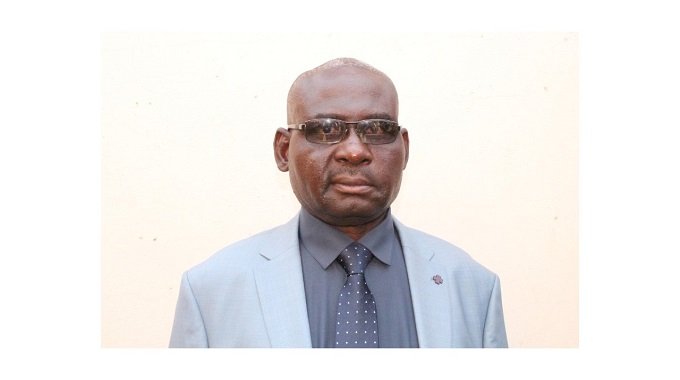
WE continue our interview with Umzingwane Member of Parliament Brigadier-General (Rtd) Levi Mayihlome pseudonym Cde Lizwe Ndebele who during the armed struggle served as an intelligence officer in Zambia. He was deployed to the National Order and Security (NSO), a Zapu intelligence unit whose Director-General was the late national hero, Cde Dumiso Dabengwa. Just below Cde Dabengwa there were five directors. As for Brig-Gen (Rtd) Mayihlome he led a group of 20 cadres to do Border Guards training at Simferopol in the then Soviet Union as Frontier Forces, for nine months. Their training covered intelligence gathering, immigration, customs, infantry tactics, etc. From the Soviet Union he was assigned to train other groups and had the added responsibility of providing security to female cadres camp as well as to the JZ School which was for boys in the Solwezi area.
He was then promoted to the rank of overall commander responsible for co-ordinating local training for all ZPRA Police, those who had trained as border guards, immigration, and customs officers. After the ceasefire he went to Papa Assembly Point in Mashonaland West Province and later on to Mashumbi Pools where he was the deputy security officer responsible for the military police, before he was integrated into the Zimbabwe National Army in 1981 where he was attested as a Lt-Col. Today Brig-Gen (Rtd) Mayihlome continues his account of the armed struggle by telling our Assistant Editor Mkhululi Sibanda (MS) about his early political life as a youth activist in Tshabalala suburb of Bulawayo. Below are excerpts from the interview. Read on . . .
MS: Last week you were telling us about how you came face-to-face with racism in the Bulawayo factories where you were working and early political activities. Which part of Bulawayo were you staying at?
Brig-Gen (Rtd) Mayihlome: I was living with a certain family in Tshabalala specifically the Mlotshwas that is Crema, Moffat and Florine Mlotshwa who now is in the United Kingdom. Unfortunately, others are late now, (MTDSRIEP). Their father was already in Zambia and we used to listen to Radio Zambia. In those broadcasts, we would hear what nationalists in Zambia were doing. Then one day Brother Crema Mlotshwa invited me for a meeting which was to be addressed by Bishop Abel Muzorewa. Muzorewa was coming to Bulawayo and he was the leader of the African National Council. He was leading the resistance against the Pearce Commission, campaigning for a No vote together with the now-late President Canaan Banana. I started attending those meetings. At that time there were no visible Zapu structures even those of PCC or ANC were not there. However, around 1972 some structures were formed, branch-level structures and districts.
The district structures would today be equivalent to provincial structures because it was covering the entire Bulawayo. So I was nominated or co-opted as the youth vice-chairman of the Tshabalala Branch. That was 1972-1973 and with time I became the substantive chairman.
MS: Who were some of the cadres that you were working with?
Brig-Gen (Rtd) Mayihlome: The ones that I remember and I went to jail with were Elijah Moyo, Sabatha Sibanda, Elliot Ncube who is late now, Ernest Ncube who is alive and is in Insiza and is part of the Zanu-PF structures as a member of the National Consultative Assembly (NCA). There was also Moffat Khumalo and Onians Moyo. I think there were seven of us.

The other very active guy was Hadebe, who left in 1975 to join the armed struggle and passed on either in Zambia or Tanzania before we got there. He left in a group with colleagues of mine who were working at Supersonic, the likes of Mandevu, the likes of uNaison, they were all inspectors at work these guys. We were all working together at Supersonic. They were O-level guys who were better radicalised, they left in 1975 loHadebe. We followed later on. But in 1975 there was violence after the release of nationalist leaders from detention and that is when Zapu, Zanu and UANC became distinct outfits. We went for Zapu. At that time Tshabalala was a hotbed of nationalist politics as a branch.
Tshabalala was a very mixed township and there were people from all over the country and region, with our chairman being Patrick Morris Chiwanga (uncle to Chronicle journalist Stanford Chiwanga), Nelson Sidanile from Tsholotsho who after Independence served as a councillor here in Bulawayo and also as Mayor, Billie Tshuma and Lloyd Madzvivandondo. Cde Chiwanga, District Youth Chairman, was originally from Malawi.
MS: Tell us about the situation before the release of the nationalists?
Brig-Gen (Rtd) Mayihlome: Before 1974 we were working well as nationalists but after 1975 people started identifying themselves with nationalist leaders.
One of our main wing Vice-Chairman, Inspector Ncube, (MHDSRIEP), in Tshabalala who was an inspector at the Rhodesia Omnibus Bus Company (ROC), uNcube was killed during some disturbances. Then all hell broke loose. Some guys were picked for murder and public violence. I was also arrested during that period with the current Zanu-PF Politburo member, Cde Richard Ndlovu, uRM (Richard Maduke Ndlovu) who at that time also lived in Tshabalala. We spent some time in detention. During that time we were working with the likes of Edson Ncube the now late national hero, Doughty Mabusa and Ndambe.
MS: When were you arrested?
Brig-Gen (Rtd) Mayihlome: We were arrested in October 1975, and eventually released upon acquittal in April 1976. The arrests and trial of the seven Tshabalala youth leaders that is us was widely covered in the print media with the unintended consequence of galvanising more youths to be openly active in the Party structures, especially in Tshabalala and Sizinda. That made us heroes.
When we came back to Tshabalala the youth had transformed immensely, they were now militant and ready to go and join the armed struggle. Many of them left. I know people like Wonder Phambano who was injured during a Rhodesian raid in Zambia. Other notable youth leaders at Bulawayo District (province) in 1970s were Pono Zondo who currently lives in Gwabalanda, Bernard Basera, Patson Dlodlo and Nathaniel. At Tshabalala Branch others were Florine Mlotshwa (secretary), Japhet Hadebe (who was one of the first in our Tshabalala branch to leave for the liberation struggle, but unfortunately we never got to see him again). Alfred Moyo, Wonder Pambano, sisters Elnert and Ossie Ngwenya (who was very brave and became the first young lady from our Tshabalala youth structures to leave for the Liberation struggle and is now Colonel Mhandu, ZNA commander for the Bulawayo District), Mishack Hove, Dan Mvundla, Elvis Mashiri, Christopher Ndiweni, Lloyd Madzivadondo, Emily Mabuya, Abbie Mayihlome, Elizabeth Moyo, Gertrude Ndebele, Martin Nkomo.

Many of these comrades subsequently joined the liberation struggle in Zambia. Unfortunately, some of the young Tshabalala activists went on to lose direction and stick with Bishop Muzorewa’s UANC around 1976. I also got to know many other youth activists across Bulawayo townships and surrounding areas through inter-branch (district meetings), like Zanu-PF Politburo member Cde Molly Mpofu, Alderman David Ndlovu, Guduza Junior, Jareth Ndlovu, Mbambo, Ernest Mguni, Ndabezinhle Nkomo, Andrew Ndlovu of Njube, Lwazi Tsheza, Calton Ngcebetsha (Jiyane), Mahlangu, many of whom are now late (MTDSRIEP), while others are alive.
MS: While in prison who were some of the cadres you met there?
Brig-Gen Mayihlome: While at Grey Street Remand Prison we met seasoned activists like Cde Rido Mpofu, now NCA member and former mayor of Gwanda, and the now Cde Lieutenant-General Nicholas Dube, who was from Njube Township. After my stint in prison I continued with my political activities, we were doing door-to-door campaigns and there is no house I did not visit in Tshabalala including those whose occupants were hostile. Later on I started working with the now late national hero, Cde Misheck Velaphi Ncube whom Zapu had deployed to co-ordinate its underground structures and was operating from the Mahomva offices in Mpopoma. At that time I did not know that Misheck Velaphi was a trained cadre.
Occasionally I would go to the Mahomva offices to relieve Wilson Moyo who was the chairman for Magwegwe, assisting in administration. I had been recommended by the party to do so. With time I got to understand how Velaphi was handling the requests for those who wanted to cross to Zambia and we didn’t know that he was trained, until 1980 when I met him at Mverechena, which was a holding camp for NSO officers before integration. So in 1976 soon after I came out of prison I was elected vice-treasurer of Bulawayo District which is Bulawayo Province now deputising Lorraine Mguni, who is married to the former Deputy Governor of the Reserve Bank, Nicholas Ncube.
I was her deputy from 1976 up to 1977 when I left. There were so many arrests at the time arising from people selling out on guerilla information. Tshabalala was neighbouring the bush where currently there is Nkulumane and Nketa suburbs, it was called Machakaire Farm. Then guerillas would come, some whom we knew and had gone to Zambia and trained. They would contact us and we would meet there. We would then give them guys whom they would take to join the armed struggle. However, a lot of information was leaking to the whites.
The party then decided to form a committee that would assist Velaphi in screening the youths who came to the offices. The genuine ones would have a signal and the pretenders from the whites would then be dismissed. We would say no, no, go and find out on your own. Genuine ones were also referred to us by people whom we knew and were committed cadres. If the person was recommended by a trusted person within the party, then he or she would be given a signal and advised which buses to use to the border with Botswana.
One of the bus companies whose buses our people used was Suka Sihambe because you go via Plumtree then to the border with Botswana. Already there was a network with bus crews, drivers and conductors whom we would refer people to and where they would meet with the guerillas. I was given the task of assisting Velaphi in co-ordinating the entirety of the Bulawayo Province and so many people knew me. With time the situation became untenable and when I left the police were on my trail, they had been to my house looking for me. By that time I was doing politics full-time as I had left my work. I had left my job in May and I left for the war at the end of June 1977.
To be continued next week


 Online Reporter