

 admin
admin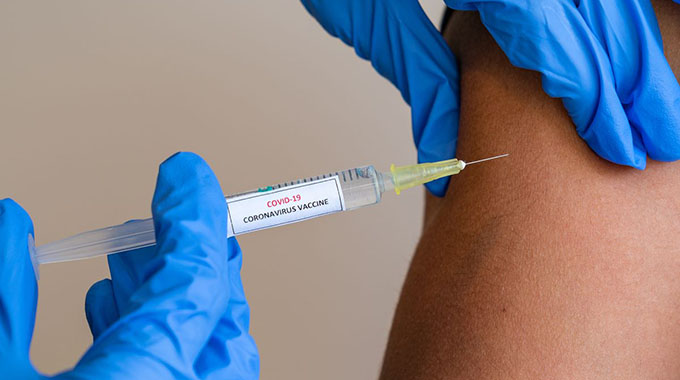
Sifelani Tsiko
Agric, Environment & Innovations Editor
Vaccine hesitancy among the Apostolic community in Zimbabwe has for a long time been one of the country’s major headaches, at a time when the country working to boost Covid -19 vaccination.
Official estimates say one – third of Zimbabwe’s population belongs to Apostolic religious groups, tied to Christianity and leaders of Apostolic churches are influential in many local communities.
They hold the key to acceptance of vaccines.
As of March 2023, the country’s cumulative cases since the outbreak of Covid-19 in 2020 stood at 264 441, with 258 456 recoveries and 5 677 cumulative deaths, according to Government figures.
The recovery rate was 98 percent, with 308 active cases having been reported.
For the most part of the Covid-19 fight, the Apostolic religious groups have not been easy to reach out to.
Reports abound of outspoken religious leaders with huge followings coming out strongly against Covid-19 vaccines, arguing that they are ‘devil’s intention’ to destroy the African race and mankind.
Health workers and development players have found it difficult to bridge the gap and figure out how to offer help to the Apostolic religious groups.
However, in Ward 8 in the Chirunya area of Mbire the implementation of introduction of the ‘Prevention of Covid-19 infection among vulnerable women and girls in drought-affected districts (Guruve and Mbire) of Mashonaland Central Province in Zimbabwe’ programme was a major milestone in bringing about the co-operation of Apostolic sects in Covid-19 vaccine roll outs.
Without the programme, there was a potential escalation of the confrontation between health officials and development players on the one side and Apostolic sect members on the other.
This could have led to unnecessary loss of lives and outright rejection of Covid-19 testing and vaccination measures in Mbire and Guruve.
The roll out of the project by Lower Guruve Development Association(LGDA) and UNWOMEN with the support from the Japanese Embassy helped to increase Covid-19 testing and vaccination, and the availability of prevention and infection control supplies.
“Without the helping hand of this project and the good dialogue between us, LGDA and Government health workers, it could have been difficult for us as members of the Johanne Masowe Nyenyedzinomwe sect to embrace Covid-19 testing and vaccination,” said Madzibaba Eckrome Madyirapanze, head of the sect in Mbire District.
“After consulting the Holy Spirit, God gave us the greenlight to embrace the Covid-19 prevention and vaccination programme.
“The Holy Spirit told us that it was ok to take up vaccination as members of the Johanne Masowe Nyenyedzinomwe religious group.
“The spirit said no one was going to die and we saw nothing wrong about the whole programme for Covid-19 testing and vaccination.”
His sect has a following of more than 300 people in Ward 8 and more than 1000 people in the whole Mbire district.
Madzibaba Eckrome said the head of their church in Mbire district – Mutumwa Fendazi Chizanga also embraced the programme and was vaccinated together with all the church elders and women.
“I was vaccinated with all the three Sinovac jabs. At first, I was afraid, but I later on discovered that it was safe. My wife is a nurse and it was easier for me to accept to be vaccinated.
“She was very persuasive and all this, together with what the Holy Spirit said, took away all the fear,” he said.
“Our church leader for Mbire District — Mutumwa Fendazi Chizanga was vaccinated and this helped a lot to clear the way for more people to be vaccinated in our area. Once the church’s leadership got vaccinated it was easier for our followers to get vaccinated.
“As a church we follow the country’s rules and regulations. We respect our Government and all the programmes and efforts to fight the Covid -19 pandemic.
One of the project’s major aims to increase knowledge and understanding by communities, particularly women and girls on Covid-19 prevention and vaccination.
Through gender responsive social behaviour change strategies, uptake of vaccination in the two districts, was attained.
“We got tremendous support from LGDA and its partners, we received masks, sanitisers and we were vaccinated.
“I would openly hold my vaccination card in front of my followers during church services to encourage them to take up vaccination,” said Madzibaba Eckrome.
“Once you as a leader get vaccinated and you have a vaccination certificate, you allay all fears. It becomes easier to convince followers to embrace testing and vaccination. There was hesitancy at first but more of our followers later accepted.
Hesitant female members of the sect also embraced the programme to fight the Covid -19 pandemic.
“I was vaccinated in 2022. I got all three doses. I accepted to be vaccinated after I saw on my own that our church leader – Madzibaba Eckrome was vaccinated,” said Madzimai Benihilda Mupambeni (19) of Madyirapanze village in Mbire.
“I was afraid at first but after we heard that the Holy Spirit had okayed this, it was easier for me to take up vaccination. I later on encouraged six more other fellow members to be vaccinated.”
Privilege Kavhu, 23, of the same village was vaccinated in 2022 with all the doses.
“I was hesitant at first but we were told by Madzibaba Eckrome that it was safe for us to take up vaccination.
“The Holy Spirit played an important role for us to accept the vaccines. I have convinced five more people to be vaccinated,” she said.
“If our church leader had refused, I was also going to refuse to be vaccinated. When Madzibaba Eckrome was vaccinated, I then agreed that this was the correct thing to do.”
Young people also admitted to be vaccinated after seeing their church leaders getting vaccinated.
“I was first vaccinated at school. This is where I first learnt about the importance of getting vaccinated.
“At first, I did not disclose this to my parents, but after I saw them getting vaccinated here in our village, I opened up. I joined them in getting the other two doses,” said Victor Mutero, 16, of Madyirapanze village.
“Our parents were not aware that we got vaccinated. Our teachers were influential and encouraged us to take up vaccination. Seeing Madzibaba Eckrome getting vaccinated was a turning point for me. This allayed all the fears.”
Victor later encouraged 10 more of his peers to be vaccinated.
“I first got vaccinated in 2021 and got the other doses in 2022. My parents encouraged me to be vaccinated.
“At first, they were lies that when you get vaccinated you could die or fall sick. There were a lot of rumours, but nothing happened and here I am today,” said Cosmas Madyirapanze(20).
“I later encouraged 12 other young people to get vaccinated. It opened floodgates to vaccination. The vaccination of my father — Madzibaba Eckrome, took away all the fear. It gave me hope that I would live and that it was the correct thing to do.”
Mr Tavirai Marega, an LGDA programmes co-ordinator said dialogue, respect for Apostolic sect members, good communication and practical co-operation between the association, Government agencies and the church was critical in avoiding the vaccine hesitancy escalation.
He said they engaged the key members of the Apostolic sect to make sure that as they preach to their followers, they were also promoting vaccination, masking up and maintenance of social distance.
“It was very encouraging that there was no hesitancy among the Apostolic sect in Mbire and Guruve to take up vaccination. We also encouraged them that it was good to follow the Government’s health advice in the fight against the Covid -19 pandemic.”
To improve distribution of Covid-19 infection control supplies including PCR test kits and Covid 19 vaccinations, the project bought two vehicles for the two districts to conduct outreach programmes.
A total of 57 Village Health Workers (VHWs) and 50 Community Influencers (CIs) were trained to build skills and confidence to encourage vaccination.
Over 150 000 people were reached out through road shows, fliers and other print materials (T-shirts, wrap cloth(Zambia), Bandanas), social media, school outreach campaigns and various activities to commemorate days such as the International Rural Women’s Day, International Youth Day and others among others.
Apart from empowering local communities to protect themselves by adhering to Covid-19 Public health and social measures, the project in many ways helped to consolidate Zimbabwe’s national vaccination programme.
Under the programme as at March 2023, a total of 6 890 028 first doses of the Covid-19 vaccine had been administered, while 5 109 287 people had received their second dose and 1 665 662 their third dose.
The country’s national vaccination coverage for the first dose now stood at 61.3 percent, thanks also to the project’s efforts to reach out to Apostolic sects that often hesitate to take up vaccination.
A 2020 survey conducted by the Zimbabwe College of Public Health Physicians found that while 50 percent of Zimbabweans would accept the vaccine, 30 percent were unsure about it, and 20 percent would reject it.



 Online Reporter