admin
admin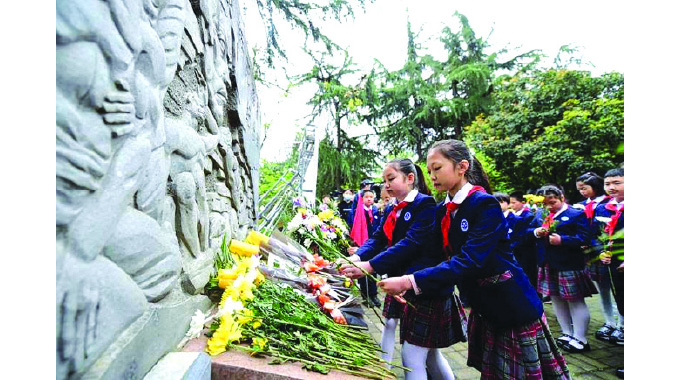
Ms G
A few days ago, when Christians around the world were celebrating the resurrection of Jesus Christ, on the same day, the Chinese were also remembering the departed, as China’s Qingming festival fell on April 4 this year.
This festival originated more than 2 500 years ago from the Cold Food Festival, when people would go three days without fire. About 1 400 years ago, Chinese Emperor Xuanzong in the Tang Dynasty restricted expensive displays of ancestor worship by decreeing that such respects would only be observed once per year on the date of the Qingming Festival.
Today, while in some parts of China people still eat cold foods only on this day, the most visible festival activity revolves around tomb sweeping, the ritual cleaning of grave-sites to honour a family’s ancestors.
On this day, families visit the cemetery to refresh the tombstones of their ancestors, root out the weeds, perhaps adding some fresh soil if necessary, and make offerings of food, incense and joss paper.
But this is not a sad day. Falling usually on the beginning of April, Qingming is the time of the year when spring arrives in the northern Hemisphere.
It is the transition from the lifelessness in winter to a new cycle of life. As such, Qingming’s sombreness is tinted with hope and a forward-looking mentality.
The coincidence of Qingming and Easter this year makes me think of the many similarities between the two cultures on matters of death.
Like the Christians, the Chinese culture believes in afterlife and resurrection. The spirit of the deceased is said to visit his or her family every seven days after the death until the 49th day, when a god would determine whether the spirit is to be sent to heaven or hell.
Therefore, after a funeral, the Chinese would make offerings every seven days until the 49th day to help the spirit with the transition.
After that, the departed is remembered on the important days throughout the year, such as Qingming, the Chinese New Year, and the dates of birth and death.
An old practice is to burn joss paper, also known as ghost or spirit money, which are paper-crafts or sheets of paper believed to be able to circulate in the other world as cash.
But it is not observed as much these days, especially in urban areas, where open fires are banned for its environmental damages.
Similar to a resurrection, the concept of rebirth is an important part of the Chinese culture, which traces its origin to Buddhist concept of Karma. According to it, spirits can begin a new life after the old one ends, either as an animal, a person, or a god, based on what kind of a person he or she was in the earlier life.
Besides the similarities, there are also differences. An interesting one I have observed is over where the dead are buried. I have not been able to see what the case is in Zimbabwe.
But in Western societies, cemeteries can be built right next to apartment blocks. This is unimaginable in China where grave-sites are invariably found on the outskirts of cities and towns, as far away from the neighbourhood of the living as possible. Unlike the Christians, the Chinese perhaps associate death with more of bad fortune.



 Online Reporter