admin
admin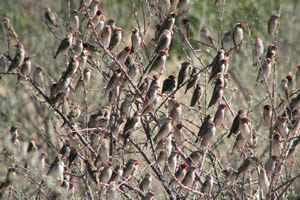
havoc during the winter cropping season.
Quelea birds usually eat wheat and barley, reducing yields by more than 40 percent if not controlled on time.
However, the authority said it had enough resources to control the birds.
The authority’s public relations manager, Mrs Caroline Washaya Moyo recently said National Parks had enough chemicals.
“We are also in the process of importing more chemicals from South Africa. At least 5 000 litres are enough to cover the winter period.
“We also have enough resources and manpower to do monitoring and surveillance,” she said.
Over the past few years, the control of quelea birds has been hampered by mobility challenges as the Crop Protection and Research Institute did not have enough vehicles for monitoring and controlling the birds.
Mrs Washaya Moyo said the authority had five vehicles set aside for the operation and with enough officers on the ground who were ready for the task.
At the moment, the quelea birds have not yet started attacking wheat since the crop is at the tasselling stage although there could be some isolated cases.
“We have spray teams in Norton, West Nicholson and Birchenough who are ready to react to reports,” she said.
Mrs Washaya Moyo urged farmers to assist by locating roosting sites (where birds sleep) before reporting.
She said the birds have a traditional place where they sleep.
“Identification of the roosting sites will hasten the spraying process and result in more farmers being attended to in a short period,” she said.
Farmers are also urged to quickly report the presence of the birds at their farms before their crop is severely damaged by the pests.
The birds usually feed during the morning and towards the end of the day.
Growers have tried to control the birds using scare crows and making noise by beating drums, but according to the farmers spraying is more effective.
Wheat production has been on the downfall in Zimbabwe due to the high risk associated with the crop.
Most farmers do not have cash to buy inputs while financial institutions are not willing to fund wheat production.
Constant power cuts that disrupt irrigation schedules have also discouraged a number of farmers from producing the crop.
More than 10 000 hectares of wheat had been planted by mid June. Zimbabwe requires 450 000 tonnes of the commodity for consumption.



 Online Reporter