admin
admin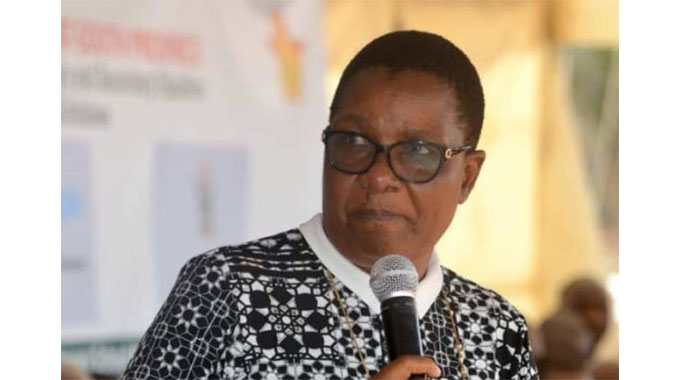
Herald Reporter
THE Government of Japan in collaboration with Adventist Development and Relief Agency (ADRA) have constructed six classroom blocks, three administrative and three teachers’ cottages at three schools in remote areas of Gokwe North as a way of complementing Government’s in advancing primary and secondary schools.
Beneficiaries are Nenyunka, Kushinga and Chirisa primary schools and over US$2 million was used to construct the blocks.
Ministry of Primary and secondary education is also supporting children with disabilities who usual exhibit lower school attendance and are not completing a full cycle of education in these remote areas.
In a speech read on her behalf during the official handover ceremony of the project at Chirisa Primary School in Gokwe north, Permanent Secretary of Primary and Secondary Education, Mrs Tumisang Thabela, expressed gratitude to the Japanese government, adding that the development partners were coming at the right time as it was fitting very well in Government’s National Development Strategy 1 (NDS1) which has been ongoing through the Government’s Better Schools Project being implemented in marginalised areas.
“With the expansion of rural communities, there has been a need to construct and develop school infrastructure particularly for the disadvantaged learners in rural and remote areas. Infrastructure remains a critical challenge to the country’s education sector as the demand for education continues to increase and school facilities require innovation, upgrading and modernisation. Under NDS1, my ministry is directing extra attention to broadening access and participation to quality, equitable and inclusive education,” she said.
Mrs Thabela applauded the Japanese government for supporting more development initiatives in Zimbabwe.
ADRA Zimbabwe country director, Mrs Judith Musvosvi, said the new buildings will give school children a conducive learning environment that will motivate them to excel. She also urged school children to work hard and desist from child marriages.
“We are complementing Government’s efforts in delivering sustainable education that results in development. In a few years to come I want to assess the impact of these investments. I really wish you well and l have a special spot in my heart for children in rural areas, especially from hard to reach areas,”she said.
At the same occasion, theEmbassy of Japan deputy Ambassador Mr Hiroyuki Kumagai said they were committed to improving the learning conditions of children living in vulnerable areas.
He also urged workers to take their work seriously and take advantage of the improved environment.
“You might wonder why Japan is supporting schools in such a faraway country as Zimbabwe, a district in Gokwe North. It is because the people of Japan understand the value of education so we decided to support the girls and boys here to have quality of education. I also look forward to them becoming proper registered government schools as soon as possible,” he said.
In addition to infrastructure development and promotion of non formal education, Government is also focussing on creating a knowledge driven economy for sustained growth, innovation for industrialisation and modernisation of the country through reconfiguration of the education system with a strong emphasis on Science, Technology,Engineering,Arts and Mathematics (STEM) subjects.



 Online Reporter